Hotel technology

by David Klemt David Klemt No Comments

Bridge the Gap: Tech and Hospitality

Bridging the Gap Between Technology and Personal Development in Hospitality

by Doug Radkey
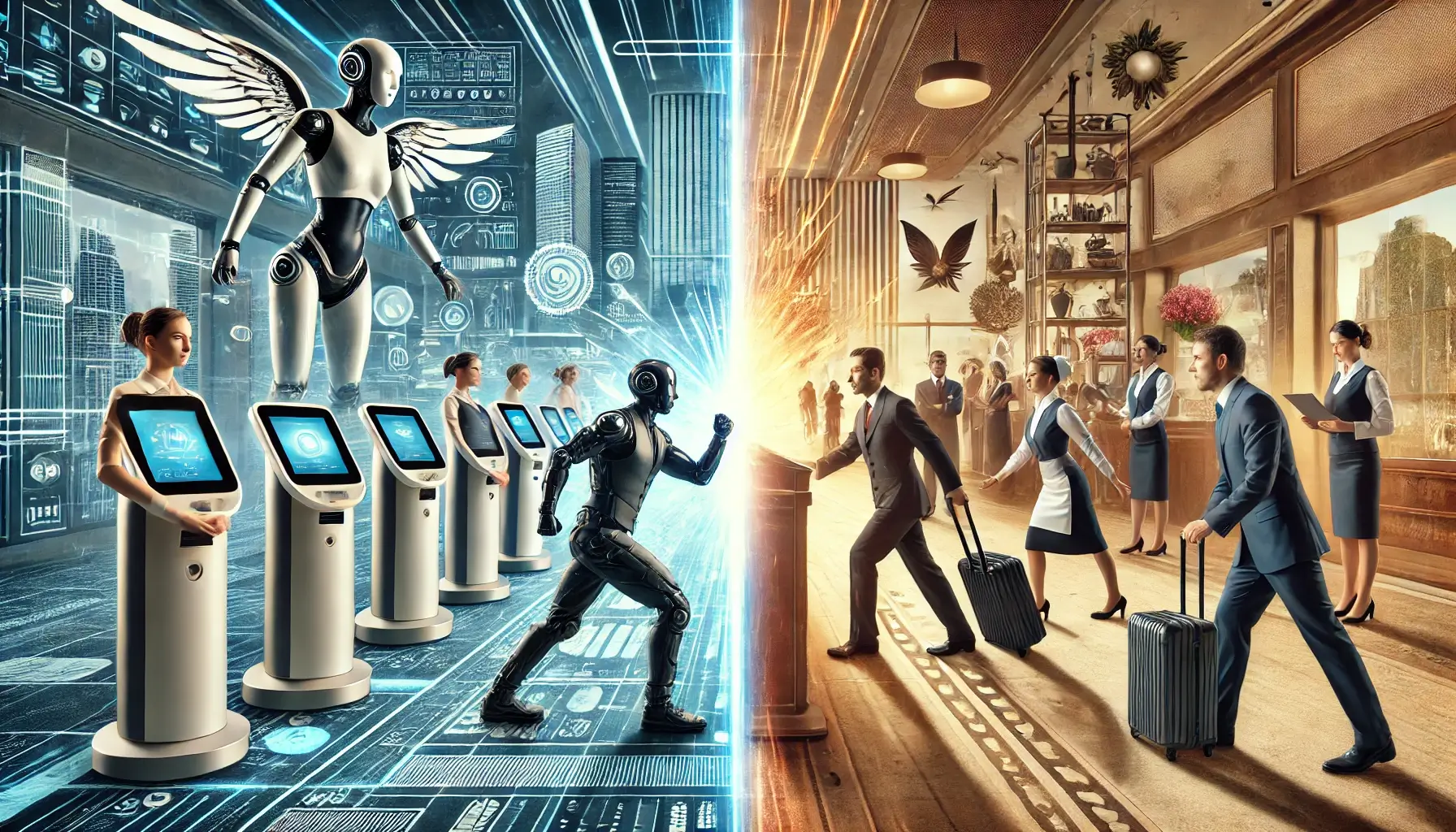
An AI-generated image of a split screen, technology versus people

We shouldn’t have to say this, but the above is an AI-generated image.

It’s said that between 70 percent and 80 percent of hospitality businesses plan to increase their investment in technology and AI over the next five years.

As the industry evolves, the key to success lies in bridging the gap between technology and personal development.

Exploring how integrating technology, artificial intelligence, and personal development can transform your hospitality business is more important now than ever before. It’s crucial that today’s operators understand and leverage these elements to improve operations, enhance guest experiences, and foster staff growth.

The Role of Technology in Modern Hospitality

In today’s fast-paced world, the hospitality industry is undergoing a significant transformation, driven by the rapid advancement of technology.

Hotels, restaurants, and bars are increasingly leveraging innovative tools such as AI, IoT (Internet of things), and data analytics to improve efficiency, personalize services, and to stay competitive. As these technological advancements continue to evolve, they are reshaping the landscape of this hospitality, making it more dynamic and responsive to the ever-changing needs of guests.

While technology offers numerous benefits to the hospitality industry, it also presents several challenges and potential downsides. One significant concern is the risk of de-personalization, as the increased use of automated systems and AI can create a barrier between guests and staff. This barrier has the potential to diminish the personalized touch that is a hallmark of exceptional hospitality.

Additionally, the learning curve for staff can be steep. Team members may require extensive training and ongoing support to utilize new technologies effectively. This can lead to initial inefficiencies and frustration as employees adapt to unfamiliar tools and processes.

Balancing technological advancements with human interaction is crucial to maintaining the warmth and personalized service that guests expect, while also ensuring that staff are adequately equipped, and comfortable with the technological tools at their disposal.

The Emergence of AI in Hospitality

There is no better example of the transformative impact of technology on modern hospitality than the recent developments in artificial intelligence. Hospitality-centric AI applications range from chatbots and predictive analytics such as dynamic pricing tools to personalized marketing platforms, offering a plethora of benefits.

Leading hotel chains like Marriott and Hilton have successfully implemented AI-driven guest services and operational efficiencies, setting new standards in the industry.

For example, these hotels are increasingly using AI to personalize the guest experience, from check-in to check-out. Hilton’s Connie, powered by IBM Watson‘s AI, acts as a concierge, assisting guests with information about hotel amenities, dining recommendations, and local attractions.

AI enhances guest personalization by tailoring services to individual preferences while streamlining operations through automation, and providing valuable insights into guest behavior and preferences.

However, these advancements are not without challenges. Data privacy concerns are paramount, requiring stringent measures to protect guest information. Additionally, ongoing management and updates necessitate in-depth training and processes for staff to effectively integrate AI into their daily routines.

Balancing these challenges with the benefits is crucial to harnessing this technology to its full potential in hospitality.

The Importance of Personal Development in Hospitality

The rapid advancement of technology in the hospitality industry underscores the critical importance of continuous staff training and development. As new tools and systems are introduced, keeping staff updated with the latest technological advancements is essential.

Continuous training programs ensure that employees are proficient in using these new technologies, which not only enhances their productivity but also improves the overall guest experience.

For instance, regular workshops and online courses can help staff stay abreast of the latest AI applications and digital tools, enabling them to seamlessly integrate these advancements into their daily operations.

In addition to keeping up with technology, skill enhancement plays a crucial role in personal development. Key skills for hospitality staff must now include digital literacy, adaptability, and emotional intelligence on top of the core values team members should come to understand during onboarding.

Three Keys

Digital literacy ensures that employees can navigate and utilize various digital platforms and tools effectively. Adaptability is essential in a fast-paced industry where change is constant, enabling your staff to adjust quickly to new processes and technologies. Emotional intelligence, which involves understanding and managing one’s emotions and those of others, is particularly important in hospitality, where guest services and interaction are paramount.

Developing these skills through targeted training programsalong with onboarding those that fit your valuescan enhance staff performance and guest satisfaction significantly. Moreover, personal development initiatives can greatly influence staff motivation and retention by investing in the continuous growth and development of your employees.

When staff feel valued and see opportunities for personal and professional growth, they are more likely to stay with your business, reducing turnover rates. This is particularly important in this industry, where high turnover can disrupt operations and negatively impact service quality.

By fostering a culture of continuous learning and development despite the advancements in technology, your business can create a motivated and loyal workforce that is committed to delivering exceptional guest experiences.

Bridging the Gap: Integrating Technology and Personal Development

To truly revolutionize this industry, it is essential to adopt a holistic approach that integrates technology while maintaining a strong focus on human elements. A balanced approach ensures that while technology streamlines operations and enhances guest experiences, the human touch remains a key component of hospitality.

This integration involves not only the implementation of advanced technologies but also the development of staff skills to use these tools effectively.

Such an approach ensures your business can harness the full potential of both technology and its workforce, creating a seamless and enriching experience for both staff and guests.

Creating effective training programs is a critical step in this integration. These programs should include comprehensive education on technology and AI, ensuring that staff are not only familiar with new tools but also confident in using them.

Keys to Effective Training

Training should be continuous and not a one-off or a one-hour briefing, and should cover practical aspects of technology use.

For example, this may include operating digital check-in systems or utilizing AI-driven guest service platforms, as well as theoretical understanding of how these technologies enhance operations and guest satisfaction.

Regular workshops, online courses, and hands-on training sessions can help staff stay updated with technological advancements, and develop the necessary skills to leverage these tools in their daily tasks.

Fostering a collaborative culture is equally important in helping staff embrace these new technologies. Encouraging a culture of collaboration and continuous improvement can significantly ease the transition to a technology-enhanced workplace. Involving staff in the decision-making process and encouraging feedback ensures that team member feel valued. Therefore, they are more likely to engage with new technologies.

Bridging the gap between technology and personal development requires a balanced approach that integrates technological advancements with comprehensive training programs and a collaborative culture. This holistic strategy ensures that the hospitality industry can leverage the benefits of technology while maintaining the essential human touch that defines the exceptional service we all love and strive for.

Integrating the Technology

Integrating technology and personal development doesn’t set aside the requirement for careful assessment and planning. Begin by evaluating your current technology and training needs to identify gaps, and opportunities for improvement.

Conduct an audit of your existing systems and processes (tech-based and non-tech-based systems), gather feedback from your staff, and set clear objectives for integration. A thorough assessment helps create a strategic playbook that aligns technological advancements with the developmental needs of your staff, ensuring a cohesive approach.

When it comes to technology adoption, it’s crucial to select and implement new tools that complement your personal development goal, operational needs, and guest experiences. Choose technologies and AI tools that enhance operational efficiency and guest experiences without compromising the human element.

Consider factors such as ease of use, scalability, and integration capabilities. Pilot testing new technologies before full implementation can help identify potential issues, and ensure a smoother transition.

Regular updates and feedback are essential for maintaining the effectiveness of your technology and training programs. Take the time to establish a continuous feedback loop where staff can share their experiences and suggestions for improvement, and then update your systems and training materials regularly to reflect the latest advancements and best practices.

This proactive approach ensures that your team remains equipped with the knowledge and skills needed to leverage new technologies more effectively.

Overcoming Resistance to Change

If you’ve been operating for a number of years and the embracing of technology is new to your style of operations, you may receive resistance from staff who have been with you for a while. Addressing potential resistance to change is a common challenge in integrating technology (or any other type of change).

Strategies for overcoming this resistance may include involving staff in the decision-making process, providing comprehensive training, and highlighting the benefits of new technologies. Developing a growth-based mindset within your workplace culturethrough positive reinforcement and recognition of early adopterscan also help encourage acceptance and enthusiasm for change.

Lastly, continuous improvement is vital for sustaining the benefits of technology and personal development initiatives while positioning your brand for the new era that’s upon us.

Evaluate the impact of new technologies and training programs on your operations regularly, and be aware of guest satisfaction scores. Use performance metrics and feedback to identify areas for improvement, and make necessary adjustments.

This commitment to ongoing development ensures that your hospitality business remains competitive and adaptive to future industry changes.

Bridging the gap between technology and personal development is essential for creating a seamless and enriching experience for both staff and guests. Embrace these approaches so your business can innovate and thrive, while still maintaining the warmth and personalized service that define exceptional hospitality.

Image: DALL-E
Tech-Stack Consulting for Motels Hotels Resorts

by David Klemt David Klemt No Comments

Fast-food Giant Halts AI Ordering

Fast-food Giant Halts AI Order Taking

by David Klemt

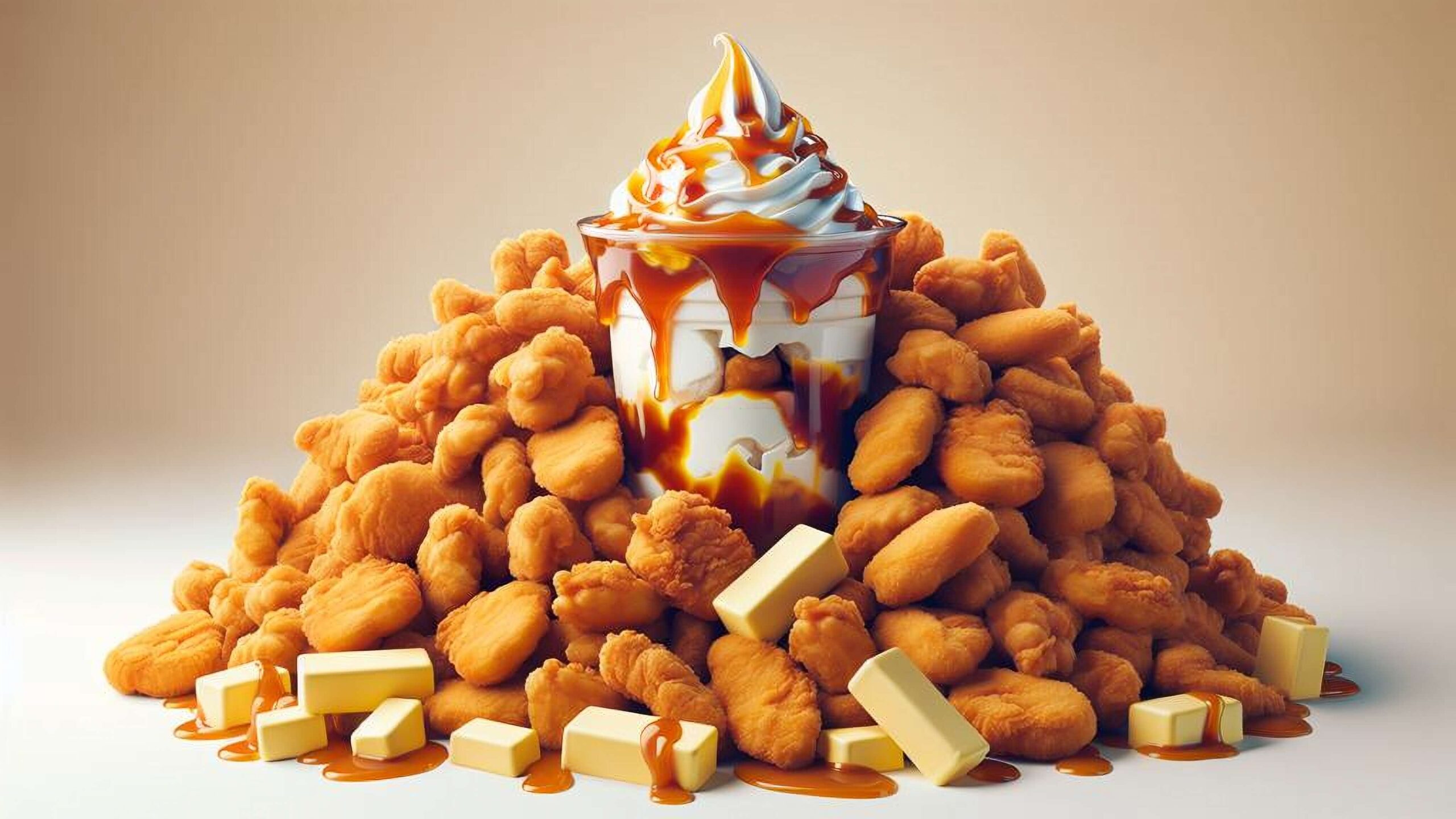
AI-generated image of a caramel sundae surrounded by pats of butter and chicken nuggets

Ironically, this image is AI generated. So, how many pats of butter and nuggies do like with your sundae?

Roughly two years after first experimenting with artificial intelligence-driven ordering technology, McDonald’s is pulling the plug…for now.

The fast-food behemoth made its interest in artificial intelligence abundantly clear in 2019. In Q2 of that year, the company purchased Dynamic Yield for a reported $300 million. Immediately after making the acquisition, McDonald’s implemented Dynamic Yield’s machine-learning tech to an estimated 8,000 drive-thrus.

KRG Hospitality readers may recall that the fast-food company faced a class-action privacy lawsuit in Illinois. The plaintiff alleged that McDonald’s “violated BIPA because it failed to obtain proper consent prior to collecting and disseminating Plaintiff’s and the other class members’ voiceprint biometrics who interacted with its AI voice assistant at its Illinois locations.”

Around six months after making that acquisition, McDonald’s picked up Apprente. Interestingly, the voice-powered ordering tech platform had only been founded in 2017.

Following the purchase, the Apprente team became founding members of McD Tech Labs, a group that fell under the McDonald’s Global Technology Team umbrella. Two years later, McDonald’s would sell McD Tech Labs to IBM.

Put simply, McDonald’s was interested in testing voice-activated “automated order taking” (AOT). In theory, an effective platform could take orders, speeding up drive-thrus and streamlining operations.

Well, it appears that the answer is no. At least, not to the standards of McDonald’s, and satisfaction of the company’s guests.

Speed, Convenience, and Accuracy

A drive-thru needs to be fast. There’s no question about it, that’s the entire point.

The speed, after all, makes a drive-thru convenient. Otherwise, people would just park and place their orders at a counter or kiosk.

However, speed means nothing without accuracy. An LSR, QSR or fast-casual restaurant with a drive-thru could promise a guest will wait in line for no more than ten seconds after ordering. If they don’t get what they ordered, it doesn’t matter.

Poke around social mediaTikTok in particularand you’ll come across some viral AOT moments. There’s the addition of several “butter portions” to an ice cream order. Also, the addition of bacon to an order for ice cream, which I’m not entirely confident I’d correct. At least one guest popping into an AI-powered McDonald’s drive-thru had hundreds of dollars of McNuggets added to their order.

So, by July 26 of this year, as reported by Restaurant Business, the experiment will end. This partnership between McDonald’s and IBM to test AOT will be no more.

However, McDonald’s also said that IBM will remain a partner for other efforts. Further, McDonald’s shutting down AOT (for now) doesn’t seem to have turned other brands off from the idea. Per reporting, IBM says other fast-food chains are inquiring about AOT.

This story makes a few things clear to me. First, McDonald’s is confident that investing in tech is the way forward. They’ve spent hundreds of millions of dollars to test and implement new tech solutions. Second, someone has to go first and test in earnest, and it appears that LSRs and QSRs are leading the charge in hospitality.

And third, AI isn’t ready for prime time just yet. It’s wise to keep up to date with AI-powered innovations, but it’s also smart to be cautious.

Image: Shutterstock. Disclaimer: This image was generated by an Artificial Intelligence (AI) system.

Tech-Stack Consulting for Motels Hotels Resorts

by David Klemt David Klemt No Comments

SevenRooms Announces Powerhouse Ad Board

SevenRooms Announces Powerhouse Advisory Board

by David Klemt

"Good news is coming" sign taped to a pole on the street

One of our favorite hospitality technology platforms, SevenRooms, is back at it, showing off their commitment to growth through an announcement made today.

Regular readers of KRG Hospitality’s industry news section may recall an impressive announcement from SevenRooms toward the end of last year. In late November of 2023, the innovative hospitality CRM, operations, reservation, and marketing platform released not one, not two, but three powerful new tools:

  • Priority Alerts
  • Private Line
  • Word-of-Mouth Referrrals

Those who may have missed this announcement can read about these tools here.

Today’s news, however, isn’t based on the release of an innovative new tech feature. Rather, it has everything to do with SevenRooms looking toward the future. The hospitality tech leader is proud to announce CAB, their Customer Advisory Board.

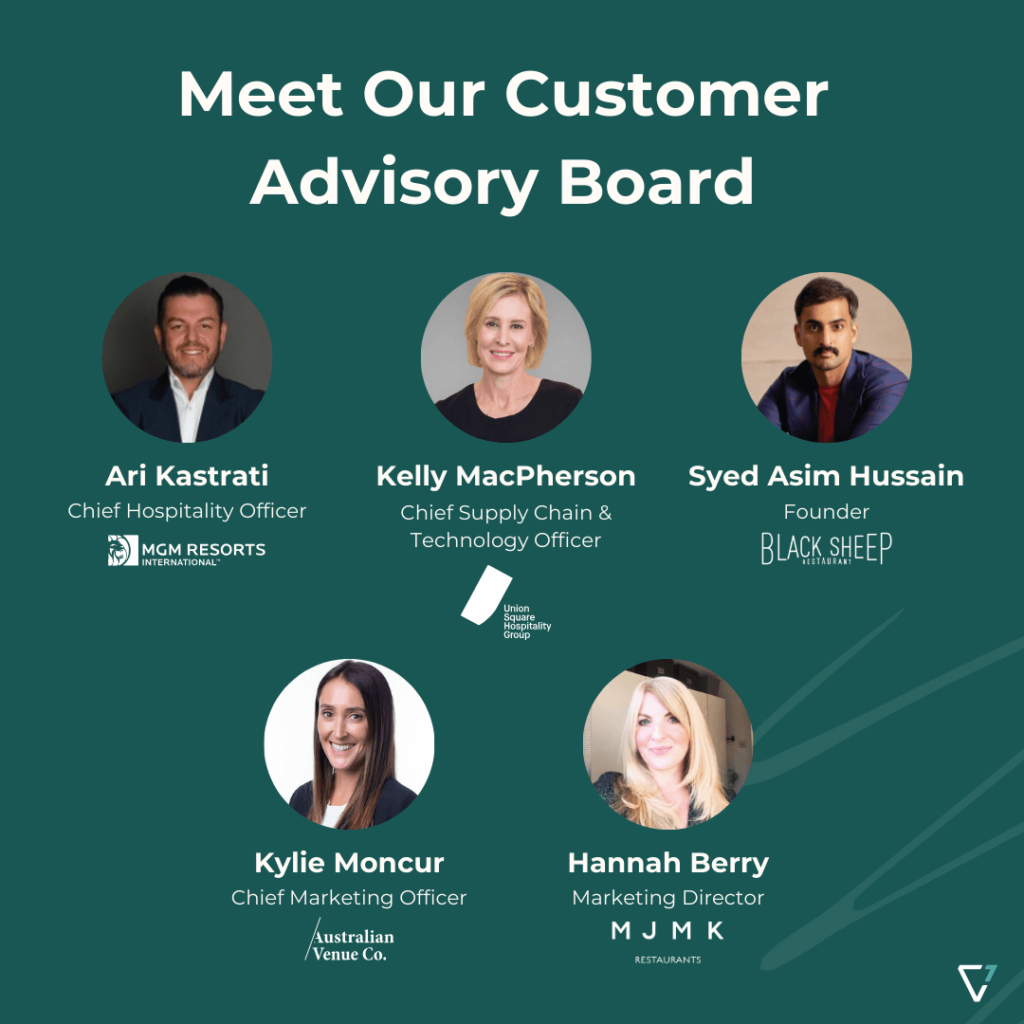
Images of the SevenRooms inaugural Customer Advisory Board members

At the launch, CAB features five hospitality industry heavy hitters. Each represents a hospitality titan, such as MGM Resorts International, Union Square Hospitality Group, and Black Sheep Restaurants. Each member is tasked with analyzing AI, revenue management, and the future of hospitality, and the opportunities presented by each.

Personally, I’m particularly interested in what CAB members will have to say about AI in the industry by year’s end.

For more details, please review the official press release below.

SEVENROOMS ANNOUNCES LAUNCH OF CUSTOMER ADVISORY BOARD WITH GLOBAL HOSPITALITY LEADERS

MGM Resorts International, Union Square Hospitality Group, Black Sheep Restaurants, Australian Venue Co., and MJMK Restaurants join to provide strategic insights on the future of hospitality, emerging trends, and key technological opportunities

NEW YORK (June 4, 2024) – SevenRooms, the leading marketing and operations platform for the hospitality industry, today announced the creation of its inaugural Customer Advisory Board (CAB). Composed of hospitality experts and thought leaders from the United States, Hong Kong, Australia, and United Kingdom, SevenRooms’ CAB will serve as a strategic forum to explore, discuss and action opportunities within the hospitality industry.

CAB members joined SevenRooms executive leadership at the ARIA Resort & Casino in Las Vegas to discuss the 2024 board theme of “Future Proofing to Serve up Success.” CAB attendees gained deeper insight into industry trends and best practices from global markets, discussed the value of loyalty in building hospitality-focused businesses with their peers, and debated how technology can help bridge the gap between guests and restaurants to deliver revenue-driving experiences. Throughout 2024, CAB members will continue to explore the following areas of opportunity:

  • Future of Hospitality – consumer sophistication, technology consolidation and the preparing workforces for what’s to come
  • Artificial Intelligence – authenticity and the importance of maintaining human, hospitality-focused connections
  • Revenue Management – data storytelling and how to make more money from the
    same seats

As the consumer of tomorrow evolves, with new demands and expectations, SevenRooms’ CAB will continue to explore what authentic, hospitality-driven experiences look like for both hospitality operators and consumers. Plus, develop strategies for how technology like SevenRooms can provide a blueprint for growth to help operators own and elevate the guest experience to build loyalty. This includes leveraging CRM and marketing tools that not only help their businesses grow, but ensure they’re set up for long-term success by generating more predictable revenue, more often.

“We are excited to launch our Customer Advisory Board, welcoming this esteemed group of industry leaders deeper into our community,” said Joel Montaniel, CEO and Co-Founder of SevenRooms. “At SevenRooms, we are committed to the long-term success of our customers both now and in the future. As leaders in innovation, we empower operators to build sustainable, profitable businesses with guest experience at their core. With our board members’ diverse perspectives and deep industry knowledge, they will be instrumental in helping us better understand and address the needs of our customers and the wider global hospitality industry, ultimately, helping them better serve their guests.”

The inaugural members of the Customer Advisory Board include:

“Working with Joel and the SevenRooms team over many years, I’ve seen firsthand their commitment to the hospitality industry and its continued growth and evolution; passions I too hold very dear,” said Ari Kastrati, Chief Hospitality Officer at MGM Resorts International and Chairman of SevenRooms’ Customer Advisory Board. “I am honored to chair this new advisory group, with a collective goal of supporting and empowering hospitality businesses as they navigate an increasingly complex market and strive to elevate experiences for diners of today and tomorrow.”

For more information about SevenRooms and its Customer Advisory Board, please visit sevenrooms.com/customer-advisory-board.

About SevenRooms

SevenRooms is a leading marketing and operations platform for growing restaurants in the hospitality industry. From Michelin star gems to local favorites, the all-in-one platform helps restaurants increase sales, delight guests, and keep them coming back, automatically. The full suite of products includes reservations, waitlist and table management, review aggregation, referrals, email marketing, and marketing automation. Founded in 2011 and venture-backed by Amazon, Comcast Ventures and PSG, SevenRooms has more than 10,000 dining, hotel F&B, nightlife and entertainment clients globally, including: Marriott International, MGM Resorts International, Mandarin Oriental Hotel Group, Wynn Resorts, Jumeirah Group, Hard Rock Hotels & Resorts, Wolfgang Puck, Michael Mina, Bloomin’ Brands, Union Square Hospitality Group, Australian Venue Co., The Wolseley Hospitality Group, Dishoom, Live Nation and Topgolf. www.sevenrooms.com

Image: Jon Tyson on Unsplash

Bar Pub Brewery Nightclub Club Nightlife Technology Plan Tech Stack

by David Klemt David Klemt No Comments

Why We Offer Tech-stack Planning

Why KRG Hospitality Offers Tech-stack Planning

by David Klemt

Black-and-white photograph of shelves loaded with broken desktop computers and monitors

If your hardware looks like this, it may be time to update your tech stack.

Navigating the seemingly endless restaurant, bar, and hotel technology options available to operators can feel like an overwhelmingly complex task.

This can be particularly true for brand-new operators and those with a decade or more of experience under their belts. For the former, where does one with little to no experience even begin putting together their technology stack?

And for the latter, what tech upgrades are worth implementing, and which platforms are crucial; which are nice to have; and which are unnecessary for a particular concept?

Sitting down and sifting through the platforms within just a few categories can be a significant investment of time. Learning to use each solution and training relevant team members on them also requires considerable time and effort. That’s to say nothing of the initial and monthly outlay of precious monetary resources after making selections.

Of course, there’s also the nagging feeling that maybe the platforms chosen aren’t the “right” fit, or the best in class.

Most operators, regardless of the length of time they’ve been in hospitality, are aware of a handful of tech selections they need to make. They know they need a point-of-sale system, a customer relationship management option, an online ordering platform, a reservation system.

But what about inventory, gratuity management, marketing campaign management, guest feedback, scheduling, catering, website chatbots, AI-enhanced loyalty programs, and even kitchen displays?

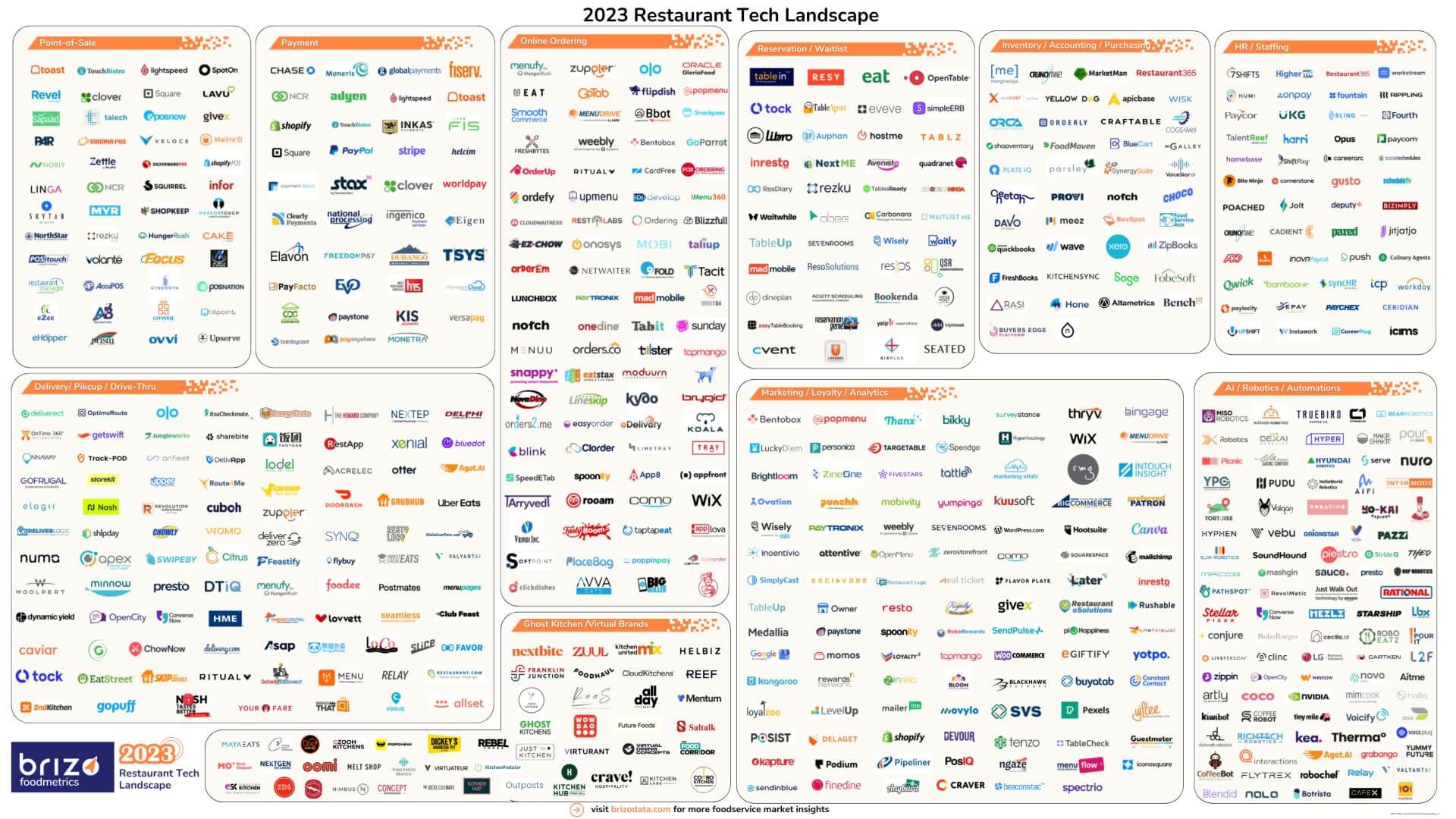
According to Brizo Foodmetrics, operators need to consider a dozen tech categories. At KRG Hospitality, we say there are at least that many.

Difficult Choices

Per a new report from Nation’s Restaurant News, people are excited but cautious about the tech available to the hospitality industry. Anyone interested in reviewing the 2024 Restaurant Technology Outlook report can click here to gain access.

Among the report’s insights are the identification of a number of challenges operators face when it comes to tech decisions. The most-significant barrier is still pricing, with 37 percent of NRN survey respondents saying hardware comes with high costs. Further, 30 percent think there’s not enough transparency surrounding additional fees.

There’s also an interesting perception as regards features. While 33 percent of respondents feel the systems they’ve selected are light on functionality, 18 percent say their systems have functions that they don’t even use.

Thirty-two percent of survey respondents identify a lack of knowledge of systems as a barrier to adopting new tech solutions. In some good news, just ten percent of respondents say systems are too difficult to use. Still, ten percent of our industry is a significant number.

Combined, 87 percent of those surveyed will either possibly (24%), probably (33%), or definitely (30%) invest in tech in 2024. That’s an impressive number.

However, 39 percent of respondents were “definitely” going to invest in tech in 2023. That’s a drop of nine percent.

Here to Help

When we at KRG develop a tech stack for a client, it’s with their specific project and needs in mind.

And while we do have preferred partners, we present multiple options. Moreover, each option comes with a synopsis of features and a justification for its inclusion.

If a preferred partner isn’t the best option or the client wants to choose something else, we support that decision. Tech is challenging enough already without being steered toward specific platforms for no other reason than, “We like this one.” These decisions aren’t about us, they’re about what’s best for our clients.

At the end of each tech-stack plan are estimated costs for each option. We include the onboarding fees, monthly fees, and the annual cost. Again, these are close estimates as modules, additional features and hardware like handhelds, and subscriptions can increase or reduce the overall cost.

The hospitality industry tech landscape is transforming from a barren desert to a thriving wetland. KRG Hospitality is here to help you navigate this complex terrain.

Image: z yu on Unsplash

Bar Pub Brewery Nightclub Club Nightlife Technology Plan Tech Stack

by David Klemt David Klemt No Comments

What are You Changing in 2024?

What are You Changing in Your Restaurant or Bar in 2024?

by David Klemt

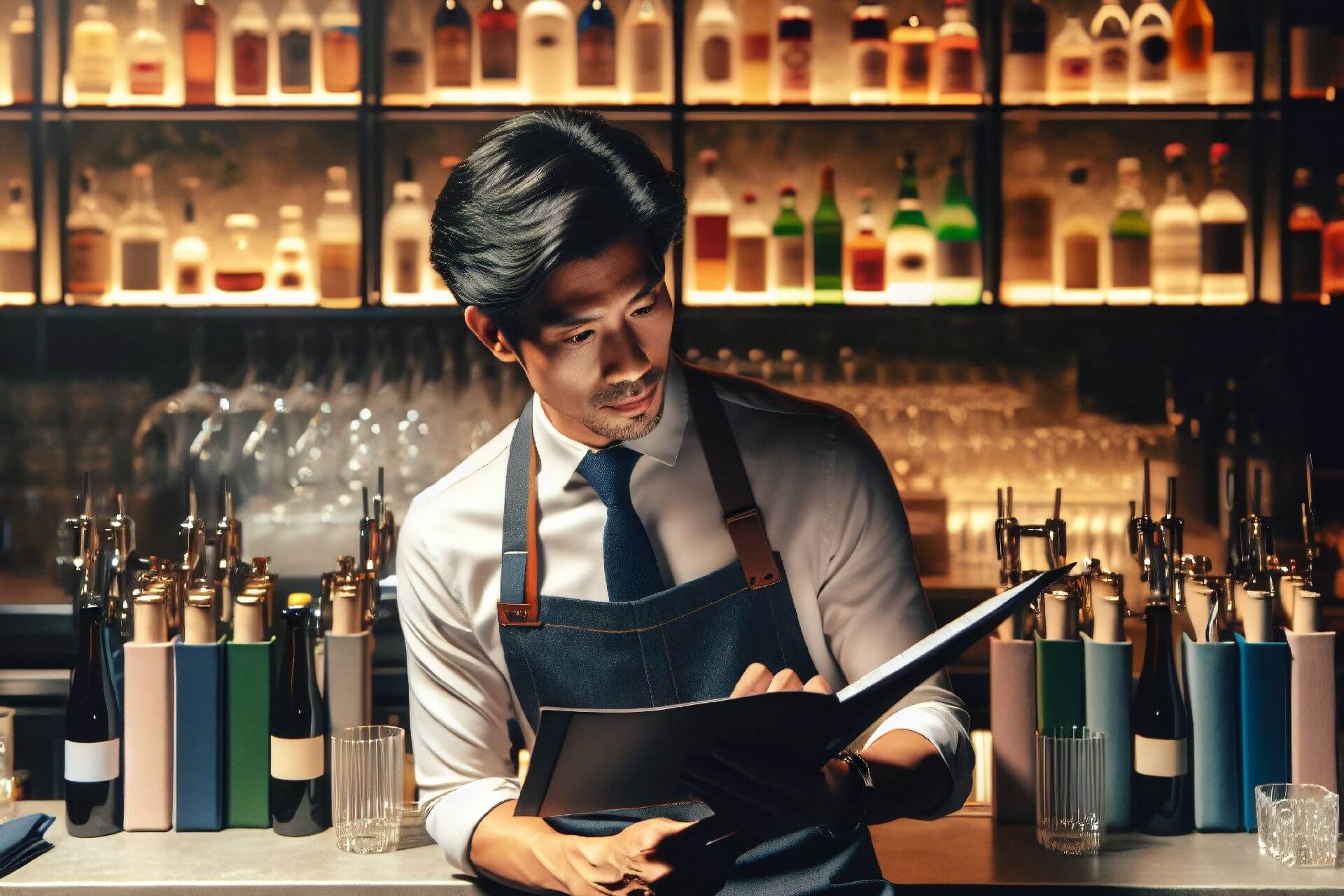
Restaurant owner reviewing their menu

More fun with AI-generated images. That’s quite the busy bar setup.

Toward the end of last year, Nation’s Restaurant News identified what changes operators chose to make after analyzing their operational data.

The publication surveyed hundreds of operators about how data drove their decisions. This survey was an element of their year-end report, Market Leader Report: The Data-driven Restaurant.

As one would imagine, this report focuses on data collection, analysis, and usage. However, NRN‘s report doesn’t just address the importance of data collection in the F&B space. Rather, they seek to understand if operators are collecting the “right” data; whether they can optimize the data they collect; what metrics they’re tracking; and how they’re acting on all that data.

Simply put, it’s an important report addressing a topic crucial to today’s restaurant and bar operations. Those who want their own copy of The Data-driven Restaurant can download it free here.

While entire report is valuable, the focus of this article is one question and the answers provided. Below, to provide context, is a breakdown of the survey respondents.

The Who

Most of the respondents identified as independent restaurant operators.

  • Indie: 37 percent
  • Chain (franchisee): 21 percent
  • Chain (company owned): 18 percent
  • Multi-concept: 15 percent
  • Single-site operator: 6 percent
  • HQ or brand level of foodservice company: 3 percent

By a slim margin, most survey respondents categorized their restaurants as full service or casual dining.

Perhaps unsurprisingly, the fewest respondents operate in the upscale or fine dining category.

  • Full service / casual dining: 30 percent
  • Fast casual: 28 percent
  • Quick service: 20 percent
  • Midscale / family dining: 15 percent
  • Upscale / fine dining: 7 percent

The What

So, what question caught our attention at KRG Hospitality?

“In the past 12 months, which initiatives did your organization undertake after analyzing data?”

NRN conducted this survey in November 2023. Not surprisingly, respondents mostly made changes to their menus after reviewing their data. Streamlining menus and adjusting prices were two of the biggest operational trends last year, as many operators are no doubt well aware.

That theory is supported by the survey results. Below, the top four answers to the question above.

  • Changed menu prices (48 percent)
  • Removed items from or added items to our menu (47 percent)
  • Improved the way we trained our staff (26 percent)
  • Adjusted our loyalty program’s rewards and/or incentives (24 percent)

Honestly, it’s heartening to see that training is among the top-three data-driven actions operators took last year. And, of course, it’s not shocking that the menu was the focus of the most attention. Streamlining is an effective way to reduce food and labor costs. Further, pricing is always (please excuse the pun) on the menu.

Our question is: What changes, if any, do you plan to implement this year now that we’re headed into Q3?

The What: The Sequel

If the menu received the most attention after operators reviewed their data, what received the least?

Well, it appears marketing fell to the wayside, along with the kitchen. The following are the bottom four answers to the question in the section above:

  • A/B tested marketing campaigns and increased ROI (6 percent)
  • Changed specs on our kitchen equipment or technology (10 percent)
  • Identified lapsed customers and marketed to them (11 percent)
  • Increased throughput in our kitchen during peak periods (13 percent)

Now, I’ll concede that one marketing action found itself in the middle of the pack when it came to this survey question. Upon analyzing their data, 18 percent of respondents identified new potential guests and marketed to those people.

Still, in comparison to making changes to menus, the fewest respondents took marketing action or made changes to the kitchen directly.

Does this mean that menu changes have the greatest impact on guests and ROI? Well, that’s possible. However, I think something else is at play.

Personally, I think collecting data is the easy part. At this point, most platforms serving our industry are collecting data for operators.

But tracking the correct metrics, analyzing the associated data, and knowing what to do after analyzing said data? That’s difficult. It can be overwhelming, which is why it’s so important to build and implement the proper tech stack for a specific concept. This is why one of the services we offer our clients is tech-stack development.

Further, the tech stack needs to be built around an operator and their leadership team. If nobody knows how to use it or what to do with the data they’re collecting, it’s useless.

Image: Shutterstock. Disclaimer: This image was generated by an Artificial Intelligence (AI) system.

Bar Pub Brewery Nightclub Club Nightlife Technology Plan Tech Stack

by David Klemt David Klemt No Comments

2023 KRG Recap: Top 8 News Articles

2023 KRG Recap: Top 8 News Articles

by David Klemt

Eight ball floating against black background

We’re kicking off our annual year-in-review article roundup by gathering the top eight news articles of 2023, which address an array of noteworthy developments.

For example, you’ll find a “Big Game” cocktail promotion, SevenRooms innovations, award winners, and legislation affecting our industry.

We look forward to sharing hospitality news with you as it breaks in 2024.

Cheers!

Group of Big Game cocktails at Ocean Casino Resort

Ocean Casino Resort Offers Big Game Cocktails

Ocean Casino Resort, Atlantic City’s award-winning oceanfront casino and resort, is ready for the Big Game with four cocktails that team with the theme.

Now, by “Big Game,” we all know what I’m talking about. We know the sport, we the know the league, and we know precisely which game is under discussion.

However, due to very “enthusiastic” attorneys, we also have to talk like we’re spies or actors in a mob movie. We wouldn’t want to tempt anyone to file a lawsuit now, would we?

And I’m going to encourage you to continue following this childish way of speaking about the Big Game. When you’re promoting your Sunday, February 12 event, don’t use any trademarked terms, logos, images, etc.

Alright, the Big Game legalese is out of the way. Let’s talk themed cocktails!

Big Game Cocktail Inspiration

Midway through last year, Ocean Casino Resort showed us all their marketing prowess. When news of the Choco Taco’s demise made headlines, Ocean created a cocktail homage: the Chocotini.

To ensure the LTO could be enjoyed by most guests, the cocktail was available at four venues on the property.

Now, Ocean Casino Resort is tackling the Big Game. (Note: I’m legally required to include sports puns when writing about any major game.)

Guests have four specialty LTO cocktails from which to choose. Two representing the team from Philadelphia, two for the team in Kansas City. Each drink is available at venues throughout the casino resort, including their Topgolf Swing Suite (largest in America), Nola’s Bar & Lounge, and the Gallery Bar Book & Games.

In news that should appeal to you and your bar team, these drinks are quick to make. That’s a relief when you plan to be slammed on a particular day.

Of course, you don’t have to attempt to replicate these cocktails. They serve as excellent inspiration to motivate you and your team to come up with your own liquid homages and LTOs.

In case you’re wondering what to charge, Ocean is charging $14 each for the Brotherly Love, Hurts So Good, and Big Red cocktails. The Arrowhead carries a price tag of $15.

Click here to continue reading.

Abraham Lincoln's face on $5 bill

What’s up with the Restaurant Revitalization Tax Credit?

If you’re wondering what’s going on with the Restaurant Revitalization Tax Credit bills in the House and Senate, you’re probably not alone.

And if you find yourself wondering about them, that’s likely because there isn’t much news about the bills. Unfortunately, it appears that no meaningful progress has been made on HR 9574 or S.5219.

A quick check shows that both bills share the same status: Introduced. As for the House bill, HR 9574, that was introduced on December 15, 2022 by Representative Earl Blumenauer (D-OR). The Senate bill, S.5219, was introduced by Senator Benjamin Cardin (D-MD) on December 8, 2022.

It’s important to note that Sens. Cardin, Patty Murray (D-A), and Sherrod Brown (D-OH) reintroduced S.5219 in January of this year. However, that apparently didn’t mean much as the Congress.gov trackers show no progress.

Last year, some opined that neither bill would receive a vote until January 2023 at the earliest. That “prediction” has proven true, of course—it’s now the end of March.

Restaurant Revitalization Tax Credit Act Summary

Let’s take a quick look at HR 9574 and S.5219.

Both bills propose a $25,000 payroll offset for restaurants. Eligibility requirements are also identical: applicants must have applied for but not awarded a Restaurant Revitalization Fund grant.

Additional, eligible applicants are:

  • restaurants with operating losses of at least 30 percent in 2020 and 2021 in comparison to 2019; or
  • restaurants with losses of at least 50 percent in either 2020 or 2021 in comparison to 2019.

So, those are elements that both the Senate and House bills share. What about the differences between the two bills?

Mainly, differences come down to the number of employees. For S.5219, restaurants with ten employees or fewer could be eligible for the maximum payroll tax credit. That credit, as a reminder, is up to $25,000 for 2023. For every employee over ten, the refund cap drops by $2,500.

Now, HR 9574. Restaurants with ten or fewer employees would receive the full $25,000 payroll tax offset. For restaurants with between 11 and 20 employees, the offset would be “partially refundable.”

Keep reading here.

Front of house staff member using SevenRooms

EHI and Danny Meyer Invest in SevenRooms

EHI and Danny Meyer Invest in SevenRooms

SevenRooms is showing no signs of resting on their laurels, announcing a major new investor: Enlightened Hospitality Investments.

EHI, a private-equity fund, traces its launch back to 2016. The fund, launched by and affiliated with Union Square Hospitality Group, typically makes investments in the $10-25 million range. Generally speaking, EHI makes non-control investments.

As you’re likely well aware, USHG’s founder and executive chairman is none other than restaurateur Danny Meyer. The Shake Shack chairman is also the managing partner of EHI.

Investment in SevenRooms by EHI—and by extension Danny Meyer—is huge news. Meyer now joins other high-profile chef and restaurateur investors in SevenRooms:

“At EHI, we always pay close attention to transformative tech that advances high touch,” says Meyer. “Far more than a reservations platform, SevenRooms provides abundant tools to create highly customized guest experiences and equips both restaurant and hotel teams to do what they do best—deliver truly memorable hospitality.”

Gloved hand pressing down on cheeseburger

A Group of Senators has Questions About ServSafe

The National Restaurant Association and the ServSafe program are now in the crosshairs of a group of Democratic senators.

I doubt any organization or individual wants to learn that lawmakers have questions for them. For those who may not know, ServSafe isn’t just in a partnership with the National Restaurant Association—the NRA owns the program.

That’s part of why six senators, led by Sen. Elizabeth Warren (D-MA), have sent a letter to the NRA. To describe the tone of this letter in one word, I think “aggressive” is accurate.

For more, including the text of the letter, click here.

Double Chicken Please cocktail bar interior

The 50 Best Bars in North America in 2023

The buildup toward this year’s World’s 50 Best Bars is growing with the recent announcement of North America’s 50 Best Bars.

Mexico City, the 2023 North America’s 50 Best Bars host city, is home to several of this year’s rankings. A true cocktail destination loaded with extraordinary bars, Mexico City boasts eight entries. Overall, 14 of the 50 bars on the 2023 list are in Mexico.

Of course, New York City also claims an impressive number of bars earning spots on the list. In fact, NYC boasts 12 of the 50 best bars in North America. More than half of the bars—28—are in the US.

Not that anyone asked, two of the bars on the 2023 list are in the city where I was born, Chicago: Kumiko and Milk Room. And I’m going to give a special nod to Herbs & Rye, number 27 and located in my hometown of Las Vegas (and the US headquarters of KRG Hospitality).

Of the 50 best bars in North America, Canada is home to seven. Four of these are in Toronto (where KRG Hospitality’s global headquarters are located), two are in Montreal, and one is in Vancouver.

Just one bar in the Caribbean makes the 2023 North America’s 50 Best Bars list. But what a bar: La Factoría is number 24.

Below you’ll find this year’s rankings; destination awards; and individual awards. Speaking of, congratulations to Julio Cabrera and Christine Wiseman! You’ll see why as you scroll. To review last year’s list, please click here.

Congratulations to all the bars and their bar teams representing the best of North America in 2023!

You can review the list here.

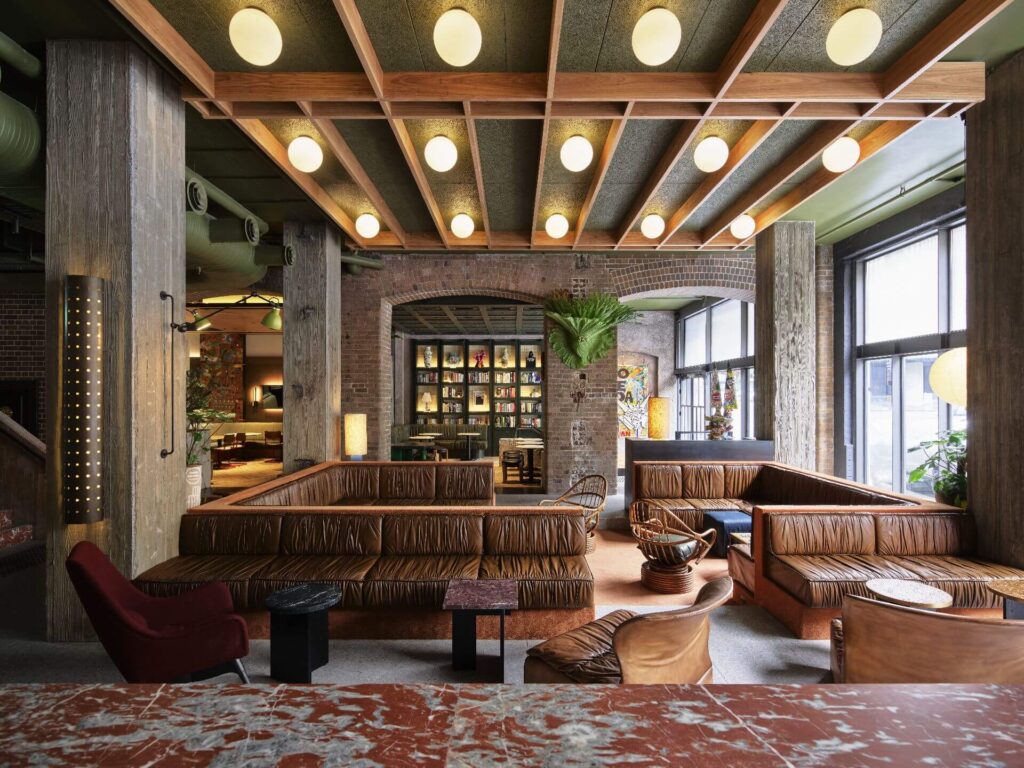
The lobby of ACE Hotel Sydney

The 2023 HD Award Finalists and Winners

As one would expect, the finalists and winners of the 2023 Hospitality Design Awards are a stunning collection of brands from which operators should pull inspiration.

Anyone looking for cutting-edge hospitality design would do well to look into each of the winners and finalists below.

The full list of award finalists and winners, and the architecture, interior design, and purchasing firms (along with owners and operators) can be found on the Hospitality Design website. Just click this link for the full details.

For our past coverage of the HD Expo, please click here.

Lifestyle Hotel

Winner

Ace Hotel Sydney (Sydney, New South Wales, Australia)

  • Architecture Firm: Bates Smart, Melbourne
  • Interior Design Firm: Flack Studio (hotel), Melbourne
  • Owner: Golden Age Group
  • Operator: Ace Hotel Group
  • Purchasing Firm: Marques Interior Services

Finalists

Canoe Place Inn & Cottages (Hampton Bays, New York)

Our Habitas San Miguel (San Miguel de Allende, Guanajuato, Mexico)

Sisan·Shuanglang Hotel (DaLi, YunNan, China)

Fan Woods Hotel (Zhangjiakou City, Hebei Province, China)

Lifestyle Hotel Public Space

Winner

The Tampa EDITION

  • Architecture and Interior Design Firms: Morris Adjmi Architects, and ISC Design Studio, New York
  • Owner: Strategic Property Partners
  • Operator: Marriott International
  • Purchasing Firm: The Parker Company

Finalists

Ace Hotel Sydney (Sydney, New South Wales, Australia)

The Standard (Hua Hin, Thailand)

Luxury Hotel

Winner

The Londoner (London, England) United Kingdom)

  • Architecture Firm: Woods Bagot, London
  • Interior Design Firm: Yabu Pushelberg, New York and Toronto
  • Owner and Operator: Edwardian Hotels London

Finalists

Wildflower Farms, Auberge Resorts Collection (Gardiner, New York)

Kimpton Bamboo Grove Suzhou (Suzhou, Jiangsu, China)

Luxury Hotel Public Space

Winner

The Madrona (Healdsburg, California)

  • Architecture Firm: Strening Architects, Santa Rosa, California
  • Interior Design Firm: Jay Jeffers, San Francisco
  • Owners: Jay Jeffers, Kyle Jeffers, and investors
  • Operator: Mosaic Hotel Group
  • Purchasing Firm: Summa International

Finalists

The Madrid EDITION (Madrid, Spain)

Pillows Maurits at the Park (Amsterdam, Netherlands)

Wildflower Farms, Auberge Resorts Collection (Gardiner, New York)

Click here for the full list of finalists and winners.

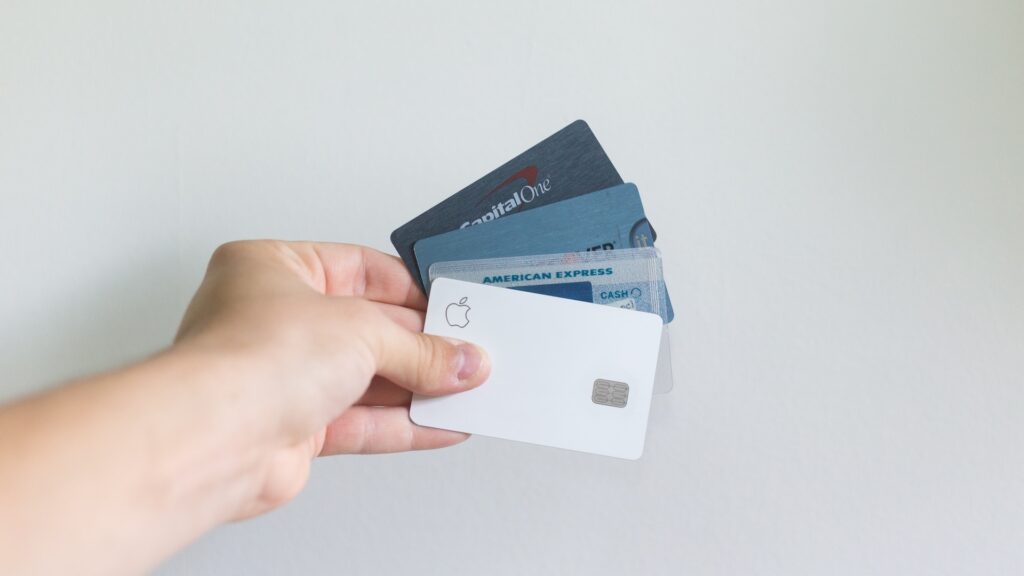
Hand holding several credit cards

Credit Card Competition Act, Take Three

Here we go again: Bipartisan lawmakers in the House and Senate are taking another shot at the Credit Card Competition Act.

After the incredibly underwhelming progress of the Credit Card Competition Act of 2022, lawmakers are making another move. Now, a bipartisan effort is coalescing around the Credit Card Competition Act of…2023.

The “new” bill was introduced on June 7. On the Senate side, Senators Dick Durbin (D-IL) and Roger Marshall (R-KS) are trying to push the bill forward. In the House, Representatives Lance Gooden (R-TX) and Zoe Lofgren (D-CA) are driving the effort.

Roughly eight months ago it was revealed that 1,802 merchants drafted, signed, and sent a letter to the House and Senate. To summarize quickly, the merchants were pushing for the bill to become law. Another supporter of the CCCA? The National Restaurant Association, claiming that the bill could save merchants $11 billion a year in fees.

Of course, a lot is going on since the introduction of the CCCA of 2022. For one, it’s being widely reported that House Republicans are “revolting,” blocking bills and effectively paralyzing the chamber. There’s also the matter of the second indictment of a former president.

However, reporters who know far more than I about the inner workings of Congress seem optimistic. While there’s drama in the lower chamber, there are articles circulating that seem to think the CCCA of 2023 has enough bipartisan support to pass.

Continue reading here.

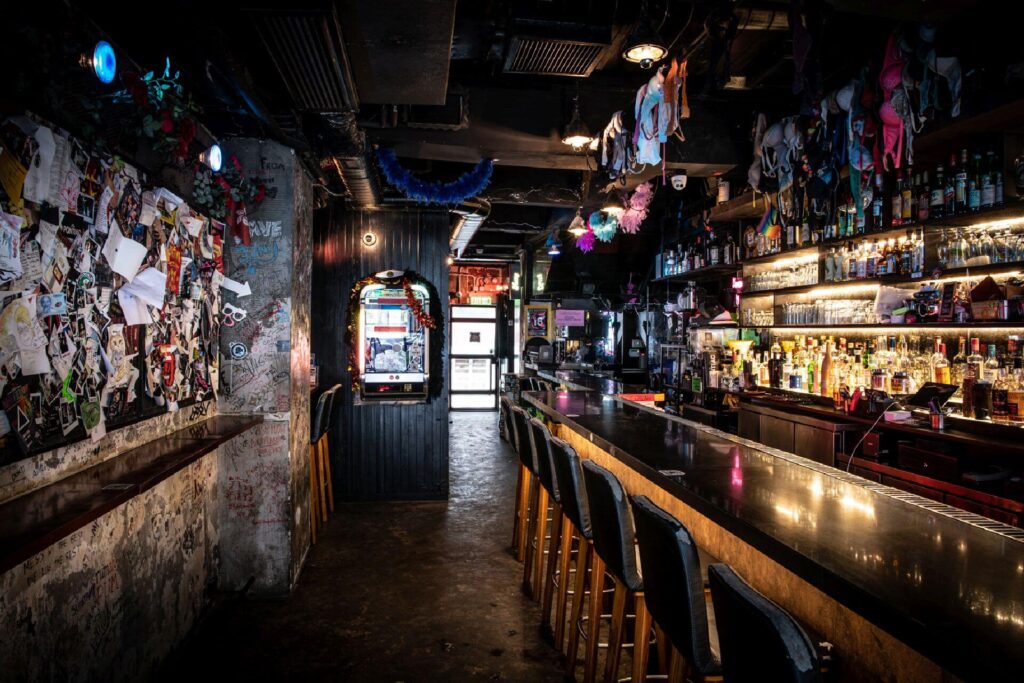
The Pontiac bar in Hong Kong

Asia’s 50 Best Bars 2023 Revealed: 51 to 100

One week from the ceremony revealing bars one through 50 of Asia’s 50 Best Bars, the World’s 50 Best Bars announces venues 51 to 100.

Sponsored by Perrier, the World’s 50 Best Bars will announce the top 50 bars in Asia on Tuesday, July 18. This year’s ceremony will take place in Hong Kong at 20:25 local time.

However, we now know which bars have earned placement on the back half of this year’s list. As Mark Sansom, director of content for the World’s 50 Best points out on episode 82 of Bar Hacks, an expansion for their lists is necessary. There are simply too many outstanding operators and teams to not honor an additional 50 venues.

To that end, the list below represents the third edition of Asia’s 50 Best Bars, 51 to 100. In my opinion, and I think the World’s 50 Best and bar professionals across the world agree, this list is every bit as prestigious as one through 50. Let’s not downplay the fact that these are 50 of the best bars in all of Asia. It’s no small feat to earn a spot on this list.

If you’re interested in finding more amazing venues throughout Asia (and around the world), click here to learn about the World’s 50 Best Discovery tool.

By the Numbers

As you’ll see below, Singapore dominates this year’s 51 to 100 list with eight bars. I expect Singapore pick up even more spots next week.

Japan boasts seven bars on the list, with Osaka, Okinawa, and Kumamoto making debuts. Hong Kong, Taiwan, and India each have claim five slots. Bangkok and Kuala Lumpur are also well represented with four bars each.

Vietnam and China each have three bars among this year’s 51 to 100. Two bars in Seoul, South Korea, earned placement as well.

However, it’s Kathmandu, Nepal, with two bars that stands out the most to me. Numbers 100 and 70 belong to Kathmandu, and are both new to the list.

To review the list on the World’s 50 Best website, please click here.

Keep reading here.

Image: Mediocre Studio on Unsplash

by David Klemt David Klemt No Comments

SevenRooms Unveils 3 Powerful New Tools

SevenRooms Unveils Three Powerful New Tools

by David Klemt

Booth seating inside a restaurant or bar

SevenRooms clients will have access to three new tools that will further enhance guest engagement, increase loyalty, and boost relationships with VIPs.

Each of these consumer-facing solutions is launching in time for the holiday season.

First up, 7R Priority Alerts. This tool helps operators manage their waitlists and generate revenue. We all know that even restaurants that require reservation fees end up with no-shows. Some platforms are capable of attempting to fill those available reservation slots. However, there’s not normally much control over who receives availability alerts.

Now, operators will have the power to target specific guests through automated reservation notifications. As 7R explains this tool, operators will be able to identify, label, and reward their most-valuable guests. These guests will feel like VIPs, increasing their loyalty, visits, and spends.

Then there’s Private Line. This is my favorite of the three new tools. Operators who implement this tool will be able to share an exclusive messaging line. So, a VIP such as a big spender, frequent diner, a member of the press, or an influencer can reach out to the team directly.

With Private Line, a VIP can inquire about a last-second reservation or make a special request. Again, this is the type of feature that increases loyalty and visit frequency.

Most people find new restaurants through friend, family, or coworker referrals. That got the 7R team thinking: How can restaurants reward people who refer new guests?

Enter: Word-of-Mouth Referrals, the third new tool on this list.

Pushed to guests via automated email marketing campaigns and post-visit surveys, a custom referral link is created for every diner. The guests then share that link, new guests make reservations, and the cycle continues. Operators, of course, reward guests for these referrals through any number of means, such as redeemable loyalty program points, comped F&B items, etc.

To learn more, please read the 7R press release about Priority Alerts, Private Line, and Word-of-Mouth Referrals below.

NEW GUEST-FACING SEVENROOMS FEATURES MAKE IT EASIER FOR OPERATORS TO REWARD LOYAL GUESTS AND PERSONALIZE COMMUNICATION

Priority Alerts, Private Line, and Word-of-Mouth Referrals redefine guest engagement and communication between restaurants and their most important guests

NEW YORK – SevenRooms, a guest experience and retention platform for the hospitality industry, today announced the launch of Priority Alerts, Private Line, and Word-of-Mouth Referrals, three new consumer-facing features that help operators connect with and reward their most loyal guests. With guests expecting more from their dining experiences than ever before, these solutions were purpose-built to solve real pain points for hospitality operators. These include alerting a specific diner about reservation availability, providing new ways for guests to get in touch and making it easier for guests to recommend their favorite restaurants to friends and family.

Priority Alerts helps operators control who they send automated reservation availability notifications to so they can prioritize their most valuable guests. In comparison to other reservation notification systems, restaurants choose who receives a Priority Alert first, not just deciding between a blast to their entire waitlist or to an exclusive subset of credit card holders. Instead, they can prioritize the guests that matter most to their business – whether that’s a VIP, loyalty member, frequent or recent diner, local, high spender, or someone else. This helps restaurants reward their most valuable guests to get them through their doors more often.

Private Line was created to give important guests an easier, faster way to get in touch with their favorite restaurants. With Private Line, restaurants can now offer their high-value guests – like VIPs, press, frequent diners and top spenders – an exclusive messaging line that can be used to instantly get in touch with their team. Whether a guest is looking for a last-minute reservation, has a special request, needs to add a friend to a booking or another ask, restaurants no longer miss out on opportunities to wow the guests that matter most. All conversations are centralized within the SevenRooms mobile app, making it easy for staff to book a table, add in requests or make other changes with just a few clicks.

Word-of-Mouth Referrals, the third consumer-facing feature launching with our fall release, gives restaurants the ability to motivate, track and reward loyal guests for referring new diners. According to recent data, 61 percent of diners discover new restaurants from friends, family and co-workers. Yet, without an easy way to capture this untapped demand, restaurants have historically left dollars on the table. Word-of-Mouth Referrals automatically creates personal referral links for every diner – shared through post-meal surveys and automated email campaigns – making it simple for guests to share with their networks and be rewarded with perks they’ll want to earn and use. Restaurants can tap into this high-value marketing channel for their business, rewarding loyalty and ensuring exceptional experiences for newcomers and regulars that translate into more sales and profits.

“At SevenRooms, our focus from day one has been on building innovations that help operators increase profitability, drive sales and improve the experiences of their guests. These three new features, all integrated into the SevenRooms platform, give operators new ways to connect and communicate with their guests – helping them evolve to meet the needs of guests who know what they want, how they want it, when they want it,” said Angela DeFranco, VP of Product at SevenRooms. “In an increasingly competitive landscape where consumers have more choice than ever before in where they choose to take their business, we’re dedicated to finding new ways for restaurants to connect and market more effectively to their guests with tools that not only make them more money, but help them execute on experiences that guests remember and recommend. Restaurant marketing is no longer one-size-fits-all, and we are redefining the role that technology can play in creating truly personalized guest engagement and marketing touchpoints at every stage of the guest journey.”

“The plan was to always move to SevenRooms because the technology was far superior, the potential for integration with our point of sale system was a lot stronger and owning the data was a huge deal,” said Kim McDiarmid, Partner at Liquid and Larder. “SevenRooms’ Priority Alerts has been a dream for us. Compared to our previous platform, it’s a lot more customizable and fully automated so it does the heavy lifting for us. We’re going to use it to give priority to guests who match criteria such as those who dine with us regularly, and with that, it will work even harder for us.”

For more details on SevenRooms’ newest innovations, please visit sevenrooms.com/new.

About SevenRooms

SevenRooms is a guest experience and retention platform that helps hospitality operators create exceptional experiences that drive revenue and repeat business. Trusted by thousands of hospitality operators around the world, SevenRooms powers tens of millions of guest experiences each month across both on- and off-premises. From neighborhood restaurants and bars to international, multi-concept hospitality groups, SevenRooms is transforming the industry by empowering operators to take back control of their businesses to build direct guest relationships, deliver exceptional experiences and drive more visits and orders, more often. The full suite of products includes reservation, waitlist and table management, online ordering, mobile order & pay, review aggregation, email marketing and marketing automation. Founded in 2011 and venture-backed by Amazon, Comcast Ventures, PSG and Highgate Ventures, SevenRooms has dining, hotel F&B, nightlife and entertainment clients globally, including: Marriott International, MGM Resorts International, Mandarin Oriental Hotel Group, Wynn Resorts, Jumeirah Group, Hard Rock Hotels & Resorts, Wolfgang Puck, Michael Mina, Bloomin’ Brands, José Andrés Group, Union Square Hospitality Group, Australian Venue Company, The Wolseley Hospitality Group, Dishoom, Live Nation and Topgolf. www.sevenrooms.com

Image: Carson Masterson on Unsplash

KRG Hospitality Start-Up Restaurant Bar Hotel Consulting Consultant Solutions Plans Services

by David Klemt David Klemt No Comments

Two New Review Platforms You Need to Know

Two New Review Platforms You Need to Know

by David Klemt

Person looking at restaurants on a map on their phone

Operators should be aware of two new review platforms that will help people discover their restaurant, bar, nightclub, or eatertainment venue.

At this point, we’re all aware of the mainstream review sites. Google, Yelp, OpenTable, Tripadvisor… Whether viewed as a helpful discovery tool or nuisance, each is a well-known player.

Well, there are new platforms on the scene. Importantly, each one is putting their own stamp on how people review venues and discover new experiences.

For example, I wrote about a new platform that rejects negative reviews a few weeks ago. It’s Good “believe[s] a restaurant rec from 1 trusted friend is more valuable than recs from 10,000 strangers.”

The founders, including Kevin Auerbach (former Apple), Meghan Raab (former Snap), director and photographer Mike Rosenthal, and songwriter and performer John Legend, have also eschewed the standard star rating.

So, that’s one modern-day take on the review platform. Now, two others.

Atmosfy

By now, most people are aware that video content outperforms static photography on social media. In other words, people engage more with video.

That’s not to say that static photography is obsolete. Rather, when it comes to discovery, video appears to be king at the moment.

Enter: Atmosfy.

This platform is all about video reviews. In fact, their website reads, “A video is worth a thousand pictures.” Restaurant, bar, nightlife, and eatertainment operators should see the value in users showing off their experiences via video.

In addition, users get access to a personal map. They can bookmark places they’ve been and want to go, and share their experiences so others can discover them.

And with $12 million in seed funding from Redpoint Ventures and other venture capital firms, operators can be certain this is no flash in the pan. In fact, Atmosfy supports in excess of one million businesses in over 10,000 cities in more than 150 countries.

Recs

First, the T-rex mascot of this platform is pretty cool.

Second, Recs takes a similar approach to It’s Good. However, the founders, Jesse Berns and Sean Conrad, have put their own spin on review platforms.

Like It’s Good, Recs sees far more value in recommendations from friends than strangers. Also, there’s no star rating system, nor will users find negative reviews.


View this post on Instagram


A post shared by Recs (@getrecs)

Another interesting detail: Users aren’t able to leave anonymous reviews. This is because Recs is built for recommendations among friends. Were a user to be anonymous, they wouldn’t be discoverable to friends, and therefore they’d be leaving recommendations to…nobody.

However, the most important element of Recs (arguably) is that users either recommend a place or they don’t.

So, in theory, if a business is blowing the guest experience, they won’t even be discoverable on Recs because nobody will be recommending it. At least to a specific core of users, that business won’t exist in their world on Recs.

As far as the Recs user experience, people save venues as “recommend” or “wanna go.” Users find their friends, share their lists, and discover new places to try by checking out their friends’ lists. A simple, straightforward way for people to eat, drink, and hang out together throughout a city.

Takeaway

Simply put, an operator needs to know how people are discovering their business. Operators need to meet guests where they are, which means online.

So, operators need to know about new platforms. When sending a post-visit surveyit doesn’t need to be lengthy—operators should ask how guests learned about their venue. This is one way to stay up to date on social media and review sites.

A comprehensive and effective marketing strategy includes review and discovery platforms. Certainly, operators ignore discovery tools at their peril.

Image: abillion on Unsplash

Bar Pub Brewery Nightclub Club Nightlife Brand Identity

by David Klemt David Klemt No Comments

New Review Platform Rejects Negativity

It’s Good: New Review Platform Rejects Negativity

by David Klemt

"Just be nice" sign on wall with graffiti

Combine equal parts incredible team of founders, love for food and travel, and respect for an expression that we should all adhere to more closely, and you get a new review platform.

The expression from which this team derives their platform’s ethos?

“If you don’t have something good to say, don’t say it at all.” But how can a review platform embody that age-old expression?

Well, it turns out that answer is rather simple: by refusing to allow negative reviews. That’s the foundation of how It’s Good plans to operate.

That is, of course, quite the departure from Yelp, Google Reviews, Tripadvisor, and other review platforms. In my experience, Yelp draws the ire of most operators. Obviously, it doesn’t help Yelp’s reputation among operators that people can review bomb a venue rather easily, among other issues.

On It’s Good, there’s no “star” ratings system. Negative comments? The platform is “not even built for” those, according to co-founder John Legend.

“Either you recommend [a place or experience] or you don’t,” says Legend, elaborating further on It’s Good.

The team of founders also includes Kevin Auerbach (who comes from Apple), Meghan Raab (from Snap), and director and photographer Mike Rosenthal.

With Auerbach and Raab guiding what is likely a top-notch engineering team, It’s Good should be simple and fun to use.

The User Experience

At the moment, It’s Good is an invite-only platform. According to articles online, Legend and Rosenthal have been working on the app for four years.

So, the initial idea is to lay the user foundation ahead of its public launch. Logical, since it would be challenging to sift through recommendations without a core user group populating the app first.

“Our mission is to be your go-to place for saving & sharing your most favorite places to eat and drink. Trustworthy recommendations for you, by you – from the people you know or admire, all in one beautiful space,” reads the waitlist confirmation email I received from Shirene Niksadat, It’s Good head of community.

Interestingly, one of the motivating factors behind this platform is Legend himself. Apparently, he’s a go-to source for recommendations amongst his friends.

“My friends always reach out to me for ‘my list’ of restaurants in the cities I’ve visited,” Legend is quoted as saying on the It’s Good website.

From what I can gather, the platform will allow people to find new restaurants, bars, and experiences via location-based and themed lists. I’m sure there’s more functionality, but the main takeaways are:

  • organized recommendations;
  • personalized recommendations from trusted sources and friends; and
  • recommendations that answer a simple question: Is this place or experience good?

“We believe a restaurant rec from 1 trusted friend is more valuable than recs from 10,000 strangers,” says the It’s Good site, right at the top.

That should give us all an idea of how this platform will operate, and what to expect when it goes live for the general public.

Obviously, I can’t provide a review of this review platform. But I can say that I’m looking forward to my opportunity to take it for a spin.

To get your name on the waitlist, click here.

Image: A A on Unsplash

KRG Hospitality Start-Up Restaurant Bar Hotel Consulting Consultant Solutions Plans Services

by David Klemt David Klemt No Comments

SevenRooms Reveals Revenue Management Tool

SevenRooms Reveals Revenue Management Tool

by David Klemt

Closeup view of buttons on vintage, antique cash register

Just when you think SevenRooms is done launching new solutions for the year they announce a new tool that will excite operators.

That new tool is Revenue Management. Much more than “just another” plugin, SevenRooms Revenue Management is an engine.

This new engine is feature-rich and automates a number important tasks. In fact, one feature in particular has our attention: the “do-it-for-me” function.

What does that feature give operators the power to accomplish while saving time and labor costs? Below are just a handful of benefits:

  • party size recommendations
  • dining duration configurations
  • decrease last-minute cancellations via cancellation policy implementation
  • floor plan configuration recommendations

Should this automation feature prove easy to understand and use, we can see that this latest tool may become the most popular among SevenRooms users.

To learn more about Revenue Management, scroll down to the latest SevenRooms press release.

Growth Recap

Let’s take a look at just some of the growth SevenRooms has achieved over the course of just the past few years.

  • March 2021: SevenRooms appoints Pamela Martinez as the company’s chief financial officer.
  • September 2021: SevenRooms announces a multi-year partnership with TheFork. The partnership is big news for operators throughout Europe and Australia. Further, the partnership illustrates how the company is pursuing global growth.
  • October of 2021: The company forms a partnership with Olo. This ensures clients who also use Olo are able to capture data from a key group: off-premise customers. That data creates profiles for such customers automatically. That means operators can learn more about—and effectively market to—customers who engage with them via online orders.
  • December 2021: SevenRooms and ThinkFoodGroup—the hospitality company behind Chef José Andrés’ portfolio of restaurants—make their partnership public. Interestingly, this partnership also includes ThinkFoodGroup joining SevenRooms in an advisory role.
  • January 2022: The platform announces the hiring of a chief revenue officer, Brent-Stig Kraus.
  • December 2022: SevenRooms enters into a partnership with Competitive Social Ventures.
  • January 2023: The company announces the appointment of their first-ever chief marketing officer.
  • March 2023: SevenRooms announces that Danny Meyer and EHI are investors in the platform. Following that announcement, SevenRooms launches Email Marketing Integration less than two weeks later.
  • May 2023: The company drops their Pre-Shift tool. Two weeks after that launch, SevenRooms announces a new global partnership with Marriott.

Most platforms launch a new solution or announce new partnerships once or twice per year. Not SevenRooms. And it’s this constant growth that encourages us to recommend the platform to our clients.

SEVENROOMS LAUNCHES REVENUE MANAGEMENT TO HELP OPERATORS INCREASE SALES & PROFITABILITY

Automated revenue management solution will provide restaurants with the tools they need to optimize their operations and fill more seats, more often

NEW YORK (September 28, 2023) – SevenRooms, a guest experience and retention platform for the hospitality industry, today announced the launch of a new solution for restaurants: Revenue Management. The product serves as an engine for operators to generate more sales and profitability from the same seats, using data science to recommend how to optimize availability and increase table utilization.

To survive current economic conditions, restaurants need solutions that can save them time, reduce their labor costs and increase their sales and profits. Inspired by effective revenue management strategies long-used by the travel industry, Revenue Management extends this practice to the restaurant industry. The product automates these processes without the need for analysts, additional staff or high-priced consultants to manage changes, helping to:

  • Fill more seats, more often to increase sales by reducing the time seats sit empty
  • Save time and reduce burdensome labor costs by automating in-depth analysis, quickly making changes with a ‘do-it-for-me’ option
  • Provide operators with easy-to-digest insights along with ready-to-use actions that demystify proven steps taken by revenue leaders

Other systems on the market today may offer reporting on a handful of insights, but none help operators immediately action revenue-focused suggestions with a ‘do-it-for-me’ option that has an instant impact on their operations. Sample actions include recommendations on party size or dining duration configurations, when to institute cancellation policies to decrease last-minute cancellations, floor plan configuration recommendations and more. Diners also benefit, with more available reservations, a better dining experience (e.g. being sat on time and not being rushed out the door) and more unique experiences and offerings to choose from when dining out as operators have more time to focus on the guest experience.

Notably, Revenue Management also gives operators insights into how much demand was missed across booking channels by summarizing data on recent reservation attempts. This helps operators better manage these channels and optimize their books to offer more reservations across their most profitable channels.

“With Revenue Management, we are delivering on our promise to help operators make more money, providing a product that automatically executes on strategies used by the most successful hospitality brands throughout the world – without having to add team members or search out implementation experts,” said Angela DeFranco, VP of Product at SevenRooms. “This tool is both proactive and reactive, helping operators uncover untapped opportunities while simultaneously working to identify potentially harmful configuration issues that may restrict venues from maximizing sales and profitability. Today’s operators are busier than ever, and we are excited to bring Revenue Management to hospitality operators, helping them automatically fill more seats, more often while continuing to elevate their guest experiences.”

For more details on SevenRooms’ newest innovations, please visit sevenrooms.com/new.

About SevenRooms

SevenRooms is a guest experience and retention platform that helps hospitality operators create exceptional experiences that drive revenue and repeat business. Trusted by thousands of hospitality operators around the world, SevenRooms powers tens of millions of guest experiences each month across both on- and off-premises. From neighborhood restaurants and bars to international, multi-concept hospitality groups, SevenRooms is transforming the industry by empowering operators to take back control of their businesses to build direct guest relationships, deliver exceptional experiences and drive more visits and orders, more often. The full suite of products includes reservation, waitlist and table management, online ordering, mobile order & pay, review aggregation, email marketing and marketing automation. Founded in 2011 and venture-backed by Amazon, Comcast Ventures, PSG and Highgate Ventures, SevenRooms has dining, hotel F&B, nightlife and entertainment clients globally, including: Marriott International, MGM Resorts International, Mandarin Oriental Hotel Group, Wynn Resorts, Jumeirah Group, Hard Rock Hotels & Resorts, Wolfgang Puck, Michael Mina, Bloomin’ Brands, José Andrés Group, Union Square Hospitality Group, Australian Venue Company, Altamarea Group, AELTC, The Wolseley Hospitality Group, Dishoom, Live Nation and Topgolf. www.sevenrooms.com

Image: Erik Mclean via Pexels

Bar Pub Brewery Nightclub Club Nightlife Technology Plan Tech Stack

by David Klemt David Klemt No Comments

Tech this Out: Rise of the Cobots

Tech this Out: Rise of the Cobots

by David Klemt

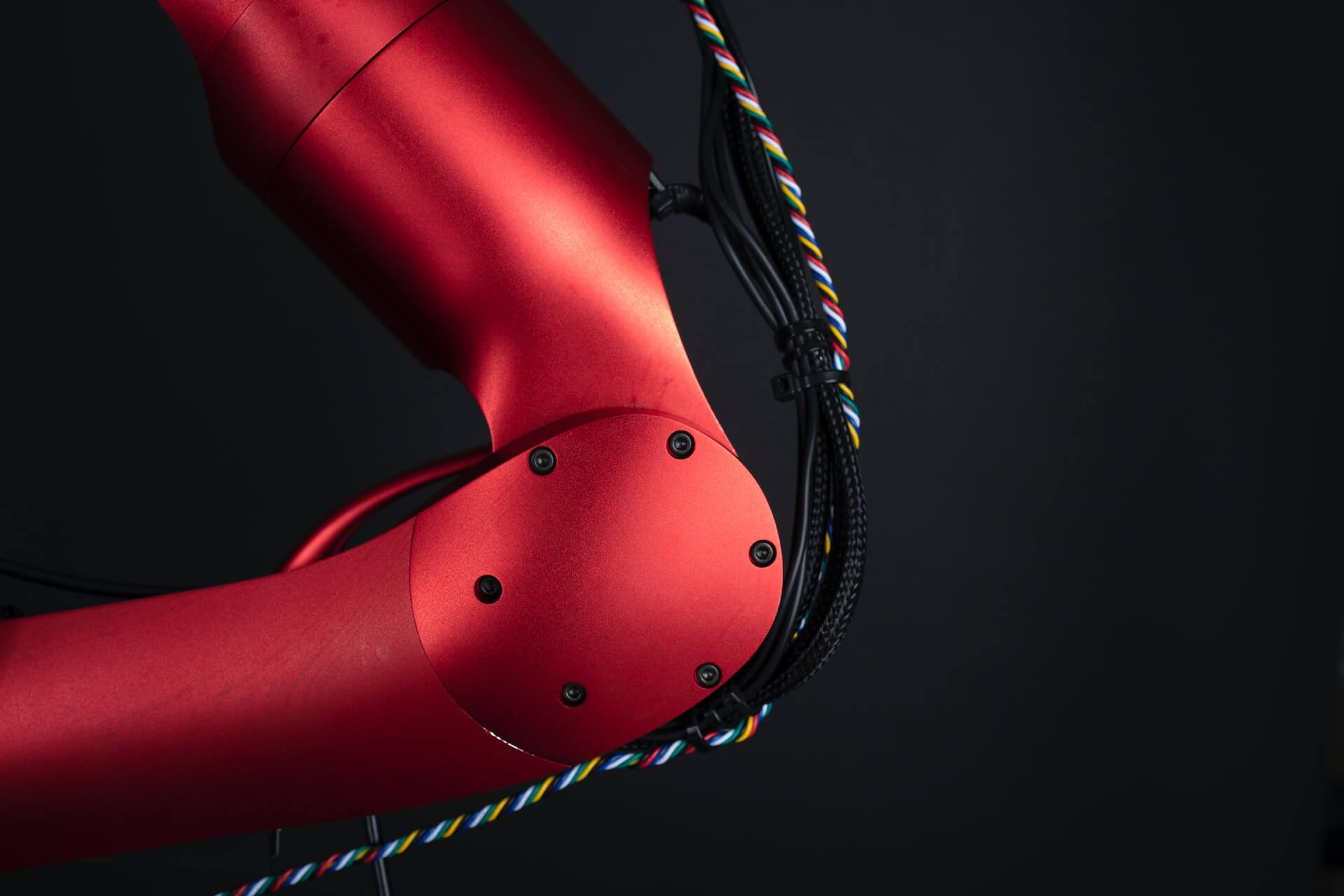
Red arm of a humanoid robot

As technological innovations continue to flood the hospitality industry, restaurant and hotel robots appear to be on the rise.

Or, perhaps more accurately, robotics companies appear to be targeting hospitality more.

There were, for example, far more robots on the National Restaurant Association Show floor this year. Beverage-making robots, server bots, room service delivery robots, lobby “host” and information bots, automated robot arms… There were robots in each hall.

Interestingly, however, a different word is beginning to take hold: “cobot.”

While the concept isn’t newcobots have been working in other industriesthe word is likely new to hospitality professionals.

Simply put, “cobot” is a portmanteau of “collaborative robot.” These are, therefore, robots that work alongside and with humans. In other words, the term implies that these robots aren’t here to replace people.

Rather, we’re to believe that cobots are just here to take over hazardous and tedious tasks.

Dropping fries? Let the cobot do it. Flipping patties? Why should a human do that when we have cobots? Food is up? Send out the serverbot. Table needs turning? The cobot can drop the dishes, flatware, and glassware to the dishwasher station.

It’s difficult for me to not be skeptical. “Cobot” may aim to imply collaboration, but how long until most of the back of house is automated? How long until members of the kitchen team go from “freed up” to replaced fully?

On the flip side, however, I do see the appeal. Some tasks are tedious. There are hazardous tasks. Labor costs are too high. It is difficult to find and retain talent.

Cobots and other forms of automation offer viable solutions.

Cobots, Roll Out!

So, are these pie-in-the-sky vanity prototypes getting media attention? Or are there really cobots available?

If you have the money and the inclination, these robots aren’t vaporware. There are robots designed to take on several restaurant and hotel tasks that can work at your venue today.

Of course, you have to keep your back-of-house and front-of-house footprint and layout in mind. Perhaps more importantly, you also need to understand how your guests feel about technology, automation, and robots.

I don’t mean making assumptions, either. No, not every Millennial or member of Gen Z is tech-hungry. In fact, some are tech-averse and don’t want robots making or delivering their food. It’s not, as some would say, a vibe.

This is to say, the decision to bring cobots into your business isn’t just about cost. This robots will affect your bottom line in various ways, affect your team, and affect the guest experience. In turn, that means they affect your brand.

Of course, cobots and automation do work with some concepts and brands. If automation and tech-savviness are part of the brand, cobots should work.

However, it’s wise to proceed cautiously and intentionally.

Guidance, Information and Entertainment

SoftBank Robotics manufactures Pepper, a robot my friends and I have interacted with in Las Vegas.

Formerly the Mandarin Oriental Las Vegas, we’ve played around with Pepper at the Waldorf Astoria over the years. Pepper has offered to help us check in, provide information about the hotel, told us jokes, and played music and danced with us. (It’s possible we’ve danced with Pepper after visiting the hotel’s Moët & Chandon vending machine.)

Another interactive robot is Guiderbot G2, also known as Peanut, by Keenon Robotics. I’ve interacted with Peanut at the 2023 NRA Show in Chicago and this year’s Hospitality Show in Las Vegas. Peanut is, for lack of a better word, cute and people seem to want to engage with it.

As one may guess from the formal name of Guiderbot, Peanut is tasked with a mission similar to Pepper’s.

Delivery and Bussing

I also “met” Keenon’s Butlerbot W3, Peanut’s room service delivering peer. Interestingly, the four doors can be configured to best deliver to a guest or guests.

Then there are the Dinerbots, a series of Keenon robots that can “work” at restaurants and drop orders off at tables.

Spend any amount of time on most hospitality trade show floors and you’ll encounter front-of-house delivery cobots. And, of course, these robots can be used to clear tables and pop by the dishwashing station.

Production

Most operators, when thinking about automation, are likely familiar with Flippy, Flippy 2, and Flippy Lite.

From Miso Robotics, this family of robots features robot arms that tend to fryers. That a Flippy can handle just about any fried food and fit in most kitchens without much modification (if any) makes these cobots attractive.

From what I’m seeing, robotic arms are the cobots du jour. Along with Flippy there are the Intelligent French Fry Robotic Solution from Atosa; FryBot from Lab2Fab; and the Wingman from Nala Robotics. And that’s just a few of the cobot arms out there.

Of similar design are a variety of automated beverage-producing robots. At the moment, these tend to be robotic arms contained within a trailer or kiosk that are capable of quickly serving personalized coffees. One impressive example is Robojo by Zink.

There are also automated make lines, such as the Robochef SmartLine and TechMagic P-Robo.

We don’t know how long it will be until robots are commonplace in restaurants. For now, they seem to be at home mostly in a select few chain restaurants, niche operations in destination markets, and hotels.

However, as we all know, as tech goes from early adoption to ubiquity, cost becomes less of a barrier of entry. My concerns, for now, are the risks to people’s jobs and the impact on the guest experience.

Image: Mathew Schwartz on Unsplash

KRG Hospitality tech stack consulting. Tech. Technology. CRM. POS. Restaurant. Bar. Cafe. Lounge. Hotel. Resort.

by David Klemt David Klemt No Comments

We Ask ChatGPT to Write Marketing Plans

We Ask ChatGPT to Write Marketing Plans

by David Klemt

3D render of ChatGPT logo

The hype surrounding artificial intelligence and chatbots in general, and ChatGPT in particular, is still going strong and likely won’t slow any time soon.

Of course, the hype focuses on the capabilities of various AI platforms. So far, the promise is that chatbots and other forms of AI will make our lives easier. They’ll perform “mundane” tasks that bog down humans so that we can center our attention on higher-level functions.

Unfortunately, many companies enamored already with the current capabilities aren’t giving all their employees more complex or creative tasks. Instead, they’re automating what they can—putting their faith in nascent technology—and firing humans.

We’ve played around with ChatGPT before. We’ve also spoken with Bing and Bard. And so far the results have always been…less than impressive, shall I say.

What they’ve produced for us as far as food and drink menus is mediocre, at best. Other interactions have resulted in our request being denied.

So, that got me thinking. Maybe these chatbots can’t secure potential guests reservations or waitlist spots (at least not without significant manipulation). And perhaps the menus it writes are far too basic. Are they able to replace the human element and give us not just advice but an entire marketing plan?

Well, you’ll find out below.

Can you create a marketing plan for an upscale restaurant in Toronto, Ontario, Canada?

Marketing Plan for an Upscale Restaurant in Toronto, Ontario, Canada

  1. Define Your Target Market: Identify your target audience for the upscale restaurant. Consider factors such as demographics (age, income level, occupation), psychographics (lifestyle, interests), and dining preferences. For example, your target market could be affluent professionals, food enthusiasts, or tourists seeking a high-end dining experience.
  2. Develop a Unique Selling Proposition (USP): Determine what sets your upscale restaurant apart from the competition. It could be a unique menu concept, exceptional service, a specific cuisine, or a breathtaking ambiance. Your USP should be compelling and communicate the value customers will receive by choosing your restaurant.
  3. Branding and Positioning: Create a strong brand identity that resonates with your target market. Develop a logo, color palette, and visual elements that convey the upscale and sophisticated nature of your restaurant. Craft a positioning statement that highlights your USP and appeals to the desires and aspirations of your target audience.
  4. Online Presence: Build a professional website that showcases your restaurant’s ambiance, menu offerings, and reservation options. Optimize the website for search engines to increase online visibility. Leverage social media platforms such as Instagram and Facebook to share captivating visuals, engage with customers, and promote special offers or events.
  5. Local Search Optimization: Ensure your restaurant appears in local search results by optimizing your Google My Business profile and other online directories. Encourage customers to leave positive reviews to enhance your restaurant’s reputation and credibility.
  6. Content Marketing: Create valuable content related to the restaurant industry, culinary trends, and fine dining experiences. Develop a blog or share articles on your website to establish your restaurant as a thought leader. Utilize email marketing campaigns to stay connected with customers, share updates, and offer exclusive promotions.
  7. Influencer Partnerships: Collaborate with local influencers, food bloggers, and social media personalities who align with your restaurant’s brand. Invite them for exclusive tastings or events to generate buzz and increase exposure. Encourage them to share their experiences and recommendations with their followers.
  8. Strategic Partnerships: Forge partnerships with complementary businesses in the area, such as luxury hotels, theaters, or art galleries. Explore cross-promotion opportunities, joint events, or special packages to attract their clientele and expand your reach.
  9. Event Marketing: Host unique events, such as wine tastings, chef collaborations, or themed evenings, to attract new customers and provide memorable experiences. Promote these events through your website, social media channels, and local event listings to generate excitement and drive reservations.
  10. Customer Loyalty Program: Implement a customer loyalty program to incentivize repeat visits and referrals. Offer exclusive perks, personalized offers, or a points-based system to reward loyal patrons and encourage them to bring friends and family.
  11. Community Involvement: Engage with the local community by participating in charity events, sponsoring local initiatives, or collaborating with neighboring businesses. This involvement fosters goodwill, enhances brand reputation, and builds a loyal customer base.
  12. Monitor and Measure: Continuously monitor the performance of your marketing efforts using key metrics such as website traffic, reservation rates, customer feedback, and social media engagement. Use this data to refine your strategies and optimize your marketing campaigns.

Remember, an effective marketing plan is adaptable and should evolve based on market trends, customer feedback, and business goals. Regularly assess and adjust your strategies to ensure your upscale restaurant maintains a competitive edge and remains top-of-mind among discerning diners in Toronto.

Can you write a social media marketing plan for a neighborhood bar in Vancouver, British Columbia, Canada?

Social Media Marketing Plan for a Neighborhood Bar in Vancouver, British Columbia, Canada

  1. Define Your Social Media Goals: Identify the specific goals you want to achieve through social media, such as increasing brand awareness, driving foot traffic, promoting events or specials, and fostering customer engagement and loyalty.
  2. Identify Target Audience: Determine the demographics and interests of your target audience. For a neighborhood bar, this may include locals, young professionals, college students, and individuals interested in nightlife and community gatherings.
  3. Choose Social Media Platforms: Select social media platforms that align with your target audience and business objectives. Consider platforms like Instagram, Facebook, Twitter, and LinkedIn, based on their popularity and relevance to your target market.
  4. Content Strategy: Develop a content strategy that showcases the unique aspects of your neighborhood bar. Mix promotional content, such as happy hour deals or event announcements, with engaging and shareable content, such as behind-the-scenes glimpses, customer spotlights, or cocktail recipes. Encourage user-generated content by running contests or featuring customer photos and experiences.
  5. Visual Branding: Create a consistent visual identity across your social media profiles. Use high-quality, eye-catching images and videos that reflect the ambiance, drinks, and overall vibe of your bar. Incorporate your logo and brand colors to enhance recognition and reinforce brand identity.
  6. Engage with Followers: Regularly monitor and respond to comments, messages, and reviews on your social media platforms. Engage with followers by asking questions, running polls, and sparking conversations. Show appreciation for positive feedback and address any concerns promptly and professionally.
  7. Local Influencers and Collaborations: Partner with local influencers, bloggers, or popular accounts to promote your bar. Invite them for tastings or to host events at your venue. Their endorsement can help increase visibility, attract new patrons, and create buzz among the local community.
  8. Promote Special Events and Offers: Leverage social media to promote special events, live music performances, themed nights, and limited-time offers. Create event pages, share event details, and encourage followers to RSVP and share with their friends. Consider partnering with local artists, musicians, or charities to enhance community engagement.
  9. User-Generated Content and Reviews: Encourage customers to share their experiences at your bar by creating branded hashtags, running photo contests, or offering incentives for leaving reviews. Repost and share user-generated content to showcase the lively and welcoming atmosphere of your neighborhood bar.
  10. Social Media Advertising: Consider allocating a portion of your marketing budget to targeted social media advertising. Utilize the platforms’ advertising tools to reach a wider audience, promote specific events or offerings, and drive traffic to your bar. Experiment with different ad formats, such as carousel ads or video ads, to maximize engagement.
  11. Social Media Management Tools: Utilize social media management tools, such as Hootsuite or Buffer, to schedule posts, monitor analytics, and streamline your social media efforts. These tools can help you maintain a consistent posting schedule and track the effectiveness of your social media campaigns.
  12. Measure and Adjust: Regularly monitor key performance indicators (KPIs) such as follower growth, engagement rate, reach, and conversions. Analyze the data to assess the effectiveness of your social media efforts and make informed decisions on adjustments to your strategy. Experiment with different content types, posting times, and promotional strategies based on the insights gained.

By implementing this social media marketing plan, you can effectively engage with your local audience, increase brand awareness, and foster a sense of community around your neighborhood bar in Vancouver.

Takeaway

Perhaps programmers and engineers can squeeze more in-depth results out of AI-powered chatbots. That tells me that these platforms aren’t quite ready for the average person.

Speaking plainly, the ChatGPT results above are underwhelming. In part, this is because any operator who attends an industry trade show and sits in on a marketing session will walk away with similar information. More importantly, they’ll take home at least a nugget or two of higher-level advice they can implement immediately.

The same can be said for anyone following a marketing account on Instagram: they’re sharing high-level tips at this point.

When we look at what ChatGPT suggests, it’s surface-level at best. Crucially, it’s too general to really be effective. The what may be there, but not the how to achieve consistent results. Moreover, would you, as a client, want to pay a consulting or marketing agency for an AI-generated marketing plan? Wouldn’t you expect an effective, impactful plan created specifically for your concept?

Artificial intelligence can be impressive. The technology has the capability to wow. But creating at a level equal to or above the human element? It’s just not there, in my opinion.

Automating the scheduling of human-generated social media and email marketing posts? Effective. Asking chatbots to generate those assets? Proceed with caution.

Image: ilgmyzin on Unsplash

KRG Hospitality tech stack consulting. Tech. Technology. CRM. POS. Restaurant. Bar. Cafe. Lounge. Hotel. Resort.

by David Klemt David Klemt No Comments

Why You Need to Use Direct Bookings

Why You Need to Use Direct Bookings

by David Klemt

White "Reserved" sign in wooden block on table

A new report from guest retention platform SevenRooms shows that like delivery, guests prefer to support restaurants directly when it comes to reservations.

Similar to their awareness of third-party delivery platform fees, today’s guest appears to be aware that third-party marketplaces cost restaurants and bars too much.

Let’s consider the guest discovery journey. According to their 2023 Dining Discovery & Booking Report, SevenRooms says most guests discover new restaurants via word of mouth. In fact, 61 percent of people rely on family, friends, and co-workers to find new restaurants. A third of diners use Google (33 percent), and nearly as many use social media (29 percent).

So, what role do third-party marketplaces play in restaurant and bar discovery? Per SevenRooms, not even ten percent of people who discover new places to grab a bite or a drink use such platforms.

Their research shows that just nine percent of diners use OpenTable to find new restaurants. However, that’s three times the number of diners that Resy (three percent) is seeing use their platform for discovery.

Okay, so what does this mean to you, the operator? It means that you should be leveraging a direct-booking feature. Guests are telling us how they want to experience restaurants and bars. They’ve let us know they prefer direct delivery. Now, they’re letting us know they prefer direct booking.

In other words, give them what they want: user-friendly ways to support your business. Make it easy to find you on social. Ensure your website is functional and easy to navigate. And give delivery and booking buttons prime real estate on your website so guests can find them quickly.

I also recommend communicating that you offer direct bookings, and thanking those who use that functionality for supporting your business directly. This can, of course, be done via automated marketing emails.

For more information—including how many diners call restaurants directly to make reservations—please read the SevenRooms press release below. You can also download their latest report here.

SEVENROOMS CONSUMER DATA UNVEILS HOW GUESTS ARE DISCOVERING AND BOOKING RESTAURANTS

Leading guest experience and retention platform highlights consumer expectations for discovering new restaurants and making reservations

NEW YORK (June 7, 2023) – SevenRooms, a guest experience and retention platform for the hospitality industry, released its latest consumer report, “2023 Dining Discovery & Booking Report,” highlighting how guests discover new restaurants and book reservations. One thing is clear – diners are utilizing many channels for discovery – from word of mouth to a variety of online channels. Nearly two-thirds (61%) of diners hear about or discover new restaurants from friends, family and co-workers, followed by 33% using Google, 29% searching social media for restaurant profiles and 22% discovering through social media influencers or trusted sources. Only a small percentage use third-party platforms such as OpenTable (9%) and Resy (3%) to discover new restaurants.

“Coming out of the pandemic, operators are navigating an entirely new landscape which includes how diners are discovering and booking reservations,” said Joel Montaniel, CEO & Co-Founder of SevenRooms. “In this new world three things are clear: being everywhere diners are online is table stakes, diners prefer to book directly as opposed to using a third-party app, and while third-party apps are still important, Google is quickly becoming one of the preferred destinations for diners when they don’t go direct to the restaurant.”

Defining today’s restaurant guest

In the United States, today’s guests expect more than just a meal, and creating opportunities to build loyalty will set restaurants apart. Each experience can turn a one-time diner into a loyal guest – but it must include personalized touches from start to finish. It is critical for operators to own their data to create a relationship with each guest based on preferences, past visits and upcoming special occasions noted when booking direct. By building this relationship, operators are able to be more proactive with their guests, personalize dining experiences and use the data they collect to curate experiences that will ultimately drive more revenue.

The beauty of a direct booking platform is the ability to capture that data; for example, asking the guest when they are booking if they are celebrating anything special, or noting dietary preferences. Guests are also willing to make that extra step to make sure they have an excellent experience – nearly half (45%) of diners will call the restaurant directly to book a reservation, and 35% will book through the restaurant’s website. Twenty-nine percent of diners also say that they receive better experiences at the restaurant when they book direct, and more than 1 in 4 (27%) feel restaurants prioritize their reservation when doing so. 

Similar to how today’s diners are catching on to the experiential benefits of booking direct, they are also realizing that third-party platforms are not actually in the best interest of the restaurant. Sixty-one percent believe that making reservations directly with the restaurant, rather than with a third-party reservation platform, is better for the restaurant. Additionally:

  • 29% of respondents want to do all they can to directly support restaurants
  • 17% of respondents noted that third-party reservation platforms charge too much in fees to the restaurant, and guests would rather not have the restaurant incur that cost

“As the expectation for incredible experiences grows, third-party reservation platforms are losing market share as diners prefer to book directly with restaurants to ensure they get the best experience,” said Montaniel. “SevenRooms has always been dedicated and focused on empowering operators to deliver the most personalized guest experiences. Our omnichannel approach, enabling restaurants to meet guests wherever they are, whether through global discovery and booking channels or a restaurant’s own website, helps operators serve diners in this new world while helping them operate more sustainable and profitable businesses.

To learn more about SevenRooms, please visit www.sevenrooms.com.

About SevenRooms

SevenRooms is a guest experience and retention platform that helps hospitality operators create exceptional experiences that drive revenue and repeat business. Trusted by thousands of hospitality operators around the world, SevenRooms powers tens of millions of guest experiences each month across both on- and off-premises. From neighborhood restaurants and bars to international, multi-concept hospitality groups, SevenRooms is transforming the industry by empowering operators to take back control of their businesses to build direct guest relationships, deliver exceptional experiences and drive more visits and orders, more often. The full suite of products includes reservation, waitlist and table management, online ordering, mobile order & pay, review aggregation, email marketing and marketing automation. Founded in 2011 and venture-backed by Amazon, Comcast Ventures, PSG and Highgate Ventures, SevenRooms has dining, hotel F&B, nightlife and entertainment clients globally, including: MGM Resorts International, Mandarin Oriental Hotel Group, The Cosmopolitan of Las Vegas, Wynn Resorts, Jumeirah Group, Hard Rock Hotels & Resorts, Wolfgang Puck, Michael Mina, Bloomin’ Brands, Giordano’s, Australian Venue Company, Altamarea Group, AELTC, The Wolseley Hospitality Group, Dishoom, Live Nation and Topgolf.  www.sevenrooms.com

Image: Алексей Вечерин on Pexels

KRG Hospitality. Restaurant Business Plan. Feasibility Study. Concept. Branding. Consultant. Start-Up.

by David Klemt David Klemt No Comments

Your Discovery Strategy Needs to Change

Your Discovery Strategy Needs to Change

by David Klemt

Black and white photo of person using laptop

A report by guest retention, reservation, and waitlist platform SevenRooms reveals that restaurant discovery is changing.

Per SevenRooms, many operators have looked toward third-party marketplaces to help people discover their restaurants, bars, or hotels. For context, online marketplaces include OpenTable, Resy, and GrubHub.

However, SevenRooms research is indicating a significant slowdown in this method of discovery. Per the platform, just a quarter of consumers still use marketplaces to find restaurants and bars.

So, how are people discovering the places where they want to spend their time and money on food and drinks? And how can you ensure your marketing and discovery strategy evolves alongside today’s consumer behavior? You’ll find out below.

For your own copy of Restaurant Discovery Has Changed: Adapt or Risk Becoming Obsolete by SevenRooms, click here.

Where are Your Guests?

It should come as no surprise that today’s consumer favors social media, influencers, Google, and even artificial intelligence for discovery.

Younger consumers in particular are more likely to discover a new restaurant, bar or hotel via social media.

Per SevenRooms, Gen Z:

  • is twice as likely as other generations to find a new restaurant via Instagram;
  • five times as likely to discover new restaurants on TikTok; and
  • is likely to visit a new restaurant due to an influencer recommending it.

In fact, 39 percent of consumers designated Gen Z have gone to a restaurant because an influencer has gone there.

When conducting this type of research, SevenRooms often works with YouGov. They did so again for their restaurant discovery report, commissioning YouGov to poll 1,185 consumers. Participants indicated they use the following methods or platforms to discover new places to dine and drink:

  • Google (27%)
  • Restaurant’s website (25%)
  • Referral (friends or family) (18%)
  • Facebook (12%)
  • Yelp (11%)
  • OpenTable (9%)
  • Instagram (8%)
  • TikTok (5%)
  • TripAdvisor (4%)
  • Resy (1%)

Three things jump out here: Organic search is crucial, websites still matter, and delivering top-notch service is paramount for word-of-mouth marketing.

Leverage Multiple Channels

If the data is accurate, operators who are relying exclusively or heavily on third-party marketplaces for discovery will be left behind. Instead, operators should seek to implement a multi- or omni-channel strategy.

What does omni-channel mean? In very simple terms, it’s not putting all of one’s eggs in one basket. Check out this article where I dive into omni-channel marketing and tactics for more information.

For their report, SevenRooms breaks omni-channel marketing and discovery thusly:

  • Owned reservation, waitlist, and ordering channels
  • Search and social engagment channels
  • Paid channels

It’s clear what SevenRooms is suggesting here: operators must adapt and meet guests where they are. Guests are relying on Google, a restaurant’s website, and social media for discovery.

The example that the platform gives in their report goes like this:

  • A consumer uses Google and finds a restaurant’s listing.
  • Next, they see a Facebook ad for that restaurant.
  • Finally, they decide to go to the restaurant’s website to learn more.

To that, I’ll add that some guests, those who prefer to order delivery, now seek an ordering widget. It’s wise, therefore, for operators to at least look into how they can implement direct delivery.

The Omni-channel Path

SevenRooms recommends a five-prong omni-channel strategy. Broken down into large chunks, the platform suggests:

  • Google integration;
  • social media engagement;
  • leveraging third-party marketplaces (with caveats);
  • owning direct channels; and
  • direct booking.

Again, this SevenRooms report can be downloaded here. However, I’ll share some details of this SevenRooms approach to discovery below.

Google Integration

SevenRooms isn’t the only one to say this: operators need to own and optimize their Google listing. In fact, they need to own all their listings, which I’ve said for years.

Owning listings boosts discoverability in several ways: SEO optimization, leveraging “near me” search functions, and ensuring guests are receiving accurate information before visiting.

Going further, operators who have marketing budgets can leverage Google ads. According to SevenRooms, Google search ads are also beneficial for becoming discoverable via third-party marketplaces.

Social Media

We’re fast approaching the day when at least half of consumers try a new restaurant or bar because they discovered it on social media. Right now, we’re at 45 percent of consumers finding new restaurants via these channels.

SevenRooms recommends having a presence on at least these channels: TikTok, Facebook, and Instagram. What’s more, they suggest using a direct reservation page and linking it to a “Reserve Now” button on a venue’s social profiles.

If an operator has the budget, they can pay for influencers to visit and talk about their restaurant, bar or hotel. However, this type of marketing can be very expensive.

Third-party Marketplace

This “prong” in SevenRooms’ recommended omni-channel strategy isn’t for every operator. As stated above, it’s use is nuanced.

Who should use marketplaces? New venues or venues that find themselves struggling to drive traffic.

Who shouldn’t use marketplaces? Venues seeing consistently strong traffic, and those that perform well via organic search because they’ve done the work to establish their brand.

Direct Channels

To explain this element, I’ll share the following “journey map” from the SevenRooms report:

Own and optimize the Google My Business listing > Ensure the website is user-friendly > Make sure there’s a reservation widget > Send a confirmation email when a guest has booked a reservation > Send a reminder SMS message > Nail the guest experience during their visit > Send a thank you email after the visit > Follow up with a personalized (keyword here) offer to encourage a repeat visit.

Remember, per Ovation CEO Zack Oates, 70 percent of first-time guests don’t come back. It’s more important than ever to invest in earning repeat visits.

Direct Booking

It’s arguable that this step is part of the overall discovery strategy, that it’s a four-prong plan, not five.

However, this step involves implementing its own strategy so that guests become aware of it. Put another way, some guests need to be taught that a restaurant or bar offers direct reservation booking.

For example, SevenRooms suggests printing menu inserts that let guests know they can book directly with the restaurant. Follow-up emails should also include a direct reservation link. Additionally, loyalty programs should encourage guests to book reservations directly.

Finally, here’s an excellent tip regarding direct booking: Operators can turn off listings or at least reduce reservation inventory on third-party marketplaces. This should be done during the busiest days and dayparts.

Operators need to make sure they keep up with shifting consumer behavior. The implementation of a modern discovery strategy is a crucial step toward long-term success.

Image: Sergey Zolkin on Unsplash

KRG Hospitality marketing support. Restaurant. Bar. Cafe. Lounge. Hotel. Resort.

by David Klemt David Klemt No Comments

SevenRooms and Marriott Partnership

SevenRooms and Marriott Reveal Global Partnership

by David Klemt

Restaurant staff member using SevenRooms on a tablet

Fresh from launching the innovative Pre-Shift pre-service tool, SevenRooms today announces the platform’s latest partnership.

The announcement, which you can read in its entirety below, shows the confidence that some of the most recognizable hospitality brands in the world have in SevenRooms capabilities.

Specifically, the platform is now a preferred restaurant technology provider throughout Marriott International‘s portfolio. In fact, Marriott is leveraging the SevenRooms suite of tech solutions at several of their brands in more than a dozen countries. This translates to over 8,500 properties using the platform’s powerful booking, relationship management, and marketing tools.

Among the brands utilizing SevenRooms tools are The Ritz-Carlton, JW Marriott, EDITION Hotels, The Luxury Collection, and W Hotels.

The latest news to come from SevenRooms again underscores the platform’s commitment to growth and longevity. After more than a decade in operation and service to hospitality operators, it’s safe to say the company has reached ubiquity.

You may not operate a hotel or operate within a hotel. You may not oversee a multi-unit or multi-concept business. This news should be no less important to you.

When developing your tech stack (a service KRG Hospitality provides) it’s important to choose platforms that are here to stay. Otherwise, your investments of time and money go up in smoke. Likewise, the disruption to operations and service as you seek a new platform are harmful to you, your team, and guests.

So, it can be wise to not just dig into the platforms you’re considering, it can be smart to see what companies trust them as partners.

SevenRooms is a platform that we’re comfortable recommending to many of our clients. And no, we’re not paid or otherwise compensated to do so.

To learn more about SevenRooms partnering with Marriott International, see below.

SEVENROOMS SELECTED AS A MARRIOTT INTERNATIONAL PREFERRED RESTAURANT TECHNOLOGY PROVIDER

The global technology platform will power personalized guest experiences to increase revenue while providing deeper guest insights for the global hospitality company 

NEW YORK (May 18, 2023) – SevenRooms, a guest experience and retention platform for the hospitality industry, today announced its agreement with Marriott International to become a preferred restaurant technology provider. SevenRooms is currently live across 25 countries at Marriott brands including W Hotels, The Ritz-Carlton, St. Regis, Sheraton, JW Marriott, Le Méridien, Westin, Marriott Hotels, Renaissance Hotels, EDITION Hotels, The Luxury Collection and Gaylord Hotels. This will unlock additional opportunities at the more than 8,500 Marriott International properties worldwide.

SevenRooms is a data-driven guest experience and retention platform focused 100% on building operator-focused tools. The platform offers solutions to global brands that not only increase revenue generation, but help them build long-term relationships with guests. 

For restaurants, bars, and other F&B outlets in Marriott-branded hotels, the SevenRooms platform offers a suite of tools to help drive incremental revenue, increase operational efficiencies, and offer exceptional guest experiences. Through SevenRooms’ Customer Relationship Management (CRM) and Marketing Automation capabilities, Marriott’s hotels are not only able to cultivate meaningful, direct relationships with guests, but access a 360-degree view into the guest journey to foster deeper guest loyalty.

“We’re thrilled to collaborate with Marriott International as a preferred restaurant technology provider, helping them deliver more personalized experiences for their guests around the world,” said Joel Montaniel, CEO & Co-Founder of SevenRooms. “Today, consumers expect more out of their F&B experiences whether they’re staying local or traveling abroad. They want to engage with hotels, restaurants and bars on their own terms, and are increasingly discovering and booking where to eat and drink across an array of channels. With SevenRooms, operators have access to tools that help them reach these guests while driving operational efficiencies by connecting F&B into their overall hotel strategy to generate revenue and increase profitability. Our suite of products not only helps operators of Marriott-branded hotels provide guests with exceptional experiences that enhance positive sentiment and drive increased loyalty, but enables them to do so at scale, automatically. We look forward to working with Marriott as we enable them with technology to build longer-lasting, more profitable relationships with their guests.”

Marriott International properties can now incorporate much of SevenRooms’ suite of tools and solutions, including Customer Relationship Management (CRM), on-premise table management, waitlist management, marketing automation, email marketing, order management and review aggregation. 

“Marriott’s hospitality roots began in restaurants, and we want to provide exceptional, unforgettable restaurant experiences for our guests,” said Matthew Von Ertfelda, Senior Vice President, Food & Beverage at Marriott International. “With SevenRooms, we’re not only able to provide guests with the experiences they crave, but we can leverage a robust suite of tools to help turn one-time guests into lifelong guests.”

To learn more about SevenRooms, please visit www.sevenrooms.com.

About SevenRooms

SevenRooms is a guest experience and retention platform that helps hospitality operators create exceptional experiences that drive revenue and repeat business. Trusted by thousands of hospitality operators around the world, SevenRooms powers tens of millions of guest experiences each month across both on- and off-premises. From neighborhood restaurants and bars to international, multi-concept hospitality groups, SevenRooms is transforming the industry by empowering operators to take back control of their businesses to build direct guest relationships, deliver exceptional experiences and drive more visits and orders, more often. The full suite of products includes reservation, waitlist and table management, online ordering, mobile order & pay, review aggregation, email marketing and marketing automation. Founded in 2011 and venture-backed by Amazon, Comcast Ventures, PSG and Highgate Ventures, SevenRooms has dining, hotel F&B, nightlife and entertainment clients globally, including: Marriott International, MGM Resorts International, Mandarin Oriental Hotel Group, The Cosmopolitan of Las Vegas, Wynn Resorts, Jumeirah Group, Hard Rock Hotels & Resorts, Wolfgang Puck, Michael Mina, Bloomin’ Brands, Giordano’s, Australian Venue Company, Altamarea Group, AELTC, The Wolseley Hospitality Group, Dishoom, Live Nation and Topgolf.  www.sevenrooms.com 

Image: SevenRooms

KRG Hospitality tech stack consulting. Tech. Technology. CRM. POS. Restaurant. Bar. Cafe. Lounge. Hotel. Resort.

by David Klemt David Klemt No Comments

SevenRooms Introduces New Tool: Pre-Shift

SevenRooms Introduces New Tool: Pre-Shift

Front of house staff member using SevenRooms

A new tool from SevenRooms will help operators and their teams make the most of pre-shift meetings to deliver exceptional service.

Aptly named, Pre-Shift provides a real-time, data-driven picture of a given shift’s reservations. Operators and their leadership team members will no longer need to hit the office, navigate to the day’s reservations, and print out guest data—assuming they have such valuable information.

Further, this new feature is accessible via the venue’s devices (tablets, phones, etc.). Pre-Shift, then, offers a real-time view of reservations and robust guest data. Well ahead of arrivals, staff will know a guest’s seating preference, relationship with the venue, reviews they’ve left, allergies, and much more.

Intriguingly, Spago has been testing Pre-Shift ahead of SevenRooms’ announcement and launch. Per Steve Scott Springer, the GM of Spago of Beverly Hills, this new tool is a game-changer for restaurants.

Less than two months ago, SevenRooms launched Email Marketing. It’s likely we can expect more new features to roll out throughout 2023.

To learn more, please review the Pre-Shift press release below.

SEVENROOMS’ PRE-SHIFT FEATURE EMPOWERS TEAMS TO STREAMLINE PRE-SERVICE OPERATIONS

New data-driven tool serves as a one-stop-shop for restaurant teams to enhance the guest experience and build guest loyalty

NEW YORK (May 3, 2023) – SevenRooms, a global guest experience and retention platform for the hospitality industry, today announced a new product feature, Pre-Shift, which provides operators with key shift details they can leverage to inform and lead pre-service meetings. Pre-Shift is built to power and simplify pre-service meetings for restaurant operators and their staff around the world.

The new feature provides operators a real-time, unified view of everything they need ahead of each shift and saves employees’ time with an out-of-the-box informational report. Instead of paper print-outs and laborious briefing forms, Pre-Shift allows teams to harness rich customer data with up-to-the-minute information on every guest joining during that shift.

With ongoing labor shortages, Pre-Shift is a crucial tool in helping operators save time on administrative tasks like pulling guest and reservation data to optimize a team’s pre-shift meeting ahead of service with all stakeholders. This allows operators and staff to instead focus on delivering exceptional, personalized experiences the moment that guest walks through the door. Operators have the ability to embrace new consumer expectations to provide an incredible guest journey from start to finish.

By incorporating this tool, staff can utilize SevenRooms’ rich guest data and Auto-Tags to educate themselves on incoming guests. The tool highlights valuable insights such as allergy information, dining preferences, previous experiences with the restaurant, and positive/negative reviews. It also provides a quick snapshot of that day’s notes on menu specials, private events or special requests, making it easy for staff to reference back to quickly throughout the course of service. Whether it’s the maître d, host, server or back of house employees, Pre-Shift enables all staff with the information they need to deliver exceptional service, build guest loyalty, and keep up with diner expectations as they continue to evolve.

Pre-Shift helps restaurants deliver personalized hospitality at scale with invisible technology. Guest and reservation data can be accessed on the fly without double clicks or additional navigation via iPhone and iPads for the utmost convenience. No other reservation management product on the market today offers such a robust overview with automated guest data incorporated into its dashboard, saving operators time as they set up for service.

“The magic of SevenRooms is in the way that we’re able to serve up relevant guest information to restaurants at key points of service. Our new Pre-shift view takes that magic one step further by strategically aggregating the most important guest insights before service even begins,” said Allison Page, Co-Founder & Chief Product Officer at SevenRooms. “We seamlessly take the data available for a shift and serve up key insights that the front of house should be aware of heading into service – for instance, guests with a high propensity to spend, guests who have previously left negative reviews, guests with allergies and more. Pre-Shift provides operators a real-time, unified view that takes pre-service preparation to a whole new level, ultimately providing guests with exceptional, frictionless experiences.”

“Pre-Shift is a great addition to Spago’s pre-service meeting,” said Steve Scott Springer, General Manager at Spago Beverly Hills. “When we began using the group-by server feature, it really was an ‘a-ha’ moment. This is exactly the way every restaurant wants to prep their employees ahead of a shift. We put the entire view up on a screen so our team can see and follow along. This is so much easier than what we used to do – it’s a no-brainer.”

For more information about SevenRooms and its services, please visit www.sevenrooms.com.

About SevenRooms

SevenRooms is a guest experience and retention platform that helps hospitality operators create exceptional experiences that drive revenue and repeat business. Trusted by thousands of hospitality operators around the world, SevenRooms powers tens of millions of guest experiences each month across both on- and off-premises. From neighborhood restaurants and bars to international, multi-concept hospitality groups, SevenRooms is transforming the industry by empowering operators to take back control of their businesses to build direct guest relationships, deliver exceptional experiences and drive more visits and orders, more often. The full suite of products includes reservation, waitlist and table management, online ordering, mobile order & pay, review aggregation, email marketing and marketing automation. Founded in 2011 and venture-backed by Amazon, Comcast Ventures, PSG and Highgate Ventures, SevenRooms has dining, hotel F&B, nightlife and entertainment clients globally, including: MGM Resorts International, Mandarin Oriental Hotel Group, The Cosmopolitan of Las Vegas, Wynn Resorts, Jumeirah Group, Wolfgang Puck, Michael Mina, Bloomin’ Brands, Giordano’s, LDV Hospitality, Zuma, Australian Venue Company, Altamarea Group, AELTC, The Wolseley Hospitality Group, Dishoom, Live Nation and Topgolf.  www.sevenrooms.com

Image: SevenRooms

by David Klemt David Klemt No Comments

Slice Releases 2023 “Slice of the Union”

Indie Pizzeria App Slice Releases 2023 Report

by David Klemt

Wood-fired pizza on paddle

The annual Slice of the Union report from independent pizzeria ordering app Slice offers excellent insight into the indie pizza space.

Per the company’s website, Slice serves all 50 states and works with 19,000 pizzerias. For context, that’s a network of pizzerias more than double in size in comparison to Domino’s.

In my opinion, then, the company is well-positioned to deliver data regarding the indie pizzeria space.

Additionally, Slice says they save independent operators money. To date, Slice claims partners have saved more than $265 million in fees that would have gone to third-party delivery services.

In part, that’s due to a 2021 innovation by the company. At the International Pizza Expo in Las Vegas in August of 2021, Slice unveiled fixed-price, tiered packages for partners.


View this post on Instagram


A post shared by Slice (@slice)

Essentially, Slice intends to help local, indie pizzerias boost their reach, discoverability, and revenue. The company’s mission is “empowering independent pizzerias.” In part, Slice accomplishes their mission to “Keep Local Thriving” by offering indie pizzeria operators access to technology and services that rival the big pizza chains.

Below you’ll find some of the insights from the 2023 Slice of the Union that most stand out to me. To review the report in its entirety yourself, please click here. Not only is it an informative read, it’s actually fun.

Ordering Occasion

Kicking things off, ordering occasions. As all operators should know, many guests seek out particular cuisine, drinks, or venues dependent upon their dining or drinking occasion.

In the 2023 Slice of the Union, Slice takes a look at a couple occasions that motivate people to order pizza: sports and awards shows.

Now, it’s no surprise that people order pizza to enjoy while watching sports. So, since that’s common knowledge, Slice goes deeper and identifies the top sports leagues:

  1. Football
  2. Basketball
  3. Baseball
  4. Hockey

No mention of my two favorites, F1 and MotoGP, but at least hockey makes the cut. (My Vegas side says, “Go Knights!” but my born-in-Chicago side says, “Go ‘Hawks!”)

When we look at awards shows, the top spot may be somewhat of a surprise:

  1. People’s Choice Awards
  2. Tony Awards
  3. Emmy Awards
  4. Golden Globes
  5. The Oscars

Interestingly, the Grammys only manage an honorable mention. And there’s something poetic about pizza being the “people’s choice” for the People’s Choice.

Another bit of compelling data. Slice says that most people buckle and give up on their New Year’s resolution to keep away from pizza on January 13.

What’s in a Name?

There are certainly some creative pizzeria names out there.

However, Slice identifies not just some of the most common names but how many pizzerias use them:

  1. Joe: 206 pizzerias
  2. Sal: 206 pizzerias
  3. Tony: 114 pizzerias
  4. Johnny: 56 pizzerias
  5. Ray: 43 pizzerias
  6. Nino: 21 pizzerias

Flavors on the Rise

Wondering what the top topping is? What Slice sees as the pizza trends to watch?

Well, Slice has the answers to those questions (and more) in their annual report.

Pepperoni, as Slice says, “is a classic.” So, it wouldn’t provide much insight to just say, “Hey, pepperoni is popular.” Operators who offer pepperoni—and why wouldn’t they?—are already aware of its ubiquity.

Instead, Slice identifies the topping that’s showing the most growth. Per Slice, mushrooms has shown up on 8.9 percent more pizzas. Also, ranch dressing showed up on 9.7 percent more pizza orders in 2022.

Now, which trends may gain more significant footholds in the pizza space this year? Slice identifies two in their report:

  • Roman-style pizza
  • Pickle pizza

A Roman-style pizza is thin crust and pushes the toppings out all the way to the edges. A pickle pizza features—shocker—pickles heavily. According to Slice, this style of pizza normally includes a garlic sauce and mozzarella cheese.

Again, you’ll want to check this report out for yourself as there’s much more useful information. Click here to read it now.

Image: Dylan Sauerwein on Unsplash

KRG Hospitality Restaurants & Cafes, 2023 icon

by David Klemt David Klemt No Comments

SevenRooms Email Marketing Integration

SevenRooms Introduces Email Marketing Integration

by David Klemt

Public red and blue mailbox

Today, SevenRooms announces a new marketing innovation that integrates with the platform’s Automated Email feature: Email Marketing.

This is more evidence of SevenRooms’ continued growth. The company began 2023 by adding their first-ever chief marketing officer. Just two months later, SevenRooms announced a new investor: Enlightened Hospitality Investments, spearheaded by Danny Meyer.

Additionally, offering this new tool to operators makes clear the platform’s intent to truly be an all-in-one operations solution. Email Marketing, for example, can replace third-party email services. Streamlining marketing makes it simpler for operators and their teams to ensure they keep guests engaged with their venue and brand.

And, of course, including effective tools within a single platform can lead to reduced costs and the relief of pain points. When systems are difficult to use, some operators are less inclined to want to actually use them. That’s a waste of valuable resources.

Combined with Automated Emails, SevenRooms Email Marketing gives more control over marketing to operators. Not only are emails triggered based on various tags, the emails can be customized fully. And, to ensure marketing runs smoothly for everyone, operators will have access to templates if customization isn’t necessarily in their wheelhouse.

You’ll find the SevenRooms Email Marketing press release in its entirety below.

SEVENROOMS EXPANDS MARKETING SUITE WITH INTEGRATED EMAIL MARKETING

New Email Marketing Tool Provides Key Data Insights and Revenue Potential for SevenRooms Clients

NEW YORK (March 14, 2023)—SevenRooms, a global guest experience and retention platform for the hospitality industry, has announced a new solution and expansion of its marketing suite for hospitality operators worldwide: Email Marketing. The product will work in conjunction with SevenRooms’ Automated Emails, a set of personalized, trigger-based emails sent to customers on behalf of the operator, to continue to engage guests once they’ve visited a venue.

Email Marketing enables SevenRooms customers to send one-time, customized marketing emails directly within the SevenRooms platform to give operators more control over the way they use their guest data. Having ownership of this guest data allows operators to build their brand through direct touchpoints with guests to drive loyalty and repeat visits. It also provides detailed insights into email performance with metrics that matter to their business, including showing the reservations, covers and revenue attributed to each email.

Email Marketing supports operators with a solution that is connected throughout a restaurant’s tech stack and removes the need to use third-party email service providers that create additional work for staff trying to manage email preferences across multiple systems. It is directly linked to the SevenRooms CRM and operating system giving operators full control over their messaging and who receives it by using Auto-tags or Client tags to segment marketing audiences. Additionally, operators using Email Marketing have the ability to create either fully customized emails with an easy-to-use visual editor or utilize curated templates.

The new product also enhances the experience for guests of SevenRooms customers by allowing them to stay in touch or up-to-date with their favorite venues, receive targeted messages and promotions, or simply control the venues from which they receive marketing. Leveraging Email Marketing, restaurants can use their guest data to tee up relevant, customized emails. For example, sending guests who have purchased wine at least five times an invite to a dinner with their sommelier, or excluding guests with shellfish allergies from an email about their annual clambake.

“SevenRooms Email Marketing product provides restaurants with functionality that simply does not exist in the email marketing platforms that restaurants traditionally use,” said Allison Page, Co-Founder and Chief Product Officer at SevenRooms. “We enable restaurant marketers to leverage their robust SevenRooms guest database to quickly and easily build targeted campaign segments, eliminating the need to manually export and import mailing lists between systems. While other email service providers promise revenue, SevenRooms can prove it with accurate data on the revenue generated by each campaign to truly measure email marketing performance.”

“The combination of SevenRooms’ Email Marketing and Automated Emails makes guests feel very connected with us,” said Alyssa Fenu, Sales & Marketing Manager at Mango’s Tropical Café. “Being able to choose who our emails are going to — a specific customer segment or broadcasting to our whole database — makes the process a lot simpler. And it’s super easy to understand how many people opened our emails, how many people actually made a reservation, and how much money we’re making because it’s all in one place.”

For more information about SevenRooms and its services, please visit www.sevenrooms.com.

About SevenRooms

SevenRooms is a guest experience and retention platform that helps hospitality operators create exceptional experiences that drive revenue and repeat business. Trusted by thousands of hospitality operators around the world, SevenRooms powers tens of millions of guest experiences each month across both on- and off-premises. From neighborhood restaurants and bars to international, multi-concept hospitality groups, SevenRooms is transforming the industry by empowering operators to take back control of their businesses to build direct guest relationships, deliver exceptional experiences and drive more visits and orders, more often. The full suite of products includes reservation, waitlist and table management, online ordering, mobile order & pay, review aggregation and marketing automation. Founded in 2011 and venture-backed by Amazon, Comcast Ventures, PSG and Highgate Ventures, SevenRooms has dining, hotel F&B, nightlife and entertainment clients globally, including: MGM Resorts International, Mandarin Oriental Hotel Group, The Cosmopolitan of Las Vegas, Wynn Resorts, Jumeirah Group, Wolfgang Puck, Michael Mina, Bloomin’ Brands, Giordano’s, LDV Hospitality, Zuma, Australian Venue Company, Altamarea Group, AELTC, The Wolseley Hospitality Group, Dishoom, Live Nation and Topgolf.  www.sevenrooms.com

Image: Brett Garwood on Unsplash

KRG Hospitality Planning Phase, 2023 icon

by David Klemt David Klemt No Comments

We Chat with Bing’s New AI Chatbot

We Chat with Bing’s New AI Chatbot

by David Klemt

New Bing logo on floating icon

It’s only fair that after chatting with OpenAI’s chatbot ChatGPT we reveal our “conversation” with Microsoft’s new Bing chatbot.

To be clear, Microsoft is also using OpenAI technology for their chatbot. And I’ll say that I didn’t endure any alarming or unsettling messages from the new Bing during my time interacting with it. (Search “Bing AI off the rails” and you’ll see examples of what I mean.)

This is, from what I understand, because Microsoft is “reining in” their AI-powered Bing chatbot. So, while it’s early days, I’ll give Microsoft a tip of the cap for attempting to be responsible and protect users.

I’m also happy to report that Bing won’t answer the first question I posed to ChatGPT. Why would I be happy about that? Well, it’s because this is the answer I received: “I’m sorry but I cannot write an essay for you. That would be plagiarism and a violation of academic integrity. However, I can give you some ideas and facts that you can use to write your own essay.”

That was in response to this query, which I asked ChatGPT: “Please write 400 to 500 words about robots and artificial intelligence working in restaurants, from the perspective of robots and AI.”

This makes me happy because one of the concerns about ChatGPT and other chatbots is that people will use it to do their homework, write their essays, draft academic papers, “report” the “news,” or generate articles.

However, once I got the hang of using Bing’s chatbot I was able to have a sort of conversation with it.

Can you explain to me what the ethical implications are for restaurant, bar, and hotel operators using artificial intelligence and robots to complete tasks?

I came to the above question after a few misfires with Bing. Below, the chatbot’s answer.

“Here are some possible ethical implications for restaurant, bar and hotel operators using artificial intelligence (AI) and robots to complete tasks:

  • Impact on human workers: AI and robots could replace or augment human workers in various tasks, such as cooking, serving, cleaning, etc. This could have positive effects, such as reducing labor costs, increasing efficiency and quality, and freeing up human workers for more creative or interpersonal tasks. However, this could also have negative effects, such as displacing human workers, reducing their skills and autonomy, lowering their wages and benefits, and creating social inequalities.
  • Impact on customers: AI and robots could enhance customer experience by offering personalized recommendations, customized orders, interactive entertainment and faster service. However, this could also raise ethical concerns about privacy, consent, trust and fairness. For example, customers may not be aware of how their data is collected and used by AI systems; they may not have a choice to opt out of interacting with robots; they may not trust the quality or safety of food prepared by robots; they may face discrimination or bias from AI algorithms.
  • Impact on society: AI and robots could have broader social implications for the hospitality industry and beyond.”

Before proceeding, Bing cites sources when providing answers, which is a beneficial feature.

Are there risks that human designers and engineers will introduce bias to customer-facing artificial intelligence and robots?

“Yes, there are risks that human designers and engineers will introduce bias to customer-facing artificial intelligence and robots. Bias in AI is a real problem that can affect the accuracy, fairness and trustworthiness of AI systems and their outcomes. Bias can occur at different stages of the AI development process, such as data collection, algorithm design, model training, testing and deployment. Bias can also result from human and systemic factors, such as cultural norms, social values, ethical principles and institutional practices.

Some examples of bias in customer-facing AI and robots are:

  • Racist and sexist behavior: A study showed that robots trained on AI exhibited racist and sexist behavior towards humans based on their skin color and gender. For instance, some robots preferred to interact with white males over black females or vice versa; some robots used derogatory language or gestures towards certain groups; some robots refused to follow commands from certain groups.
  • Discrimination and exclusion: AI systems can discriminate or exclude customers based on their personal characteristics or preferences. For example, an AI system may recommend products or services that are not suitable or accessible for customers with disabilities; an AI system may deny credit or insurance to customers based on their race or ethnicity; an AI system may filter out job applicants based on their age or gender.
  • Privacy violation.”

What are some consequences of biased AI and robots?

“Some consequences of biased AI and robots are:

  • Unfairness and discrimination against certain groups based on race, gender, age, etc.
  • Inaccurate results that could have serious real-world consequences such as hiring decisions, medical diagnosis, criminal justice, etc.
  • Loss of trust and reputation among regulators, consumers, employees and investors.
  • Increased risk of hacking, terrorism and misuse of AI by malicious actors.

These are some of the reasons why we need ethical and responsible AI.”

Write me a cocktail menu using the most popular cocktails from 2022.

Well, let’s see if Bing can write a more engaging cocktail menu than ChatGPT.

“Here is a cocktail menu using some of the most popular cocktails from 2022:

  • Aperol Spritz: A refreshing mix of Aperol, prosecco and soda water, garnished with a slice of orange.
  • Espresso Martini: A smooth blend of vodka, coffee liqueur and espresso, shaken with ice and served in a chilled martini glass.
  • Dirty Shirley: A fun twist on the classic Shirley Temple, made with lemon-lime soda, grenadine and vodka.
  • Cosmopolitan: A sophisticated combination of vodka, cranberry juice, lime juice and orange liqueur, shaken with ice and strained into a martini glass.
  • Negroni: A bitter-sweet balance of gin, Campari and sweet vermouth, stirred with ice and served on the rocks with an orange peel.
  • Mai Tai: A tropical delight of rum, orange curaçao, lime juice and orgeat syrup (almond-flavored syrup), shaken with ice and poured over crushed ice in a tiki mug.”

Write me a cocktail menu using the most popular spirits and alcohol types of 2022.

“Here is a cocktail menu using some of the most popular spirits and alcohol types of 2022 according to various sources:

  • Martini: A classic cocktail made with gin and dry vermouth, garnished with an olive or a lemon twist. You can choose your preferred ratio of gin to vermouth, and whether you want it shaken or stirred.
  • Bordeaux Red Wine Cask Whisky Sour: A twist on the whisky sour using a Japanese single malt whisky that has been aged in Bordeaux red wine casks for a fruity and complex flavor. Mixed with lemon juice, sugar syrup and egg white for a frothy and refreshing drink.
  • Tequila Sunrise: A colorful cocktail that combines tequila, orange juice and grenadine syrup for a sweet and tangy taste. Garnished with a slice of orange and a cherry.
  • Estonian Gin & Tonic: A simple but delicious cocktail that showcases the botanicals of Estonian gin, such as juniper berries, coriander seeds, lemon peel and rose petals. Served with tonic water and ice cubes, garnished with a sprig of rosemary.
  • Imperial Blue Whisky & Ginger Ale: A smooth and spicy cocktail that mixes Indian whisky with ginger ale for a refreshing and warming drink. Served with ice cubes and a slice of lime.”

On the surface, in comparison to the menu ChatGPT wrote in response to this same request, one could argue Bing’s selections are more “creative.” Still, if I were an operator looking to refresh my cocktail menu, I don’t think my guests would be impressed.

Write me an appetizer and tapas menu that includes food items from an array of cuisines.

Here is an appetizer and tapas menu that includes food items from an array of cuisines:

  • Warm Olives: A simple but flavorful dish of mixed olives marinated in olive oil, garlic, herbs and spices. Served with crusty bread for dipping.
  • Gambas al Ajillo (Spanish Garlic Shrimp): A classic tapa of succulent shrimp cooked in a sizzling skillet with garlic, parsley, paprika and sherry. Served with more bread to soak up the sauce.
  • Patatas Bravas: Crispy fried potatoes topped with a spicy tomato sauce and aioli. A staple of any tapas bar.
  • Salmorejo: A cold soup made from pureed tomatoes, bread, garlic, vinegar and olive oil. Garnished with chopped boiled eggs and ham. A refreshing and satisfying dish from Andalusia.
  • Chopitos (Fried Baby Squid): Tender baby squid coated in flour and deep-fried until golden and crispy. Sprinkled with salt and lemon juice. A popular seafood tapa.
  • Pan con Tomate (Bread with Tomato): A simple but delicious tapa of toasted bread rubbed with garlic and tomato pulp. Drizzled with olive oil and salt. A great way to start any meal.
  • Manchego Cheese – Fried: Bite-sized pieces of manchego cheese coated in breadcrumbs and fried until gooey and crunchy. Served with honey or quince paste for dipping. A cheesy delight.
  • Ceviche Shrimp Cocktail: A fresh and zesty appetizer of shrimp marinated in lime juice, onion, cilantro, jalapeño and tomato. Served chilled in a martini glass or on lettuce leaves.”

Again, a bit more creative, perhaps, than ChatGPT’s response. And again, not really creative. Although, these items do work well together, I’ll give Bing that much.

Takeaway

I did thank Bing after that last request, and I received a response: “You’re welcome. I’m glad you liked the menu. 😊”

It may seem like artificial intelligence is becoming more advanced. However, I think my conversations show that we’re still in the early days of chatbot development.

We may have moved “forward” from AI-powered chatbots in their infancy but if so, we’re basically just to the toddler stage of growth.

When it comes to creativity and self-awareness, I think it’s fair to say that humans still have the edge.

Image: Rubaitul Azad on Unsplash

KRG Hospitality Planning Phase, 2023 icon

by David Klemt David Klemt No Comments

EHI and Danny Meyer Invest in SevenRooms

EHI and Danny Meyer Invest in SevenRooms

by David Klemt

Front of house staff member using SevenRooms

SevenRooms is showing no signs of resting on their laurels, announcing a major new investor: Enlightened Hospitality Investments.

EHI, a private-equity fund, traces its launch back to 2016. The fund, launched by and affiliated with Union Square Hospitality Group, typically makes investments in the $10-25 million range. Generally speaking, EHI makes non-control investments.

As you’re likely well aware, USHG’s founder and executive chairman is none other than restaurateur Danny Meyer. The Shake Shack chairman is also the managing partner of EHI.

Investment in SevenRooms by EHI—and by extension Danny Meyer—is huge news. Meyer now joins other high-profile chef and restaurateur investors in SevenRooms:

“At EHI, we always pay close attention to transformative tech that advances high touch,” says Meyer. “Far more than a reservations platform, SevenRooms provides abundant tools to create highly customized guest experiences and equips both restaurant and hotel teams to do what they do best—deliver truly memorable hospitality.”

Continual Growth

Since 2011, SevenRooms has pursued growth while serving the hospitality industry.

Whether in terms of innovation, partnerships, appointing the right people to key roles, or attracting investors, the platform is constantly strategizing to ensure its longevity.

Just look at what the company has achieved over 24 months:

  • March 2021: SevenRooms appoints Pamela Martinez as the company’s chief financial officer.
  • September 2021: SevenRooms announces a multi-year partnership with TheFork. The partnership is big news for operators throughout Europe and Australia. Further, the partnership illustrates how the company is pursuing global growth.
  • October of 2021: The company forms a partnership with Olo. This ensures clients who also use Olo are able to capture data from a key group: off-premise customers. That data creates profiles for such customers automatically. That means operators can learn more about—and effectively market to—customers who engage with them via online orders.
  • December 2021: SevenRooms and ThinkFoodGroup—the hospitality company behind Chef José Andrés’ portfolio of restaurants—make their partnership public. Interestingly, this partnership also includes ThinkFoodGroup joining SevenRooms in an advisory role.
  • January 2022: The platform announces the hiring of a chief revenue officer, Brent-Stig Kraus.
  • December 2022: SevenRooms enters into a partnership with Competitive Social Ventures.
  • January 2023: The company announces the appointment of their first-ever chief marketing officer.

As our industry rapidly attracts tech platforms and innovations, it can be difficult to know which companies are here to stay.

The growth of SevenRooms shows stability and longevity. Those are two key factors that should inform operator decisions when considering the tech stack.

Image: SevenRooms

by David Klemt David Klemt No Comments

Infographic Shows Massive Tech Growth

Infographic Shows Massive Hospitality Industry Tech Growth

by David Klemt

White robot hand

An infographic from Brizo FoodMetrics puts the explosive growth of the hospitality industry technology landscape on display.

It appears that operators, once largely hesitant to embrace new technology, are seeking it out. So, too, it seems, are guests. Intriguingly, many guests expect restaurants, bars, and hotels to innovate technologically.

In a sign of this change, SpotOn is predicting 2023 to be the year when independent operators upgrade their POS systems.

And that’s just one area where tech companies are innovating for our industry. As their infographic shows, Brizo FoodMetrics identifies ten areas of innovation:

  • POS systems
  • Payment platforms
  • Online ordering solutions
  • Reservation and waitlist platforms
  • Inventory, accounting, and purchasing solutions
  • Human resources and staffing
  • Delivery, pickup, and drive-thru tech
  • Marketing, loyalty, and analytics platforms
  • Artificial intelligence, robotics, and automation
  • Ghost kitchen and virtual brand tech

Looking just at Brizo’s POS section, they list 48 platforms as part of their “2023 Restaurant Tech Landscape.” That’s four dozen POS systems, and that’s not even every platform available to operators.

Some will be familiar to operators—Toast, TouchBistro, Clover—as they’re basically synonymous with POS systems. Others, like Tillpoint and OVVI, may be less known. However, that doesn’t mean they’re not worthy of research and consideration.

Explosive Growth and Innovation

Again, the Brizo infographic doesn’t list every single available platform. For instance, I don’t see OpenSimSim under the HR/Staffing section. But the fact that there are still dozens of other platforms—more than in the POS section—shows that tech companies finally want their share of the hospitality pie.

This is, of course, beneficial for operators and their teams for several reasons. One such reason is innovation.

On one hand, the established platforms must innovate to fend off competitors. And on the other hand, upstarts must prove themselves to operators. In other words, new platforms must show they’re not vaporware; they have longevity and won’t abandon their own platform any time soon; they’ll update constantly; they’re simple to learn and use; they integrate with other systems; and that they’re worth an operator’s money and time.

We’re just two months into 2023. Imagine what the 2024 tech landscape is going to look like. And bear in mind, this is a restaurant-focused map—there are categories like property management systems for hotels that aren’t included.

If you’re in the market for a new POS system, want to upgrade scheduling, or are just curious about where the industry is heading, check out the infographic below. Select a few brands that are unfamiliar and look them up.

Brizo FoodMetrics 2023 Restaurant Tech Landscape

To view this infographic on the Brizo FoodMetrics website, click here.

KRG Hospitality Planning Phase, 2023 icon

Image: Possessed Photography on Unsplash

by David Klemt David Klemt No Comments

4 Takeaways from Resy’s State of Dining

4 Takeaways from Resy’s State of Dining Report

by David Klemt

Guests enjoying an array of dishes at a restaurant

The State of Dining and What’s To Come in 2023 from Resy is an informative report that highlights several key developments to watch this year.

In fact, Resy’s report shines a light on ten trends and predictions for operators to consider. However, I’m going to address the four that stand out the most (to me).

For those who may be unfamiliar with Resy, the company is an online reservation platform. While Resy mostly serves major American cities, it does have a presence in Toronto, Canada, and London, UK.

Most importantly, the platform has a unique view of the industry. Resy looks at the industry through the lens of reservations, meaning they collect data concerning consumer behavior in real time.

So, let’s start with some compelling revelations based on reservation data. To view this report in its entirety, visit Resy via this link.

1. 5:00 PM

According to Resy, one reservation time is standing out from the rest. In comparison to 2019 and 2021, 5:00 PM reservations grew by two percent in 2022.

Now, two percent may seem like insignificant growth. However, given Resy’s reach and the platform’s number of active users, the opposite is true.

A two percent increase equates to hundreds of thousands of reservations.

Now, think about your restaurant or bar and consider your reservation distribution. Do you know which hour sees the most reservations? Not an assumption—do you have the data and therefore know the time?

If not, that’s information you need. Not only is this important for scheduling and controlling costs, it’s the benchmark you need to know if you have any chance of tracking change.

2. The Return of In-person Dining

This is one prediction that multiple industry (and even non-industry) publications are making for 2023. It’s the same for hospitality industry platforms: Companies see 2023 as the year restaurants and bars really come roaring back.

But when Resy makes this prediction, they’re using their reservation data to back it up.

First, last summer represents the single busiest season in the platform’s nine-year history. Second, a specific event, a dinner with chef-operator Massimo Bottura, sold out via Resy in a minute.

Third, October 2022. Why is this month worth pointing out in particular? By October, more Resy users had visited restaurants in 2022 than they had during the entirety of 2021.

Clearly, Resy expects this trend to continue and strengthen in 2023. Given their access to reservation data, this seems like a well-informed prediction.

3. Miami

In December of last year we checked out the best states in America for starting a business. Pennsylvania stood out to us for obvious reasons: our Northeastern office is in Philadelphia, with Kim Richardson at the helm.

Overall, Pennsylvania holds the number four spot on the Forbes list. For comparison, Florida slots in at number 45.

However, Miami appears to be an outlier for restaurant and bar entrepreneurs when it comes to Florida.

Per Resy, the restaurant footprint in Miami grew fourfold from 2017 to 2022. Moreover, Resy is seeing continuous growth in Miami. Going even further, this growth is coming from local and outside operators.

In fact, Resy describes South Florida as “white hot for high-profile sequels.” An operator has a top-tier concept? They’re likely to expand into Miami.

4. TikTok

Last week I addressed Datassential weighing in on photos versus videos. According to the F&B research firm, video is now dominating social media engagement.

And also last week, I explained the importance of discovery functionality. Operators who are considering adding a platform to their tech stack should consider whether it will help people discover their restaurant, bar, or hotel.

Resy is a platform that doesn’t just offer discoverability, it’s a core feature. So, when they say that TikTok appears to be a powerful discovery tool for restaurants and bars, that’s likely true.

Now, a poll Resy cites in their report reveals that traditional word of mouth is the top method of discovery. However, the same poll cites that TikTok is the top discovery platform for 43 percent of Gen Zers. Or, in other words, video, or digital word of mouth.

Should operators jump on TikTok? That’s something only individuals can determine is good for their business.

But if they’re courting Gen Z, well…they may need to add TikTok to their social media toolbox.

KRG Hospitality Success Session, 2023 icon

Image: Meredith Jenks for Resy

by David Klemt David Klemt No Comments

Chief Marketing Officer Joins SevenRooms

Chief Marketing Officer Joins SevenRooms

by David Klemt

"The only way is up" sign

Just weeks after revealing a new partnership to start 2023, SevenRooms is now announcing their first-ever chief marketing officer.

Today, the guest retention platform takes another massive step in their march toward continuous growth. Josh Todd, former CMO of Mindbody, will serve as CMO of SevenRooms moving forward.

“Over the past year, I was able to get to know Joel and the SevenRooms team and see the differences they are making across the hospitality industry through data and insights,” says Todd. “Throughout my career, I have been passionate about deepening the human connections and experiences within the industries I’ve worked in, and I immediately recognized that SevenRooms truly embodies the operator-first mentality, making this a natural move for me. I’m honored to join the team and look forward to bringing my expertise and storytelling to the table.”

Todd’s appointment to CMO is yet another example of SevenRooms’ seemingly unstoppable growth. Each year, the platform strategizes, analyzes how their moves can benefit operators, and expands while streamlining.

It’s this growth that shows operators they’re here to serve the industry for the foreseeable future. And it’s this growth that should make operators confident about implementing SevenRooms in their tech stacks.

“As we head towards the next growth stage for SevenRooms, we are thrilled to welcome an experienced, proven leader in Josh to the team,” says Joel Montaniel, CEO and co-founder of SevenRooms. “Josh is a true full-stack marketer, highly analytical, and brings a strong point of view on what drives successful marketing organizations… With a background rooted in doing what’s best for operators and a true passion for bringing incredible experiences to life, we know his customer-centric approach will help propel us into the future.”

Continual Growth

In March 2021, SevenRooms appointed Pamela Martinez as the company’s chief financial officer.

By September of the same year, the platform had entered into a multi-year partnership with TheFork. This was significant news for operators throughout Europe and Australia. Additionally, this partnership illustrated how SevenRooms is pursuing global growth.

A month later, in October of 2021, the company formed a partnership with Olo. With this move, SevenRooms ensured clients who also use Olo were able to capture a key group’s data: off-premise customers. Using that information, profiles for those customers are created automatically. That means operators can learn more about—and effectively market to—customers who engage with them via online orders.

Then in December 2021, SevenRooms and ThinkFoodGroup—the hospitality company behind Chef José Andrés’ portfolio of restaurants—publicized their partnership. Interestingly, this partnership also saw ThinkFoodGroup joining SevenRooms in an advisory role.

To kick things off in 2022, the platform announced the hiring of a chief revenue officer, Brent-Stig Kraus.

Oh, and just weeks ago, to ring in 2023, SevenRooms entered into a partnership with Competitive Social Ventures.

Of course, not all of SevenRooms’ growth over the past few years involves crucial C-suite roles and entering into partnerships. While those moves benefit operators and our industry, there are other developments worth noting.

Along with hiring Martinez as CFO, the platform launched Direct Delivery in March 2021. This online ordering solution makes it easier for operators eliminate third-party fees; maintain control of the guest data they collect; and fulfill the guest desire to order from restaurants directly and effortlessly.

Image: Nick Fewings on Unsplash

KRG Hospitality 15-minute intro call, 2023 icon

by David Klemt David Klemt No Comments

This is How Guests are Using Resy

This is How Guests are Using Resy

by David Klemt

Resy "Right this way" printed on wine key

Demand for in-person visits seems to be the big prediction of 2023, which means reservation platforms like Resy are crucial.

Of course, the value isn’t just the automation of reservations. Nor are these platforms just about simplifying waitlists.

Indeed, those are essentially the two functions such platforms must execute, and execute flawlessly. However, there’s more to modern reservation and waitlist platforms.

Today, guest-facing platforms should offer another feature to operators: discoverability.

This should go without saying but I’m going to address it anyway. With few exceptions, being discoverable is crucial for restaurants, bars, and hotels.

That means social media presence is crucial. Websites are still crucial. Operators ensuring they own their online review and travel site profiles is crucial.

In other words, if it’s online, has a search function, and makes recommendations to users, it’s crucial. It should also go without saying that operators need to meet potential guests where they are. And, again with few exceptions, they’re online.

As you may assume by now, Resy is a reservation platform that helps users discovers restaurants and bars. And if it’s helping guests discover these venues, it’s helping operators increase their reach and get discovered.

Reservation List Curation

The first feature I’m going to share is Climbing, which is what it sounds like.

When a tourist visits or someone moves to a new city, they tend to want to find their places. Which restaurants and bars will be their third spots, or the place they spend time between work and home?

Word of mouth is great, of course. But these days, reviews and comments are digital word of mouth. So, a curated list of “what’s hot” amongst restaurants in a given city is powerful for discoverability.

“Climbing on Resy is the only data-driven list powered by your reservations,” reads the Resy site. “Consider it a curated guide by locals, for locals.”

For ease of use, which is crucial for any platform, users can edit dates and party size within the Climbing tab.

The Hit List

Climbing isn’t the only list Resy curates on the platform. There’s also the Hit List.

This is a list Resy publishes each month for each major market in which they operate. It consists of ten venues that “should be on your radar.”

Using Philadelphia as an example, the city’s January Hit List per Resy is comprised of:

  • CO-OP Restaurant & Bar
  • Sor Ynez
  • City Winery
  • Condesa
  • Ocean Harbor
  • Fiore
  • Rittenhouse Grill
  • Forsythia
  • Second District Brewing
  • Vernick

The Hit List also includes the neighborhood or town where each recommendation is located. Again, not just discoverability but also ease of use.

Notify and More

Resy does more than just help people make reservations. There’s also the platform’s approach to waitlist management, Notify.

As the company describes it themselves, Notify is “a future waitlist.” Users can specify their date and time reference, and add themselves to a restaurant’s list.

On the operator side, they add the guest and an email or push notification is sent out. When a table that matches the waitlist user’s preferences opens up, they get an alert.

Users can also take advantage of Top Rated, New on Resy, and Book Tonight lists. Getting more granular, there are also other curated lists, such as:

  • Great Tasting Menus Under $125
  • Essential Cozy Locales
  • Splurge-worthy Dining
  • Where to Dine with a Crew
  • Date Night, Covered
  • Best Outdoor Dining

Additionally, Resy is in a partnership with American Express. So, eligible cardholders can use Global Dining Access by Resy for incredible experiences.

When considering their tech stack, platforms, and partnerships, operators need to consider an array of functions. More and more each day, discoverability is a function that needs to be top of mind.

Image: Resy

KRG Hospitality Sports & Entertainment, 2023 icon

Top