Branding

by David Klemt David Klemt No Comments

A Brand Does Not Start with a Logo or Menu

Most founders think a brand starts when the visuals begin.

Too often, founders kick things off by designing a logo. There’s a wishful menu. A color palette. An Instagram teaser. A friend’s design file. That feels like progress, like the “we’re finally doing this!” moment. So naturally, it becomes the focus.

But in hospitality, polished visuals can create a dangerous illusion: movement without clarity.

Because a logo can’t explain who the business is for. A menu can’t define positioning. And a beautiful brand deck can’t sell a weak concept, an undefined guest, or a business model to a savvy investor. Yet this happens constantly. Founders build the aesthetics first, then try to reverse-engineer the strategy afterward.

That sequence is backwards.

The strongest hospitality brands don’t start with design. They start with a point of view strong enough to shape every decision that follows. A clear understanding of who the brand is for, what role it plays in the market, what standards it protects, and why it deserves to exist in the first place.

Without that clarity, everything becomes reactive. The menu becomes guesswork. The marketing sounds generic. The guest experience feels disconnected. The visuals may look polished, but the business underneath them lacks structure, alignment, and direction.

And in a market where guests are more selective, investors are more cautious, and operating costs are less forgiving, that lack of clarity becomes expensive fast.

by Doug Radkey

A closeup of a person's hands as they sit at their desk and design a logo on a tablet with a stylus.

Designing the logo and menu are fun, but they’re not where successful brands start.

Here’s what I see time and again, call after call.

The Discovery Call Pattern

There’s a version of this conversation that happens over and over and over again.

A founder books a call and I can tell immediately that they’re excited (which is great). They seem to have momentum early on in the journey. They have a space they are looking at, or maybe a lease they’ve already signed. They tell me they are ready to move quickly.

Then, they continue with one of three things:

  • “We already have a logo.”
  • “We’ve already built the menu.”
  • “We don’t need a feasibility study. I’ve lived here my whole life; I know the market.”

And every time, I ask the same question: What is your business model based on?

That’s usually where the room gets quiet. The logo was designed before the concept was pressure-tested. The menu was built before the market was understood. The visual identity was created before the guest was defined clearly.

We see this pattern constantly, and it exposes a sequence problem.

The Market Does Not Reward Aesthetics Without Clarity

This is the hard truth founders need to understand earlier on in the sequence.

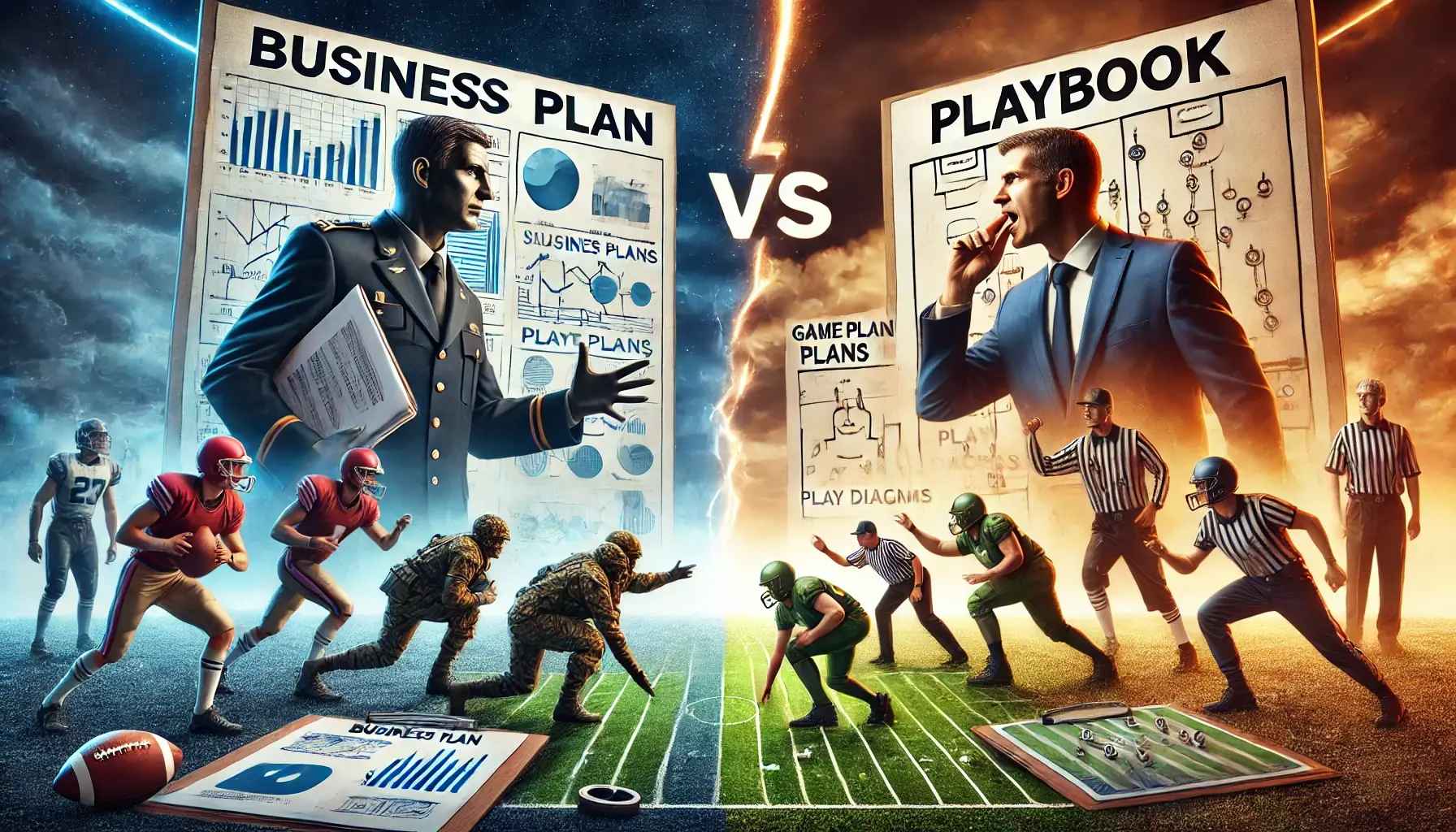
A logo does not create demand. A menu does not create positioning. A pretty brand deck does not create investor confidence. What does is a point of view.

That point of view answers questions, such as:

  • Do we understand who we are?
  • Do we know where we’re going?
  • Do we understand why we’re doing this?
  • Do we know how we’re going to get there?

This is the essence of strategic clarity. Without answering those questions through the completion of a series of strategic playbooks, your logo is decoration. Your menu is guesswork, and your investor deck drives more questions than confidence.

This matters even more now because guests are more informed and more selective on how and where they spend their money. This is a signal that modern guests are making decisions faster, with more scrutiny, and with less patience for uncertainty.

If the brand is unclear, the market will feel that before the founder does.

What a Point of View Actually Is

A point of view is not a slogan.

It’s not “elevated comfort food,” or “modern yet approachable,” or “a neighborhood spot with a twist.” Those are filler phrases that sound polished, and they mean almost nothing.

A point of view is the strategic stance behind the brand. It’s the way the business sees the guest, the market, hospitality, and its own role inside both.

It gives shape to everything that follows:

  • The concept
  • The programming
  • The music
  • The service style
  • The price strategy
  • The visual identity
  • The marketing voice
  • The standards
  • The guest experience

A point of view is what makes a brand feel intentional. Without it, everything becomes reactive.

The founder builds a menu they personally like, not what the market wants or needs, or what will support the business model financially. The designer builds a logo they think looks cool before establishing the strategy, story, values, and personality. The space gets designed around trends instead of budgets, service, and guest experiences. The marketing ends up sounding like everyone else because there was no strategy tied to targeted guest profiles.

Does any of that sound familiar? That’s how generic hospitality brands are born.

A Logo is Not a Strategy

I want to be direct here because this misconception costs people a lot of money.

A logo is an identifier, not a strategy. A logo can only express something that already exists. It can’t invent clarity where there is none.

This is why so many early-stage hospitality brands look polished but feel hollow. The founder invested in visual assets before making strategic decisions, so the look arrives before the logic.

That’s backwards, and should no longer need to be explained. If the brand doesn’t know who it’s for, why it matters, what lane it owns and what standards it protects, then no visual system can save it.

In fact, a premature logo often creates false confidence. It makes the founder feel further along than they actually are. That’s dangerous, because confidence without clarity speeds up the wrong decisions throughout the planning and development process.

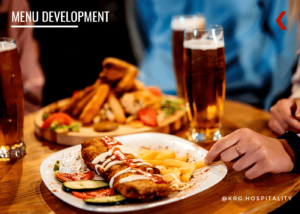
A Menu is Not a Concept

The same problem exists with menus. Founders often show up with 40-plus dishes and a list of beverage categories or 15 cocktails, and they feel prepared because the menu is already “done.”

The question is: What is the menu based on?

A menu should not start with creativity alone. It should start with the 14 fundamentals:

  • Target your ideal guest profile
  • An ideation stage of just 12-15 items
  • Competitive analysis and positioning
  • Economic factors
  • Flavor profiles
  • The talent pool to execute menu
  • Vendor management
  • Pricing strategies
  • Theoretical costs
  • Bar and kitchen layouts and equipment
  • Visual representations
  • Testing and feedback phase
  • Marketing and engineering
  • Training program for that menu

A menu isn’t just food or drink. It’s the primary signal for a successful business model.

If the concept is unclear, the menu becomes random. If the target guest is fuzzy, the menu becomes too broad. If the operations are not defined, the menu becomes expensive to execute. And if the point of view is missing, the menu becomes a list instead of a story.

That is why I say a menu should be the result of strategy, not the substitute for it.

Story First, Design Elements Second

Let me put this another way. A strong brand is built in this order:

  1. Point of view: What do we believe, who are we for, and why do we matter?
  2. Positioning: Where do we sit in the market, and what role do we want to own?
  3. Guest Journey: What should it feel like to discover us, enter, order, stay, leave, return, and talk about us?
  4. Operational reality: Can the experience be delivered consistently, profitably, and at standard?
  5. Identity system: Now the logo, visual direction, menu language, and design cues can begin, and will start to make sense.

This is the order serious brands follow. Everyone else starts at step five and wonders why nothing feels cohesive.

What Happens When You Skip the Point of View

When founders skip this work, a few predictable things happen.

  1. The brand sounds generic: The language becomes vague: “curated,” “elevated,” “authentic,” and “experiential.” Do those all sound familiar? These words get used because there’s no sharper perspective underneath them.
  2. The menu overreaches: It tries to be too many things to too many people because nobody defined what the concept actually stands for.
  3. The guest experience feels disconnected: The music says one thing. The food says another. The pricing says something else. The room looks polished, but the soul of the brand is missing.
  4. Investors lose confidence: Remember, smart investors aren’t buying your taste. They’re buying into your clarity, systems, strategy, and ability to execute at a high level.
  5. Teams struggle to execute: When the founder can’t clearly explain what the brand is trying to be, the team can’t possibly deliver it consistently.

The Discipline New Brands Need

This is the part founders don’t always want to hear, but they need to listen to it.

You don’t need to move faster, you need to think in the right order. You need to follow a tested sequence that drives success.

So, before the logo, before the menu, before the social accounts, before the branded packaging, and before the lease, you need a point of view.

That means doing the less glamorous work first:

  • Validating the opportunity
  • Studying the market
  • Identifying the concept
  • Defining the promise
  • Developing strategic clarity through playbooks

If you’ve already started, that isn’t a delay. If you’ve already started, this is protection. Because once the point of view is clear, everything else gets easier, I promise.

Your design becomes sharper, your menus become smarter, your marketing becomes more magnetic, your hiring becomes more intentional, your training becomes more consistent, your guest experience becomes more memorable.

This type of clarity 100 percent compounds.

The Takeaway Serious Founders Should Save

If you’re building a new hospitality brand, remember this: Your brand doesn’t start when someone designs a logo. It doesn’t start when someone writes a menu. It doesn’t start when you post the first teaser on Instagram. It starts the moment you can answer, with precision and confidence:

  • Why this concept and brand?
  • Why this guest and this market?
  • Why now, and why us?

That’s your point of view. And if you don’t have that yet, you don’t need more design; you need more strategic clarity.

Because in this industry, the brands that win won’t be the ones that look the best first. They’ll be the ones that know exactly what they stand for. That’s how a brand starts.

Everything else comes after.

Related Reading

Image: Kelly Sikkema via Unsplash

Work with Us

Seeking strategic clarity? Click the image below to learn how and where we can help.
Client Intake Form - KRG Hospitality

by David Klemt David Klemt No Comments

Six Traits Quantify Cool

Six Traits Quantify Cool

by David Klemt

An AI-generated image of a dog wearing goggles, sitting on top of a motorcycle that's parked outside of a bar

It’s difficult to visualize cool, so here’s a dog wearing doggles on a sportbike outside of a bar. Cool!

A team of researchers published the results of an experiment spanning several years, nearly 6,000 participants, and a dozen countries to quantify cool.

The international team’s paper, “Cool People,” was published by the American Psychological Association’s Journal of Experimental Psychology.

Alphabetically, the respondents are from: Australia, Chile, China (mainland and Hong Kong), Germany, India, Mexico, Nigeria, Spain, South Africa, South Korea, Turkey, and the United States.

The team’s research identifies six attributes of being “cool.” Interestingly, while they focused on 13 different regions, attributes associated with being cool are found to be surprisingly stable.

For the most part, cool people share these characteristics across several countries and cultures.

“Coolness is socially constructed such that a person, object, or behavior is cool if people agree that it is cool and uncool if they agree that it is not. Thus, it is less important to know how scholars have defined coolness than to understand what people perceive to be cool and uncool. We therefore operationally define coolness as whether or not a person is subjectively perceived to be cool by an observer.

Per the Cool People researchers, this is fairly universal.

Relevance to Hospitality

I’ve taken a look at “cool” before. My conclusions were that it’s an amorphous concept, and that most people know something is cool in the moment. So, it’s interesting to see that researchers tackled the topic over the course of five or more years.

“Okay, great,” you may be thinking. “What does this have to do with my business?”

Hospitality is, by its nature, social. Coolness is a social construct, and society (and the cultural subsets therein) decide what’s cool.

People support brands and businesses they think are cool; it’s really that simple. Being deemed cool by a significant number of guests is a key to long-term success for most brands.

This experiment inspired me to look at restaurants, bars, and hotels through the lens of the Cool People experiment. Can we apply the six Cool People attributes to a restaurant, bar, or hotel?

Let’s dive in, or whatever a cool person would say. I guess they wouldn’t have to say anything; they’d make their move and people would follow.

Extraverted/Extroverted

In simple terms, extroverts are perceiveda key word here—as sociable and outgoing. They enjoy being around other people, and want to interact in social settings.

If your restaurant, bar, nightclub, or hotel were a “cool” person, it would display characteristics of an extrovert: sociable, assertive, friendly, makes friends easily, talkative/communicative, enjoys groups, finds socializing energizing, and many others.

(Extraversion versus introversion goes much deeper, psychologically speaking, and I’m keeping things much less complicated here. Introverts can absolutely have the characteristics above.)

Were your venue and staff seen as extroverted (and therefore cool), it would be perceived by guests as welcoming and sociable, at the least. The experience would tell a story, and make guests feel like friends rather than being strictly transactional.

Look appealing? Sound like your business? It should, because that’s hospitality at its core.

Achieving this attribute requires leadership to make the right decisions, from branding and marketing to hiring, onboarding, and training, and also curating the vibe during every daypart.

Hedonistic

Hedonism is indulgence. It’s a focus on pleasure, and an aversion to pain.

Understand this: People can eat, drink, relax, and sleep at home. They don’t really need to visit your bar, restaurant, or hotel; they want to visit your business. People want to socialize, see, and be seen, to feel accepted and special.

Of course, you and your team have to make them want to visit and spend their time and money at your place. They want to leave their homes and be made to feel cool and special, but you need to do the work to lure them to your venue.

A hedonistic restaurant, bar, nightclub or hotel delivers a memorable experience that fulfills guest desires and surpasses their expectations (delivering pleasure). Hedonism in this sense also means ensuring a guest’s exterior stressors melt away while they’re spending time with you and your team (removing pain points).

In my opinion, truly cool people make others feel cool. So, you and your team need to do the same. Look at your touch points. Review your leadership’s approach to service recovery. Be honest about whether your team feels empowered to be themselves while adhering to your SOPs and expectations.

Why? Because your guests want to feel cool. They want to feel relevant, important, seen, and heard. Does your standard of service make guests feel cool?

Show your guests that you think they’re cool. Indulge their wants and needs, unreasonably so if possible. In turn, they’ll want to indulge their desire to socialize, eat, and drink at your place.

Powerful

In the context of your hospitality brand, powerful can be defined as influential.

Does your community view your bar or restaurant favorably? Do the locals in your market support and spend time in your hotel?

If you’ve led your business to becoming a destination for surrounding markets, it’s powerful. And if people aspire to be seen at your business, that’s influence, and therefore power.

Has your restaurant or bar become a destination for people in other cities, states, provinces, and even other countries? Congratulations, you and your team have built, and are running, a powerful concept.

The same is true if your business can scale successfully; a concept that resonates strongly with the public is powerful. (Interestingly, building a brand that can scale but doesn’t is also cool.)

Create a legacy brand, lead your business to achieve long-term success, and you’ll have built a powerhouse.

Adventurous

People perceive as cool any person who’s willing to try new things, and does so often. The reasoning is simple: adventure is cool.

Travel and exploration are cool, and all over social media. Overlanding—self-reliant travel to remote destinations—has surged in popularity over the past few years. The ADV (adventure) motorcycle segment is expected to grow by a billion dollars year over year for the next eight years.

People want adventure, excitement, and new experiences. Hospitality brands are positioned uniquely to fulfill this desire.

Offering guests a unique spin on even a single F&B item can be adventurous. Introducing guests to a new-to-them cuisine is you and your team taking them on an adventure. The same is true for unique amenities, or creating a new way for a guest to experience a space.

Interesting glassware, compelling F&B pairings, eccentric ingredients and presentations, distinct menus, cuisines not otherwise presented in a given market… Even how menus or checks are dropped can deliver an adventure.

Adventurous people are seen as cool. You know what’s even cooler? Being the adventure. Strive to become an escape and escapade.

Open

Along with being adventurous, cool people are viewed as “open.”

Curiosity is cool. Being open to new experiences and ideas is cool. Welcoming people from all walks of life is cool.

This characteristic of coolness is represented in multiple ways in hospitality. A restaurant or bar team can at once be open to new ideas internally, and provide the opportunity for guests to experience new items and experiences.

Empower your team to share their thoughts on your brand, marketing, menus, promotions, and the guest experience. Speaking generally, different generations and groups have different opinions on what’s cool, so ask them for their input.

Be open to change, embrace it, and see how quickly your restaurant, bar, or hotel becomes the cool place to seek out new experiences.

Autonomous

Ask someone if conformity is cool and they’ll likely pull a face and say no. Of course, that’s somewhat ironic since most people want to beand want to be part ofwhat’s deemed cool.

Trying to be cool is inherently uncool; we expect cool people to be so effortlessly. It’s a double-edged sword, with cool on one side of the blade and uncool (or cringe, if you prefer) on the other.

Going against the grain, circumventing expectations, and doing their own thing? That’s what cool people do.

It makes sense, then, that a restaurant or bar that doesn’t do and offer what every other place is doing (autonomy) is cool.

From the researchers: “[I]f coolness motivates the spread of innovation, then coolness should be associated with creating and diffusing new ideas.”

To be blunt, most restaurants, bars, and hotels are selling the same shit. In recent years, some big personalities in the industry have been saying this quite plainly. One was on the Bar Hacks podcast recently.

So, if we’re all selling the same things to our guests, how can any concept be seen as autonomous, and therefore cool? It comes down to strict adherence to our vision, a commitment to developing a fully realized brand, our team’s focus on the guest experience, and unique interpretation of menu items.

Of course, that last element can go sideways, slipping away from “cool” and spiraling into confusion or frustration.

Give your guests the cool, unique experience only you and your team can deliver, but make it approachable and understandable. Otherwise, you’ve given them homework, not an escape from their everyday lives.

Cool vs. Good

There’s an additional, interesting component to the Cool People experiment.

Within their paper the researchers reference a Canadian experiment. The study found that Canadian students, at least up to 2012, “frequently” saw cool people as those who demonstrated five characteristics of admirable people: friendliness, competence, desirability, attractiveness, and trendiness.

(Personally, I’m disappointed Canada wasn’t included in the Cool People experiment. I’m comfortable saying the rest of the KRG Hospitality team joins me in my dissatisfaction.)

Cool People researchers posit that that cool people should be admired by others for their status as a cool person. But that leads to other questions: Shouldn’t we admire good people? If so, is cool the same as good?

The researchers were compelled to address those questions during their experiment. Put simply, they found that cool people are capable of being “good.” However, they’re defined, for lack of a better word, as being extraverted, hedonistic, powerful, adventurous, open, and autonomous. You’ll notice “good” isn’t on that list.

So, no, cool is not the same as good, as far as this particular experiment’s findings show.

You’re probably wondering now what characteristics are attributed to good people. Well, you’re in luck, because the Cool People researchers included them in their experiment: conforming, traditional, secure, warm, agreeable, universalistic, conscientious, and calm.

What would the perception of being “good” look like for a restaurant, bar, or hotel? I may just tackle that question in an upcoming article.

Cheers!

AI-generated image: Microsoft Designer

Client Intake Form - KRG Hospitality

by David Klemt David Klemt No Comments

Program for Unique Holidays: March 2025

Program for Unique Holidays: March 2025

by David Klemt

Restaurant or bar owner sitting at the bar, working on a schedule or calendar

AI-generated image.

Do you want to stand out from from other restaurants and bars in your area? Change how you think about your March 2025 holiday programming.

Several holidays are set against every date on the calendar, and this month is no exception. These holidays range from mainstream to esoteric.

Pay attention to the “weird” or unique holidays to raise eyebrows, carve out a niche for your restaurant or bar, and attract more guests. Why do what everyone else is already doing? Why program only around the same holidays as everyone else?

To provide a handful of examples, March boasts National Cold Cuts Day, Mario Day, and Make Up Your Own Holiday Day. Those are all things you can get creative and program around, and celebrate with your guests.

Of course, you shouldn’t try to celebrate every holiday, strange or otherwise. Focus on the days that are authentic to your brand; resonate with your guests; and help you grab attention on social media.

You’ll find suggestions for promotions below. However, the idea behind our monthly holiday promotions roundup is to inspire you and your team to get creative and come up with unique programming ideas.

For our February 2025 holidays list, click here.

March 3: National Cold Cuts Day

If you’re a deli, are partners with a deli, or otherwise serve menu items featuring cold cuts, this holiday should certainly be on your radar.

Whether you choose to feature all the cold cuts available, focus on one specifically, or offer LTO sandwiches or other items, this is a holiday worth building a promotion around.

March 5: National Absinthe Day

Some people choose to celebrate “Cinco de Marcho” on this day, “training” their kidneys for St. Patrick’s Day. Well, allow me to propose an alternative: National Absinthe Day.

While there are also clear versions, absinthe is usually green. It’s interesting, and loaded with lore. And this holiday doesn’t necessarily encourage dangerous levels of alcohol consumption.

March 7: National Cereal Day

From breakfast shots to breakfast cereal-flavored shots and cocktails, this is a simple holiday for programming beverage promotions.

And on the food side, think about how much fun your culinary team can have reimagining famous cereals as new menu items.

March 10: Mario Day

People tend to associate Mario with a few powerups: Super Mushrooms, Fire Flowers, Super Leaves, and Starman stars. So, if we extrapolate and apply these powerups to F&B, operators and their teams can craft food and drinks that feature mushrooms, edible flowers, leaves, and star shapes.

And that’s to say nothing of the suits Mario can don, enemies he bests, and other associations with Mario.

March 13: World Kidney Day

I mention kidneys toward the top of this holiday roundup. Well, operators can celebrate World Kidney Day by offering healthy, zero-alcohol beverages. Going further, they can highlight food items that are free of ultra-processed ingredients, and low in sodium, potassium, and phosphorous. Instead, promote dishes that feature lean proteins and healthy fats.

March 15: National Corn Dog Day

On its own, a standard corn dog, one can argue, isn’t that unique. So…let’s change that. If you have corn dogs on your menu, or you have the capability of adding them as an LTO, think about how far you and your culinary team can go with it.

Elote treatment to the exterior? Awesome. Panko or cornflake crust? Yes, please. Going sweet and savory with a dusting of sugar, and accompanied with ketchup and mustard? I’ll try it.

March 21: National Countdown Day

For several reasons, a lot of people seem to like a countdown. Operators can leverage this by creating a countdown that ends later on National Countdown Day.

A special food item, unique drink, or LTO menu revealed when the countdown reaches zero are just a few ideas.

March 22: National Goof Off Day

I’m always a fan of giving guests an “excuse” to blow off work, errands, and other responsibilities. Not every day, of course, but once in a while.

This year, National Goof Off Day falls on a Saturday, so it shouldn’t be too difficult to encourage guests to goof off at your restaurant or bar.

March 26: Make Up Your Own Holiday Day

Hey, have you ever thought about a holiday celebrating your business? National [insert your bar, restaurant, cafe, nightclub, hotel] Day? Well, this is the perfect time to launch just such a holiday, or anything else you can dream up.

March 30: National Virtual Vacation Day

If National Goof Off Day doesn’t work with you, your brand, and your guests, perhaps this holiday does. While one way to celebrate this day is to use VR for a “vacation,” another is to simply embrace a holiday mindset. With nearly a month to plan, I’m sure you can come up with a promotion that helps transport guests to a vacation destination via your business.

Image: Microsoft Designer

Client Intake Form - KRG Hospitality

by David Klemt David Klemt No Comments

Program for Unique Holidays: February 2025

Program for Unique Holidays: February 2025

by David Klemt

Restaurant or bar owner sitting at the bar, working on a schedule or calendar

AI-generated image.

Do you want to stand out from from other restaurants and bars in your area? Change how you think about your February 2025 holiday programming.

Several holidays are set against every date on the calendar, and this month is no exception. These holidays range from mainstream to esoteric.

Pay attention to the “weird” or unique holidays to raise eyebrows, carve out a niche for your restaurant or bar, and attract more guests. Why do what everyone else is already doing? Why program only around the same holidays as everyone else?

To provide a handful of examples, February boasts National Pizza Day, National Cheddar Day, and National Retro Day. Those are all things you can get creative and program around, and celebrate with your guests.

Of course, you shouldn’t try to celebrate every holiday, strange or otherwise. Focus on the days that are authentic to your brand; resonate with your guests; and help you grab attention on social media.

You’ll find suggestions for promotions below. However, the idea behind our monthly holiday promotions roundup is to inspire you and your team to get creative and come up with unique programming ideas.

For our January 2025 holidays list, click here.

February 7: Rose Day

Rose presents interesting flavor and scent profiles. It can also be difficult to perfect; too little and it likely won’t register, too much and it will overpower. Notably, it doesn’t take much for rose to go in either direction. However, if your kitchen and bar teams are up to the task, rose dishes and drinks can be quite intriguing for your guests.

Of course, you can also go a different direction and celebrate Rose Day as Rosé Day with all manner of wine, spirits, and beers.

February 8: National Kite Flying Day

As one would expect, there are several drinks with “kite” in the name. Cocktails (including zero-proof versions), beers, and wines. Further, there’s the similar paper airplane, so you can feature the Paper Plane, as well.

February 9: National Pizza Day

Is programming around pizza unusual, unexpected, or unique? On its face, no, of course not.

However, restaurant and bar operators can make National Pizza Day an unusual food holiday by featuring unique ingredients, and interesting pizza styles.

February 10: National Cream Cheese Brownie Day

Much like pizza, most brownies aren’t considered unique. That said, your culinary team’s interpretation can become a signature dessert (or appetizer

February 13: National Cheddar Day

Is everything better (or “beddar”) with cheddar? No, not everything. But there sure are a lot of menu items that are great with this hard cheese.

I’m confident that you and your kitchen team can find plenty of ways to feature cheddar on an LTO menu.

February 14: Start of Alzheimer’s and Dementia Care Education Week

This week is dedicated to Alzheimer’s and dementia awareness and education, along with raising funds for charitable organizations looking for a cure. If you think you can organize a charity drive, be it for one day or the entire week, go for it.

One way to execute is to donate proceeds from an LTO item or menu. If you have signature drink or dish, that item can lead the charge for raising charitable donations. This important week has a hashtag, so be sure to include it to spread the word: #AlzheimersDementiaCareEducationWeek.

February 20: National Comfy Day

Sure, operators can go for comfy dress to celebrate this holiday. It can be “cute” to have staff show up in comfy gear, or encourage guests to do so.

Or, operators can go a different direction: focusing on the comfort foods on their menus. Whether they’re traditional or creative takes on comfort classics, a comfort food LTO menu is perfect for February 20.

February 24: National Tortilla Chip Day

Who doesn’t love a tortilla chip, particularly when it’s carrying an array of delicious toppings? You know what to do: highlight your nachos (if you have them on your menu), and get creative with the presentation (we like to go sky high), proteins, and other ingredients.

February 27: National Retro Day

It seems like the phrase, “Everything old is new again,” is always relevant. National Retro Day is one of the best times to dive into vintage F&B recipe books and select classics that work with your theme and resonate with guests. Grasshoppers, anyone?

February 28: National Floral Design Day

Edible flowers are visually appealing, and can also enhance the dining and drinking experience. You know what to do!

Image: Microsoft Designer

Client Intake Form - KRG Hospitality

by David Klemt David Klemt No Comments

Branding Chaos vs. Chaos Branding

Branding Chaos vs. Chaos Branding

by David Klemt

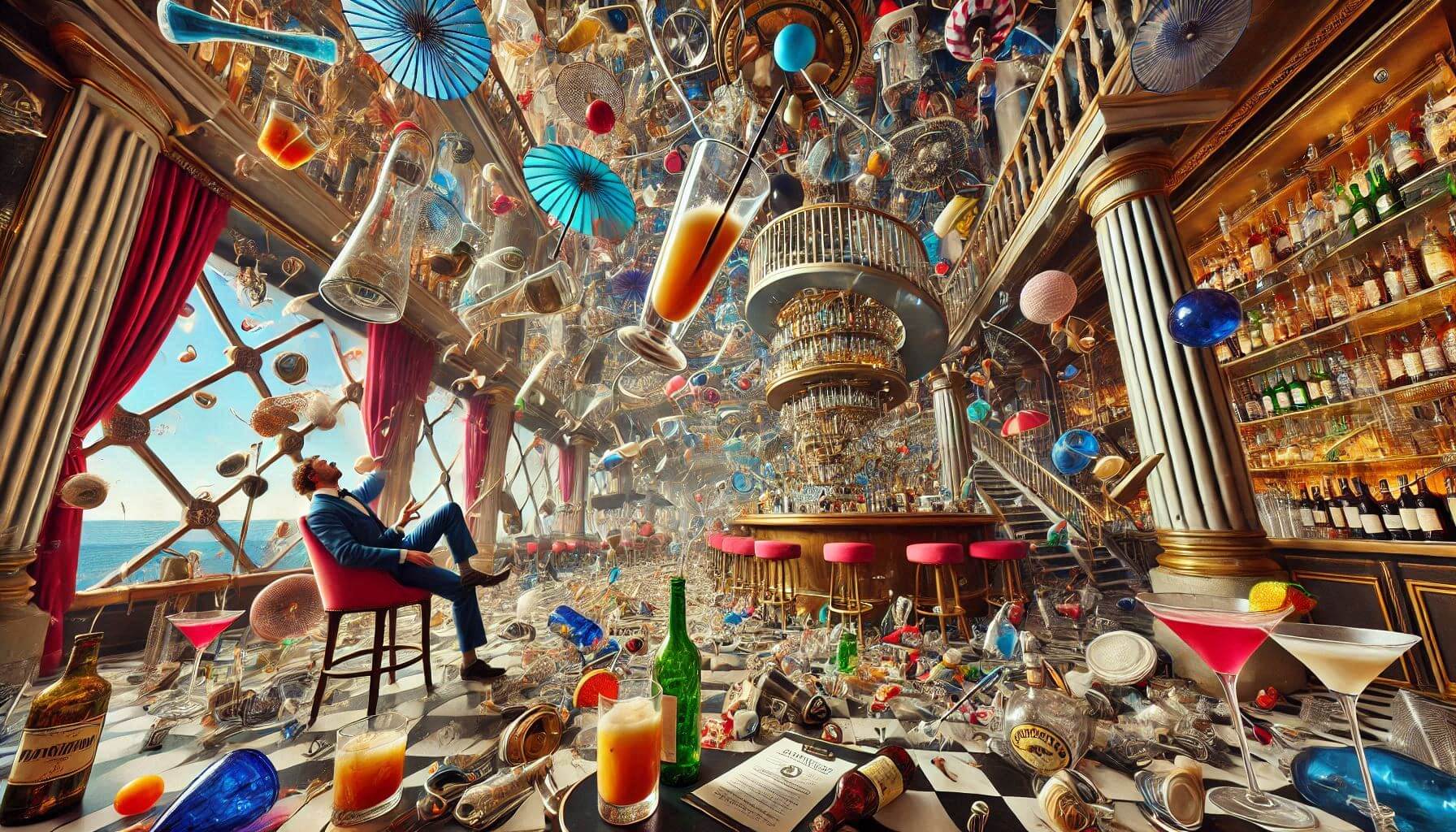
A scene of absolute chaos and impossible physics inside a maximalist design bar

As realistic as this image appears, this was, indeed, generated by artificial intelligence.

It’s important to understand the marketing terms “chaos branding” and “branding chaos,” and what they mean for your business.

The first thing to realize is that the two terms aren’t interchangeable. One, when a brand executes it successfully, is a positive. The other goes in the opposite direction, and hints at a strategic problem.

In fact, it points to a lack of strategic clarity. And if you’ve been following KRG Hospitality president Doug Radkey’s articles, social media posts, or Hospitality Reinvented podcast episodes, or have attended one of his speaker sessions or webinars, you know strategic clarity is a KRG pillar.

So, what do the two terms mean, and why are they important?

Branding Chaos

Simply put, this isn’t good.

Branding chaos is a lack of clarity (there’s they keyword again) and consistency in branding. Generally speaking, when a brand lacks a clear and considered branding strategy, the result is branding chaos.

This can manifest in many ways, from the overt to the subtle. You’ll find some examples below.

Colors

A brand’s color palette is crucial to its branding strategy. This branding element is so important, in fact, that one of the eight KRG Hospitality playbooks is our branding strategy playbook.

Failing to establish a brand color palette and adhere to it strictly can create branding chaos.

Logo

Have you ever visited a company’s website, social channels, or brick-and-mortar location and seen more than one company logo? Or been handed a business card that had a different logo than the company’s current design?

That’s an egregious branding issue.

Slogans & Taglines

These are just as important to a brand’s identity as the logo. To provide clarity, the slogan speaks to a brand’s mission and is used in advertising; a tagline tends to be punchy and is used to promote brand awareness.

It’s one thing to have a slogan that’s a bit different from the tagline. It’s quite another thing when a brand generates multiple slogans and taglines, and it’s a problem.

Confusion

A great branding exercise is to ask your team members to describe your brand. If you’re not receiving consistent descriptions, your own team is confused about the brand, which is a red flag.

Voice

It’s important for a brand to establish its “voice.” To put this in simple terms, a key element of branding is attaching a personality to a brand. Is the brand silly? Snarky? Moody? Serious?

The brand’s messaging, from traditional advertising campaigns to social media posts, must embody that personality, or voice. Think about how jarring it can be for a brand that has established itself as serious or moody to take on a silly voice suddenly.

Consistency

Something as simple as seemingly small inconsistencies on a brand’s website, for example, can be a branding chaos warning sign.

At KRG, we’ve worked with clients who used “night club,” “nightclub,” “gastro pub,” “gastropub,” and even different versions of their brand name. That may seem like a simple error but, if not addressed, it’s a “small” mistake that harms the brand’s identity.

There’s also font mixing, or the use of several fonts on the same website or webpage. And that’s just on a website. Think about how a mix of inconsistent uniforms can affect guest perception.

Successful branding promotes engagement and loyalty, and requires a clear strategy. Or, strategic clarity.

Chaos Branding

Unsurprisingly, traditional branding methods don’t resonate with everyone. Speaking generally, many members of younger, tech-savvy, chronically connected generations find “old” marketing methods unappealing.

Again, I’m speaking in generalities; no demographic is a monolith. It’s crucial to develop a deep understanding of your target audience to communicate with them effectively.

That said, a common belief concerning Millennials and Gen Z is that they don’t trust polished content. Really, I’d say that applies to a significant number of people of all ages.

This is because social media posts and advertisements that are just too polished and slick put some people on the defensive. They immediately become suspicious that you’re only motive is to sell them something, and that your brand perhaps doesn’t share their values.

It’s not a leap to say this is the natural consequence of social media’s ubiquity. If nothing is real life on social media, everything is a trick or hustle.

Enter: Chaos branding.

Authenticity

Chaos branding seems far and away more honest and authentic because it eschews careful curation.

It seems off the cuff, in the moment, and honest. Chaos’ counterpart is curation. When we look at carefully crafted and curated posts, they seem to share the same aesthetic.

Whereas curated posts get lost in a sea of reels, stories, slideshows, and static images, posts that leverage chaos branding can cut through the white noise.

Be the Chaos

Get messy. Go maximalist. Be spontaneous. This is hospitality—every shift is punctuated with spontaneity and chaos. Embrace that, and share the reality of your brand’s day-to-day vibe to show people what they can expect when they visit.

To provide a solid example, Wendy’s snarky social media presence, complete with the audacity to roast rivals and even its own fans, has mastered chaos branding.

And if you really want to go hard, there’s unhinged branding. The image at the top of this article? It’s unhinged.

One way to leverage unhinged branding, if it matches your brand authentically, is to ask AI to make a video for your brand. If it’s just…unstable, you’re on the right track. But…it must be cool.

Takeaway

Branding and marketing require strategic clarity. That’s non-negotiable for operators who want to achieve long-term success and craft a legacy.

Our eight playbooks are bespoke documents that provide a roadmap to success built on strategic clarity.

However, chaos has a place in clarity, as at odds as those concepts may appear. Savvy operators can succeed with chaos branding if they make it a part of their well-crafted, carefully considered strategy.

Image: Microsoft Designer

KRG Hospitality Contact 60-Minute Impact Session

Looking to Start, Stabilize, or Scale? Book Below to Setup a 60-Minute Result-Driven Impact Session.


by David Klemt David Klemt No Comments

Program for Unique Holidays: January 2025

Program for Unique Holidays: January 2025

by David Klemt

Restaurant or bar owner sitting at the bar, working on a schedule or calendar

AI-generated image.

Do you want to stand out from from other restaurants and bars in your area? Change how you think about your January 2025 holiday programming.

Several holidays are set against every date on the calendar, and this month is no exception. These holidays range from mainstream to esoteric.

Pay attention to the “weird” or unique holidays to raise eyebrows, carve out a niche for your restaurant or bar, and attract more guests. Why do what everyone else is already doing? Why program only around the same holidays as everyone else?

To provide a handful of examples, January boasts celebrations of birds, tempura, a French comfort dish, and gift cards. Those are all things you can get creative and program around, and celebrate with your guests.

It’s also Dry January, which is embraced by a vast array of people: non-drinkers, the “sober curious,” the newish “zebra stripe” consumers, the health conscious… Whatever their motivation, these guests still need an amazing experience at your bar or restaurant. And you may recall that Whistlepig launched Dank January last year, releasing the limited-edition Dank & Dry Old Fashioned Cocktail. This was a non-alcoholic bottled cocktail made with rye “non-whiskey,” and enhanced with non-psychoactive terpenes. If you visit their site, they may have something planned for 2025.

Of course, you shouldn’t try to celebrate every holiday, strange or otherwise. Focus on the days that are authentic to your brand; resonate with your guests; and help you grab attention on social media.

You’ll find suggestions for promotions below. However, the idea behind our monthly holiday promotions roundup is to inspire you and your team to get creative and come up with unique programming ideas.

For our December 2024 holidays list, click here.

January 5: National Bird Day

The Jungle Bird. Grey Goose. Famous Grouse. Redbreast. Eagle Rare. Wild Turkey. Kentucky Owl. Chicken wings. Duck fat. Use this holiday, which falls on a Sunday this year, to feature your bird-themed drinks and foods.

January 7: National Tempura Day

When it comes to comfort foods, battering and frying are winning partnership. If you can batter and fry it, put it on your menu, and promote it.

January 9: National Cassoulet Day

Did you know that less than one percent of restaurants have cassoulet, a warm and comforting French dish, on their menus in the US? Seems like an opportunity for a savvy operator and kitchen team to fill a gap.

January 11: National Milk Day

This is the day to promote your bar team and their skill crafting milk cocktails. The Coquito, Bourbon Milk Punch, the Grasshopper, the Mudslide… National Milk Day is easy and fun to celebrate.

January 12: National Mocktail Week Begins

If it hasn’t yet achieved ubiquity, Dry January has certainly reached proliferation. This week, National Mocktail Week (which runs through January 18), is the time to show that you’ve crafted a carefully considered zero-proof drink menu. Remember, some sober guests find the term “mocktail” disrespectful, so consider using a different term.

January 17: National Bootlegger’s Day

This is the holiday to celebrate brands or cocktails that have survived prohibition, were created during prohibition, or produce or feature moonshine.

January 20: National Use Your Gift Card Day

Are gift cards an element of your marketing and branding strategy? Do you see them as a viable revenue channel? If so, this is the day to encourage people to come in and redeem them. Send a targeted email campaign, and include a link to your restaurant’s reservation system.

January 21: Squirrel Appreciation Day

Did you know that it’s believed squirrels plant three billion oak trees every year? Well, you do now.

I’m sure you’ve gotten ahead of me already regarding what I’m going to recommend you do to celebrate this holiday: put the classic Pink Squirrel on your menu. And why not? This iconic cocktail has been around since the 1940s, and may inspire an upcoming Drink Donnybrook.

January 24: National Beer Can Appreciation Day

Creative beer can design goes hand in hand with craft beer brewing. In fact, the approval of can designs in the US is quite an important process.

A lot of thought goes into beer can design and particularly eye-catching labels deserve more than a passing glance. Feature the most creative and attention-grabbing beers on your menu on National Beer Can Appreciation Day. You should definitely feature them on your social media channels.

January 30: National Croissant Day

The humble but delicious, flaky croissant is a tasty canvas. Sure, you can just offer croissants, but what about going harder and offering an array of croissant sandwiches or desserts? Bacon, egg, and cheese. Plant-based sausage, plant-based egg, and plant-based cheese. Nutella…croissants are light, flaky, butter, and fun.

Image: Microsoft Designer

KRG Hospitality Contact Request for Proposal 30 Minute Discovery Session

Book Below to Setup a 30-Minute Complimentary Discovery Call and Request for Proposal.


by David Klemt David Klemt No Comments

Program for Unique Holidays: December 2024

Program for Unique Holidays: December 2024

by David Klemt

Restaurant or bar owner sitting at the bar, working on a schedule or calendar

AI-generated image.

Do you want to stand out from from other restaurants and bars in your area? Change how you think about your December holiday programming.

Several holidays are set against every date on the calendar, and this month is no exception. These holidays range from mainstream to esoteric.

Pay attention to the “weird” or unique holidays to raise eyebrows, carve out a niche for your restaurant or bar, and attract more guests. Why do what everyone else is already doing? Why program only around the same holidays as everyone else?

To provide a handful of examples, December boasts celebrations of flavored vodka, mountains, a famous fruit salad, and iced cookies. Those are all things you can get creative and program around, and celebrate with your guests.

Of course, you shouldn’t try to celebrate every holiday, strange or otherwise. Focus on the days that are authentic to your brand; resonate with your guests; and help you grab attention on social media.

You’ll find suggestions for promotions below. However, the idea behind our monthly holiday promotions roundup is to inspire you and your team to get creative and come up with unique programming ideas.

For our November 2024 holidays list, click here.

December 6: National Bartender Day

Short of scheduling bartenders off (should they want the day off, of course), what else can you do for your bar team to celebrate them?

Driving traffic to your bar and encouraging generous tips could be nice. Hit your social channels and suggest your followers come visit their favorite bartenders.

December 7: National Rhubarb Vodka Day

Tart when raw, sweeter when cooked, rhubarb most often delivers a bright flavor profile. Producers of rhubarb vodkas sometimes focus solely on the vegetable, others combine it with lemons and other ingredients to create complex, balanced expressions.

Two products to look into come from Mammoth Distilling and Chase Spirits Co. Of course, if you don’t mind missing the holiday this year, you can produce your own, and it only takes about a month to achieve the maximum effect.

December 9: National Pastry Day

Is your kitchen team skilled in the art of pastries? In fact, do you have a pastry chef on the team? If so, this is the day (and remaining month) to let them flex their creative pastry skills for starters, mains, and desserts.

December 11: International Mountain Day

This holiday is meant to celebrate not just mountains but the role they play in our lives. For example, the bounty of botanical ingredients we can find in mountainous regions. And, of course, the effects mountains can have on distillation and aging.

On this holiday, look to your back bar and kitchen. Whiskeys like Stranahan’s and TINCUP leverage the mountains, as do gins like Rainier Mountain Fresh Gin and the aptly named Mountain Gin. There are also tequilas like Mijenta and Teremana. On the kitchen side, look into local suppliers who forage in mountainous areas for items you can feature in dishes.

December 12: National Ambrosia Day

You know it. You love it…or maybe not. It’s a classic: ambrosia, the fruit salad that either activates your nostalgia or makes you recoil.

There are a few ways to approach this holiday. One, you can reproduce a family recipe for ambrosia, if you have one. Two, you can look up an old

December 16: National Chocolate-Covered Anything Day

I think this is one of those holidays that’s self-explanatory. Look at your menus and ask yourself, “What if I covered that in chocolate?”

December 21: National Coquito Day

Look, I get it: eggnog is a classic. Sure, there are people who like eggnog, and seek it out in December. However, there’s also the coquito, which is, in my opinion, a far better drink.

You can learn more about the coquito in an article I wrote about it a couple of years ago. And after you read that one, read about the carajillo, another cocktail that shines in December (and the rest of the winter months).

December 23: National Pfeffernüsse Day

Cardamom, cinnamon, nutmeg, ginger, black pepper, anise, mace, cloves, and sugar come together in a tidy package called pfeffernüsse. This iced cookie is perfect for the season, and if your kitchen has baking and dessert skills, they should be able to produce these fantastic cookies. Pfeffernüsse, as you may imagine, work well as a dessert and with after-dinner drinks.

December 28: National Card Playing Day

It’s very likely that the card- and board-game playing guests who frequent your restaurant, bar or hotel got some new games this month. If your concept encourages guests to gather and play such games, this is an excellent holiday for them to visit your spot and try out their gifts (while eating and drinking with friends and family).

December 30: National Bacon Day

It’s bacon. Go HAM and feature bacon everything, including drink garnishes.

Image: Microsoft Designer

KRG Hospitality Contact 60-Minute Impact Session

Looking to Start, Stabilize, or Scale? Book Below to Setup a 60-Minute Result-Driven Impact Session.


by David Klemt David Klemt No Comments

Program for Unique Holidays: November 2024

Program for Unique Holidays: November 2024

by David Klemt

Restaurant or bar owner sitting at the bar, working on a schedule or calendar

I don’t know why but AI seems to think anyone who owns a restaurant or bar has a beard. AI-generated image.

Do you want to stand out from from other restaurants and bars in your area? Change how you think about your November holiday programming.

Several holidays are set against every date on the calendar, and this month is no exception. These holidays range from mainstream to esoteric.

Pay attention to the “weird” or unique holidays to raise eyebrows, carve out a niche for your restaurant or bar, and attract more guests. Why do what everyone else is already doing? Why program only around the same holidays as everyone else?

To provide a handful of examples, November boasts celebrations of the bold and pungent, Gose beer style, stuffing, and metal. Those are all things you can get creative and program around, and celebrate with your guests.

Of course, you shouldn’t try to celebrate every holiday, strange or otherwise. Focus on the days that are authentic to your brand; resonate with your guests; and help you grab attention on social media.

You’ll find suggestions for promotions below. However, the idea behind our monthly holiday promotions roundup is to inspire you and your team to get creative and come up with unique programming ideas.

For our October 2024 holidays list, click here.

November 8: Cook Something Bold and Pungent Day

This is the day to shine a spotlight on menu items that are heavy on aromatics, intense flavors, and presentations that demand attention.

November 9: Chaos Never Dies Day

If your bar or restaurant has a chill, relaxing vibe, this may be a great holiday for you and your guests. Chaos Never Dies Day is about mindfulness, relaxation, de-stressing, and, if healthy, socializing with friends and family.

Encourage your guests to visit your venue, silence their phones, and escape for a while.

November 10: Area Code Day

Area Code Day is an excellent time to celebrate your community. Showcase the local producers and collaborators with whom you partner, for example.

November 11: National Metal Day

Does your bar play metal? Do you feature live metal bands? Would you say your overall theme and ambiance is metal? Have I got a holiday for you…

November 15: National Philanthropy Day

Organize food, coat, or clothing drives. Highlight a charitable organization that your bar, restaurant, or hotel supports. This is one of the best days of the year for you and your guests to get involved with organizations that improve the community.

November 17: International Happy Gose Day

Several centuries old, Gose comes to us from Germany. Generally speaking, this wheat beer is tart, sour, spicy, and salty. Of course, craft brewers love to make styles their own, so there are Goses out there with other dominant characteristics.

Fans of this style of beer will tell you that it pairs well with everything. However, when developing your Gose promotion, keep grilled meats, seafood, roasted root vegetables, and tangy, powerful cheeses in mind.

November 21: National Stuffing Day

We all know that person whose main food focus on Thanksgiving (American, Canadian, or otherwise) is stuffing (or dressing, depending on preparation and pedantry). Sure, the other dishes are great, but they may just stab someone in the hand with their fork if they get between them and stuffing. In fact, we may be that person.

In the lead-up to Thanksgiving, task your kitchen with creating an irresistible stuffing (or dressing), and preparing it in multiple ways: waffled, sandwich, etc. Who knows? It may just lead to Thanksgiving Eve takeout orders.

November 22: National Farm-City Week

People celebrate this week to honor the farmers who help make American Thanksgiving possible. Of course, farmers deserve recognition for more than just one holiday.

This is a fantastic time of year to call attention to the farms and farmers with whom your restaurant partners.

November 29: Sinkie Day

Okay, so this one could be interesting. With all the prep and formality that can go into some people’s Thanksgiving celebrations, Sinkie Day offers welcome casualness. In simple terms, it’s about grabbing a bite while standing over a sink. Basically, rejecting a dining table, and eating anywhere else.

One spin you and your restaurant team can put on Sinkie Day is to highlight the items on your menu that are transported and eaten just about anywhere easily.

November 30: National Mason Jar Day

Cocktails, their alcohol-free counterparts, soft drinks like teas and sodas, kombucha, desserts, even salads… There’s a lot a creative bar or restaurant team can do with menu items, mason jars, and presentations.

Image: Microsoft Designer

KRG Hospitality Contact 60-Minute Impact Session

Looking to Start, Stabilize, or Scale? Book Below to Setup a 60-Minute Result-Driven Impact Session.


by David Klemt David Klemt No Comments

Program for Unique Holidays: October 2024

Program for Unique Holidays: October 2024

by David Klemt

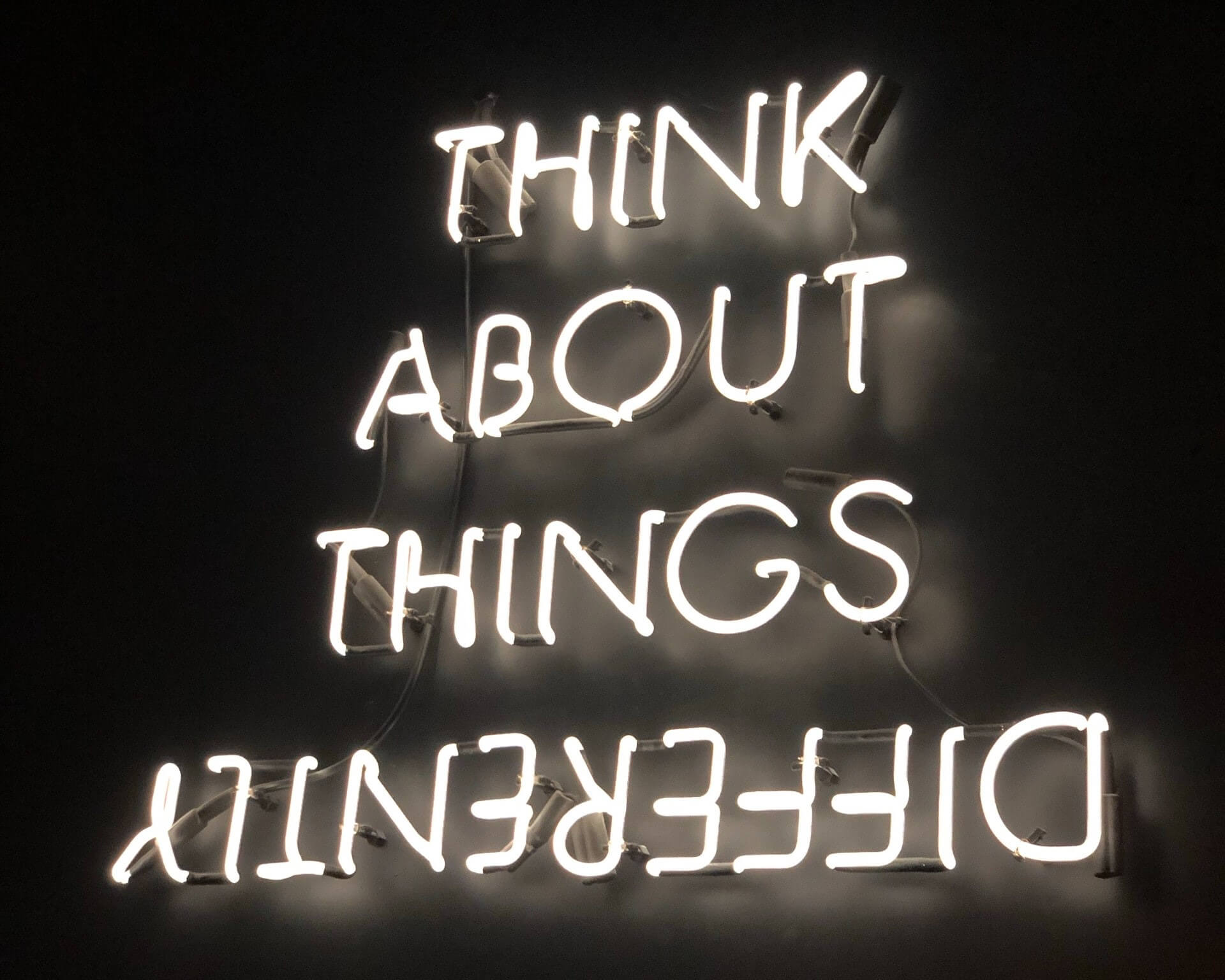
"Think about things differently" neon sign

Do you want to stand out from from other restaurants and bars in your area? Change how you think about your October holiday programming.

Several holidays are set against every date on the calendar, and this month is no exception. These holidays range from mainstream to esoteric.

Pay attention to the “weird” or unique holidays to raise eyebrows, carve out a niche for your restaurant or bar, and attract more guests. Why do what everyone else is already doing? Why program only around the same holidays as everyone else?

To provide a handful of examples, October boasts celebrations of the cheeseburger, the double cheeseburger, cheese pizza, pepperoni pizza, beer, and guacamole. Those are fantastic F&B holidays sure to appeal to your guests. However, you can still celebrate some “out there” holidays to get people’s attention and draw them to your business.

Of course, you shouldn’t try to celebrate every holiday, strange or otherwise. Focus on the days that are authentic to your brand; resonate with your guests; and help you grab attention on social media.

You’ll find suggestions for promotions below. However, the idea behind our monthly holiday promotions roundup is to inspire you and your team to get creative and come up with unique programming ideas.

For our September 2024 holidays list, click here.

October 1: The New National Taco Day

That’s right; National Taco Day has changed! You can read my article addressing this change here for more details, but what you need to know is that from today onward, National Taco Day will always fall on a Taco Tuesday.

October 2: Walk Your Dog Week

If your venue is dog friendly, and you operate in at least a decently walkable city or town, this is a great week to invite your guests to pop in for a dog treat, a bite, and a drink with their best friends.

October 4: Plaidurday

This day is dedicated to plaid. Plaid shirts, plaid pants, plaid shoes, plaid hats, plaid coats, plaid scarves, kilts featuring a tartan… If it’s plaid, encourage your guests to come by your place while they’re wearing it.

October 11: It’s My Party Day

Okay, this is an odd one. Really, it’s all about nostalgia. Technically, it’s about people revisiting their sweet sixteen parties, which is incredibly specific. Personally, I’d tap into your understanding of your guests and come up with a nostalgic theme that will appeal to them. After all, October is all about dressing up and themed parties.

October 12: National Motorcycle Ride Day

If your venue is motorcycle friendly, encourage your guests who ride to organize a ride, with a stop at your business to relax and refuel.

October 15: National Chicken Cacciatore Day

Recently, we addressed the importance of putting your spin on classic comfort foods. Chicken cacciatore, a recipe that’s about 600 years old, certainly falls into this category; it’s a classic comfort food, and your kitchen team can certainly put their own take on it.

October 21: Apple Day

We also addressed applejack, America’s first native spirit, just yesterday. Sure, you can do caramel apples or apple pie to celebrate this day, but I think you should bring your bar team into the mix, and create an LTO menu featuring applejack cocktails.

October 24: National Food Day

It sounds like this holiday is incredibly open ended, doesn’t it? A blank slate for any cuisine or food item you want to program a holiday promotion to leverage.

However, it’s specifically focused on featuring natural foods. For tips on how to build a natural, farm-to-table menu, check out KRG Hospitality chef consultant Nathen Dubé’s article here.

October 25: Chucky, the Notorious Killer Doll Day

I’ve included this because, wow, is it specific. It’s also a great day to play the Child’s Play movies and Chucky television show, within the confines of the proper licenses, of course.

October 30: National Candy Corn Day

Candy corn sucks, and if you agree (which means you’re correct), you’ll use this day to campaign against this food crime against nature.

Image: Ivan Bertolazzi on Pexels

KRG Hospitality Contact 60-Minute Impact Session

Looking to Start, Stabilize, or Scale? Book Below to Setup a 60-Minute Result-Driven Impact Session.


by David Klemt David Klemt No Comments

A Brand-New Day: Celebrating ITALICUS

A Brand-New Day: Celebrating ITALICUS

by David Klemt

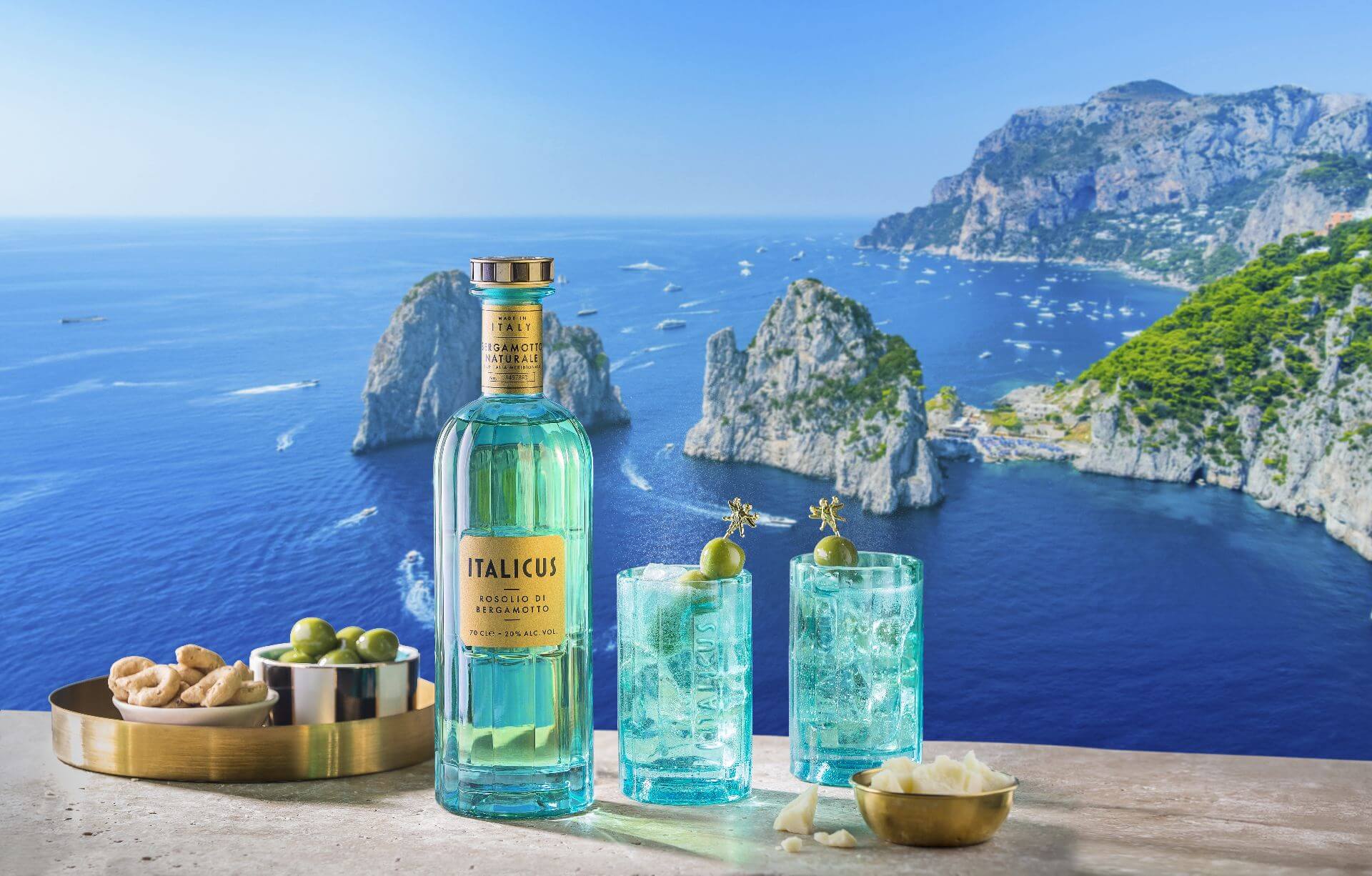
A bottle of ITALICUS Rosolio di Bergamotto and two cocktails, resting on a ledge overlooking the ocean.

I want to go to there, and drink that.

Operators, bar teams, and guests have the opportunity to partake in the first-ever National Rosolio Day, launched by ITALICUS Rosolio di Bergamotto.

The brand, known in part for its elegant and instantly recognizable bottle, is celebrating its eighth anniversary. To acknowledge their growth and mark this milestone, ITALICUS is launching the inaugural National Rosolio Day this coming Sunday, September 1.

I have to give the brand an approving nod here. They could be launching National ITALICUS Day. Instead, they’re celebrating the liqueur category that Giuseppe Gallo and the ITALICUS team have (re)introduced to modern cocktail lovers: rosolio.

I’ll get into the category in a moment. For now, there’s an interesting detail about the brand, the bottle, and the bar holiday launching on September 1.

Traditionally, eighth anniversaries are marked with gifts of bronze and pottery. Looking at the alluring, turquoise bottle, the label and stopper, one can argue, look bronze. Focusing on the stopper, there’s a relief of Bacchus, which looks like it could be porcelain, a form of pottery.

It’s almost like the team and bottle designer were prescient, and set the stage for this new bar holiday before the first case was ever shipped.

Global Celebration

Bars in France, Hong Kong, Hungary, Italy, New Zealand, the UK, the US, and Switzerland are participating via an exclusive cocktail menu.

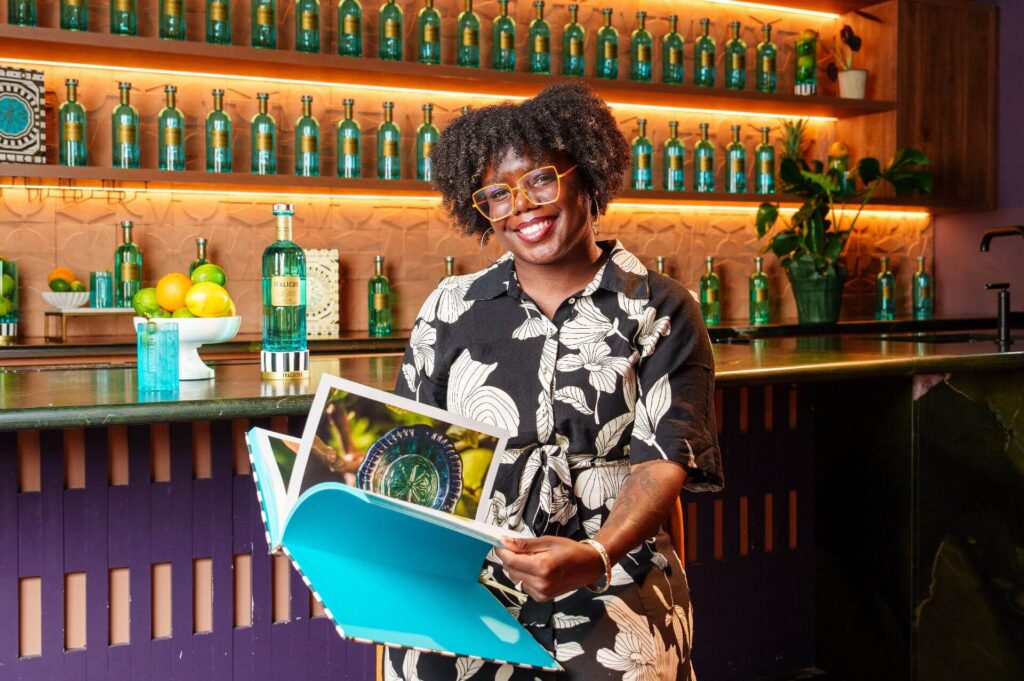
One bartender recognizable the world over is LP O’Brien. Fans of the Netflix show Drink Masters know that O’Brien won the first season.

LP O'Brien, the winner of the Netflix show Drink Masters, holding an ITALICUS book, surrounded by ITALICUS bottles.

I need that book, and that back bar.

Her part in the National Rosolio Day celebration includes a series that will educate people on ITALICUS and aperitivo culture. I’m certainly looking forward to learning more about the brand, rosoli, and apertivos from one of the best bartenders and mixologists in the business.

Of course, there’s no reason operators reading this can’t show their support for National Rosolio Day by introducing their guests to ITALICUS and aperitivo culture.

As this will become an annual celebration, bars can plan to participate officially in 2025 and beyond.

Cheers!

Roso-what-now?

So, you likely know what a liqueur is. And I’m willing to go out on a limb and assume you’re familiar with aperitivos.

But what, you may be wondering, is a rosolio?

This drinks category is a low-ABV Italian liqueur that, according to multiple sources, predates amaro, bitters, and vermouth. This ancient liqueur was, of course, homemade, so the botanicals varied wildly depending on region and who was creating a particular batch.

ITALICUS, for example, is crafted using Bergamot oranges from Calabria (considered by many to be the finest citrus in the world), citrons from Sicily, chamomile sourced from Lazio, and several Northern Italian herbs, including gentian, lavender, lemon balm, and yellow roses.

Clearly, these flavors are perfect for summer sipping. Of course, with a bit of creativity, creating cocktails that appeal to guests every season is quite an easy feat to accomplish.

Given its name, you may be curious about the use of rose petals in the production of rosolio. Well, while there are rosoli made with rose petals as an ingredient, rosolio translates to “morning dew,” or “dew of the sun.”

Operators and bar teams interested in implementing an Aperitivo Hour rather than (or in addition to) a standard happy hour have the perfect opportunity this coming Sunday. National Rosolio Day is ideal for leveraging the growing popularity of low-ABV drinks. This new holiday is also one of the best times to introduce guests to relaxing, socializing, and starting their evening with an aperitivo.

So, this weekend (and throughout the month of September), raise a glass to ITALICUS and the brand’s eighth anniversary.

For more details, check out the press release below.

ITALICUS CELEBRATES 8 YEARS WITH THE INAUGURAL NATIONAL ROSOLIO DAY ON SEPTEMBER 1st AND A MONTH DEDICATED TO THE APERITIVO

ITALICUS and mixologist LP O’Brien partner to celebrate the Italian Aperitivo culture across the world in honor of the brand’s 8th anniversary

NEW YORK, NEW YORK (August 28, 2024)ITALICUS Rosolio di Bergamotto announces the first ever National Rosolio Day on September 1st in honor of the brand’s 8th anniversary. During the month of September, the brand will celebrate the aperitivo around the world with 8 countries taking part to host week-long events featuring special cocktails created with ITALICUS to allow consumers to discover the Rosolio di Bergamotto through its drinks, story and innovation.

Founded in 2016 by Giuseppe Gallo, ITALICUS Rosolio di Bergamotto was created to bring back the forgotten Rosolio category. Made using the finest Italian ingredients, ITALICUS’ bottle design embodies the history and heritage of Italy’s distinctive regions, while telling the story of Rosolio’s traditional drinking occasion of aperitivo and its culture.

September 1st is officially recognized as National Rosolio Day thanks to ITALICUS. For this recurring holiday, ITALICUS has partnered with LP, Lauren O’Brien – renowned mixologist and winner of the Netflix series Drink Masters in 2023 – who will present a mini-series campaign to educate consumers about the brand, aperitivo category and culture. To further explore the best ways to enjoy ITALICUS, LP will be promoting ITALICUS through the art of mixology to demonstrate how you can drink ITALICUS and which easy-ingredient aperitivo cocktails can be replicated at home.

The 8 countries that are a part of the anniversary campaign include: Italy, France, Hong Kong, Hungary, New Zealand, The United Kingdom, The United States and Switzerland. Additionally, the bars that are a part of the initiative will be launching week-long activations whereby consumers can try delicious ITALICUS cocktails from an exclusive menu. The list of bars can be found through the website: https://rosolioitalicus.com/the-art-of-italicus/rosolio-day.

Along with these bars, ITALICUS can also be tasted and explored in some of the world’s 50 best bars including: Connaught Bar in London, Sips in Barcelona, Freni e Frizioni in Rome, Double Chicken Please in New York, Bar Leone in Hong Kong, Maybe Sammy in Sydney, Cafe La Trova in Miami and BKK Social Club in Bangkok.

“The aperitivo is a global trend started in Italy,” comments Giuseppe Gallo, founder of ITALICUS. “Now having a trendy moment around the world, the aperitivo blends tradition and innovation in its story and is served in many cocktails at the best global bars. For this campaign, we are extremely excited to partner with LP O’Brien – one of the most creative minds in the international mixology scene – to inaugurate Rosolio Day on September 1st.”

“Being part of the anniversary and ITALICUS’s launch of Rosolio Day is a tremendous honor,” explains LP. “I’m incredibly grateful to be associated with a brand that demonstrates such thoughtfulness in every aspect – from crafting the liquid to designing the bottle and creating a captivating story. Giuseppe, with his extensive experience in the beverage industry, has created something truly special with ITALICUS.” 

National Rosolio Day is dedicated to celebrating the history of the liqueur. Dating back to the Renaissance period, Rosolio is an Italian liqueur that was originally crafted in convents and monasteries as a medicinal tonic. Rosolio, meaning “dew of the sun,” is traditionally made from a base of alcohol, unrefined sugar, water and infused with botanicals, herbs, and fruits – with the most common flavors using spices or citrus fruits. Its preparation was a family traditional craft which was passed on from generation to generation. This liqueur was often used as a welcome drink (or “Cordiale” in Italian) at home.

Despite a decline in the 19th century, Rosolio has experienced a modern revival, driven by the craft cocktail movement and a renewed appreciation for conventional spirits. Today, Rosolio is enjoyed as an aperitif or digestif and brands like ITALICUS have revitalized the category by combining historic methods with contemporary flavors like the bergamot citrus orange – bringing the liqueur to a new generation of enthusiasts.

ITALICUS Rosolio di Bergamotto is sold in 700ml bottles at 20% ABV and is available at select retailers including Curiada and Total Wine for $39.99.

About ITALICUS® Rosolio Di Bergamotto

ITALICUS was created by the authority in Italian spirits, Giuseppe Gallo, to bring back the forgotten Rosolio category. With key notes of Calabrian bergamot, ITALICUS is made using the finest Italian ingredients to create a sip of Italy. The striking bottle design embodies the history and heritage of Italy’s distinctive regions, whilst telling the story of Rosolio’s time-honored traditional drinking occasion of Aperitivo.

ITALICUS is one of the top awarded aperitivo brands globally. ITALICUS Rosolio di Bergamotto was awarded Best New Spirit 2017 at the prestigious Tales of the Cocktail Spirited Awards, and Top Trending Liqueur Brand by Drinks International in the years from 2019 to 2024.

Additional awards include: DOUBLE GOLD – World Wine Spirits Trophy 2021; Italian Aperitif of the year GOLD MEDAL – NYISC 2021 and 2016; Tasting GOLD medal 2018, 2019 – Women & Wine and spirits awards; Best New European Spirit at the Mixology Awards 2017 in Berlin; Best Product at FIBAR 2017; Packaging awards GOLD MEDAL 2017 and Contemporary Awards TROPHY – International Wine & Spirits Competition 2017; Packaging Trophy – Harpers Design 2017; Gold Medal – San Francisco World Spirits Competition 2017; Platinum Best of Luxury – Pentawards 2017; Best New Product – Bar Awards 2016; EXCEPTIONAL quality certificate – Difford’s Guide 2016.

About Giuseppe Gallo

Giuseppe Gallo is one of the world’s most respected bartenders and drinks-industry innovators, with an unrivaled passion for the drinks business and an inimitable source of knowledge and insight into the world of aperitivo. Hailing from the Amalfi Coast, his passion for mixology stems from his strong Italian heritage. Giuseppe is widely considered a vermouth expert and he has spent over 15 years traveling the world and educating consumers and professionals on the category. This work has culminated in winning ‘International Ambassador of the Year’ at the prestigious awards in the drinks industry, Tales Of The Cocktail’s Spirited Awards in 2014. In September 2016 he created Italicus Rosolio di Bergamotto which reinvigorated a forgotten aperitivo category, which has won countless industry awards since its launch. In 2019, Giuseppe launched the Roma Bar Show, the first-ever international cocktail festival in the country.

About LP

LP O’Brien is an Afro-Boricua trailblazer in the world of mixology, research and development, renowned for her innovative approach and expertise in crafting exceptional beverages. She gained widespread recognition as the inaugural winner of the Netflix competition series Drink Master, where her creativity and skill set her apart from a field of talented competitors. Despite being sober for a little over a year, LP has continued to excel in her craft, demonstrating that a passion for mixology doesn’t require consuming alcohol. Her unique perspective and commitment to understanding the art of drink-making have made her a leading figure in the industry.

LP’s impressive portfolio includes collaborations with major corporations and celebrities. She has worked with Disney, Food & Wine, American Express, and has created bespoke beverage experiences for high-profile clients such as Christy Carlson Romano and Vanessa Hudgens, along with crafting the signature non-alcoholic beverage for the 2023 Primetime Emmy Awards. Her ability to blend flavors and create memorable drink experiences has earned her a reputation as a top-tier celebrity mixologist.

Images: ITALICUS

KRG Hospitality Start-Up Restaurant Bar Hotel Consulting Consultant Solutions Plans Services

by David Klemt David Klemt No Comments

Program for Unique Holidays: August 2024

Program for Unique Holidays: August 2024

by David Klemt

"Think about things differently" neon sign

Do you want to stand out from from other restaurants and bars in your area? Change how you think about your August holiday programming.

Several holidays are set against every date on the calendar, and this month is no exception. These holidays range from mainstream to esoteric.

Pay attention to the “weird” or unique holidays to raise eyebrows, carve out a niche for your restaurant or bar, and attract more guests. Why do what everyone else is already doing? Why program only around the same holidays as everyone else?

Of course, you shouldn’t try to celebrate every holiday, strange or otherwise. Focus on the days that are authentic to your brand; resonate with your guests; and help you grab attention on social media.

You’ll find suggestions for promotions below. However, the idea behind our monthly holiday promotions roundup is to inspire you and your team to get creative and come up with unique programming ideas.

For our July 2024 holidays list, click here.

August 3: National Mustard Day

Condiments offer the perfect finishing touch to the dishes we present to guests. Given their importance, we should celebrate them whenever we get the chance.

For some, nothing but mustard belongs on a hot dog. And there are even those out there who claim it’s the only condiment that belongs on a burger.

August 6: National Night Out Day

Traditionally, this holiday aims at encouraging communities to set up neighborhood watches. However, some communities also use this day to simply foster a sense of togetherness, organizing cookouts, block parties, and concerts.

This is a great day to establish your bar or restaurant as part of the community, particularly if your business is family friendly.

August 7: Particularly Preposterous Packaging Day

This is certainly one of the more obscure holidays I’ve encountered. To put a spin on this day to leverage it for a bar or restaurant, I suggest engaging your kitchen and bar teams to come up with an over-the-top presentation for one food item, and one drink. Make it Instagram-worthy and it’ll spread like wildfire on social media, making it a clever marketing exercise.

August 11: Play in the Sand Day

This is another holiday during which operators will benefit from tapping into the creativity of their kitchen and bar teams. The back of house, for example, can look into creating a sand pudding dessert. As for the bar team, the Blood and Sand is a classic whiskey cocktail that teams with the theme.

August 12: Afternoon Tea Week

An entire week dedicated to afternoon tea! In 2024, this holiday runs to August 18. Afternoon Tea Week is a fantastic way to boost traffic and revenue during the lunch daypart. Further, operators have two shots at brunch to cap this weeklong holiday.

Engage the bar team to have them create an LTO menu of tea-based cocktails, including zero-alcohol to full-ABV options.

August 14: World Calligraphy Day

If you have someone on your team with particularly fantastic handwriting, a sandwich board, and chalk (or markers for acrylic boards), you’re all set to celebrate this holiday. Not only can these signs lure passersby into a restaurant or bar, people like to spread them on social media. The same goes for restaurants and bars with chalkboard menus, making them useful marketing tools.

August 20: National Chocolate Pecan Pie Day

You’ve probably eaten a slice of pecan pie. But what about chocolate pecan pie? It’s possible many of your guests haven’t tried this lesser-known dessert. I bet your kitchen team can change that…

August 22: Burger Day

On its face, Burger Day isn’t particularly unique. However, any holiday can be made unique with a clever and creative promotion.

While it’s the ideal day for promoting your signature burger (or burgers), it will also work as a traffic-boosting LTO. For example, if you don’t have a smashburger on your menu, consider creating one for Burger Day. As another example, if you don’t have sliders, this is the time to offer them. Track the sales of your Burger Day LTOs to consider making them repeat promotions, or adding them to the standard menu permanently.

August 27: National Just Because Day

Sometimes operators are handed the perfect day to create and execute any promotion they can imagine. This is one of those days.

August 30: National Beach Day

Drinks with umbrellas, tropical shirts and beachwear, summery drinks, classic cookout dishes, refreshing desserts… Even bars and restaurants that don’t have an outdoor area can be transformed into a beachy scene.

Image: Ivan Bertolazzi on Pexels

KRG Hospitality Start-Up Restaurant Bar Hotel Consulting Consultant Solutions Plans Services

by David Klemt David Klemt No Comments

Campbell’s Shares Tips for LTOs

Campbell’s Shares Tips for LTOs that Generate ROI

by David Klemt

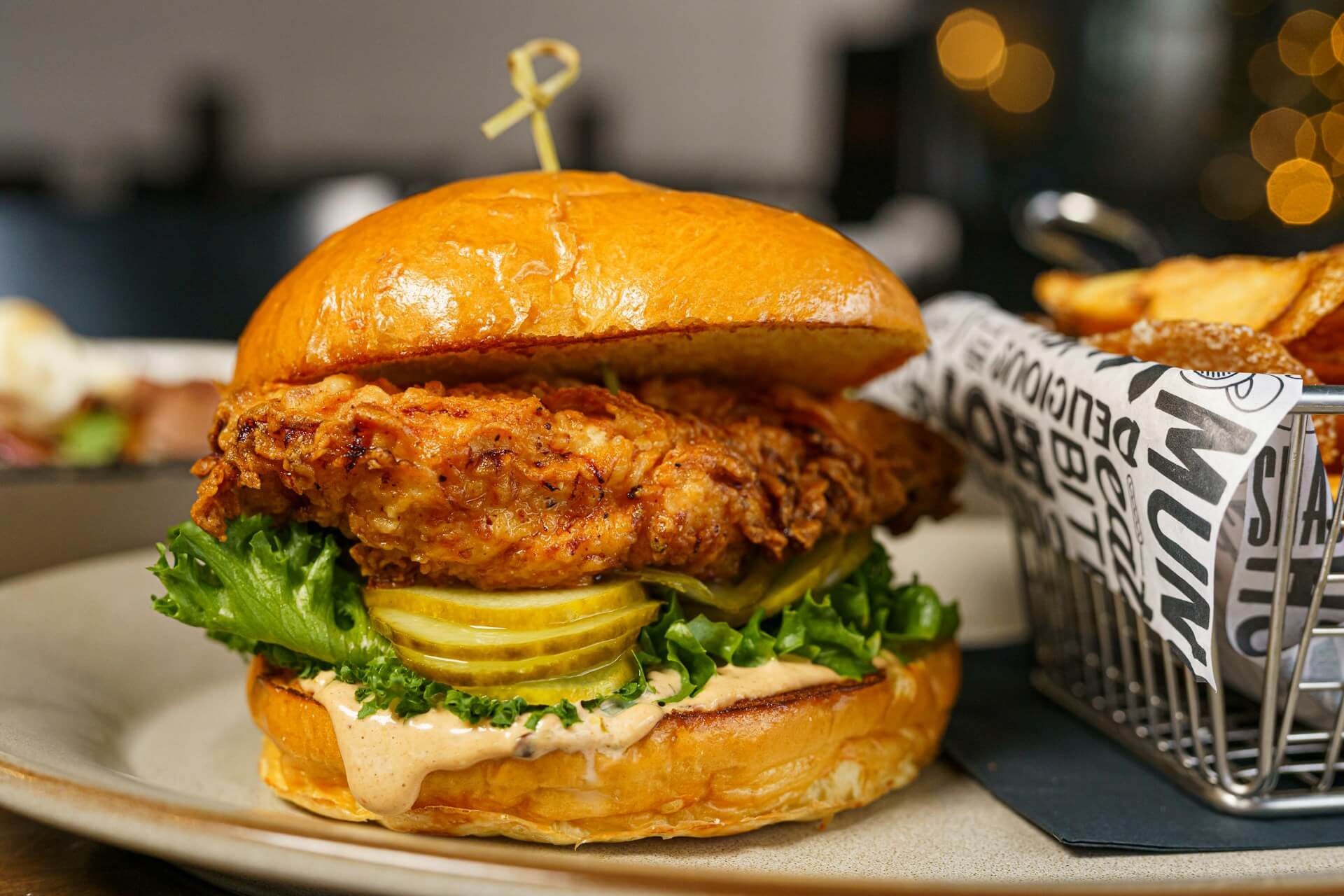
A well-crafted chicken sandwich with pickles, lettuce, and sauce, served next to a basket of French fries

Yes, the Chicken Sandwich Wars are still going strong in 2024.

We appreciate Campbell’s Foodservice’s reports and posts, and their most recent insights address how operators can succeed with LTOs.

For example, our look into their tips for leveraging nostalgia is here. And our thoughts on Campbell’s Culinary TrendPulse 2024 report are here for your review.

This time out, Campbell’s Foodservice, utilizing data from Technomic, Datassential, and other sources, is tackling LTOs.

If you’re a regular reader of KRG Hospitality’s industry insights, you know we love an LTOif an operator executes it effectively. Along those lines, you probably also know that we view Taco Bell as a leader in the industry when it comes to leveraging the power of LTOs.

Not only does the QSR giant know what their guests want, they know how to generate demand. In fact, Taco Bell understands the power not just of LTOs but of tying them to their subscriptions. Take, for example, their Taco Lover’s Pass and the Toasted Breakfast Taco menu drop.

When approached with thoughtful consideration, well-executed LTOs are a crucial element of an operator’s marketing and branding strategy. They drive traffic and sales, boost guest engagement and loyalty, and attract attention from first-time guests.

Of course, crafting a gainful LTO—gaining profits, loyalty, and positive public perception—can be easier said than done. However, there are a number of steps you can take to get the ball rolling and come up with one that reflects your brand, and resonates with guests.

Four Steps

Kicking off their tips, Campbell’s Foodservice recommends keeping LTOs simple. As they say in their report, which you can read here, operators need not “reinvent the wheel” when developing these promotions.

You can differentiate an LTO menu item from its standard counterpart in a number of simple ways. A few examples are using a unique cooking process, crafting a limited-edition sauce, and featuring a distinctive and specific topping or two.

Another tip is to do your best to offer LTOs that embrace current trends. While sharing these tips, Campbell’s cites Datassential and the revelation that just 20 percent of all LTOs are recurring. That means that the vast majority of LTOs are new creations, not stalwarts like the McRib. To draw the attention of a wider swath of guests, feature regional and local items and flavors. Per Datassential, 70 percent of guests are interested in such LTOs.

Speaking of attention, operators should learn how to take and edit attractive F&B images. Or, as Campbell’s says, “make LTOs pretty.” Per Datassential, roughly a third of consumers will try an LTO if it looks appealing in an advertisement or in-store imagery.

Finally, and this one is crucial as it embodies the previous three tips, leverage seasonality. It’s currently summer, so what can you add in the way of flavor to an existing item? Is that item regional and locally sourced? Will photographing it and crafting a sharp post communicate the season and inspire a bit of FOMO? These questions can help guide your approach to crafting profitable LTOs.

Oh, and to help you get started, I’ve shared Campbell’s season flavor suggestions below. Cheers!

Campbell’s Foodservice Seasonal Flavors

Not only did Campbell’s share tips for succeeding with LTOs, they also provided several examples of seasonal flavors to inspire you and your team.

Since it’s July, I’ll start with their summer suggestions.

Summer: basil, blackberries, corn, cucumbers, peaches, tomatoes, watermelon, zucchini

Fall: artichokes, cranberries, edamame, parsnips, pears, pumpkin, sweet peppers, tomatillos, turnips,

Winter: butternut squash, persimmons, radishes, salsify (a root vegetable), sunchokes, sweet potatoes, tangerines

Spring: asparagus, fava beans, pea greens, rhubarb, snap peas, spring onions, strawberries

Campbell’s Foodservice sources:

  1. Foodservice and Hospitality: A strong LTO strategy helps operators retain and grow their customer base (March 2024)
  2. Datassential: Limited Time Offers Keynote Report
  3. Technomic: 162 Best-in-Class LTOs for 2023
  4. Food & Drink Resources: A Limited Time Offer Strategy For Restaurants
  5. Your Guide to Seasonal Fruits and Vegetables, The Spruce Eats
  6. Datassential: State of the LTO 2024

Image: Hybrid Storytellers on Unsplash

Bar Nightclub Pub Brewery Menu Development Drinks Food

by David Klemt David Klemt No Comments

Difference Between a Plan and Playbook

The Difference Between a Plan and a Playbook

by Doug Radkey

An AI-generated image of a business plan on one side, versus a playbook on the other side

Sometimes AI comes up with impressive images. This is one of them.

You’ve likely heard that 80 percent of hospitality businesses fail within the first five years.

When you ask those in the industry the question of why there is such a high rate of failure, they reply with a fairly predictable list of factors. These tend to be location, concept or brand confusion, lack of service standards, toxic workplace culture, sub-par marketing efforts, and mismanaged funds.

Many operators who fail try to quickly blame external factors, such as the economy.

When you ask the next questionwhat are the other 20 percent of operators doing differently to surpass five years in businessyou get one simple answer. The difference between those who drive a sustainable profit of 12, 15 or 20 percent (or more) and those who don’t boils down to one thing and one thing only: they have strategic clarity.

It’s not that the successful 20 percent did not battle challenges or the same tough economy or labor struggles. What they had was clarity, and a playbook detailing how to overcome a multitude of challenges.

So how do you achieve strategic clarity? Well, it’s much more than just writingor filling out a template fora business plan.

What is Strategic Clarity?

Strategic clarity is the comprehensive understanding and alignment within your hospitality business regarding its identity, direction, purpose, and the means to achieve its goals.

It involves clear communication and consensus on key aspects of the business, ensuring that everyone is working towards the same objectives. Below, the key components that define strategic clarity.

1. Understanding Who We Are

  • Core Identity: This includes the mission, vision, and core values of your business. It defines what the business stands for, and its fundamental purpose.
  • Strengths and Weaknesses: Recognizing the business’ strengths, weaknesses, opportunities, and threats (SWOT) aids in identifying the core competencies and areas for improvement.
  • Culture: The shared beliefs and practices that characterize the business’ internal environment, and how it interacts with both staff and guest perceptions.

2. Knowing Where We are Going

  • Vision: A clear and compelling picture of what the business aspires to become in the future. It serves as a guide for choosing current and future courses of action.
  • Long-term Goals: Specific, measurable, achievable, relevant, and time-bound (SMART) goals that outline the desired outcomes over an extended period.
  • Milestones: Intermediate targets that mark progress towards the long-term goals.

3. Understanding Why We are Doing This

  • Purpose: The fundamental reason for the business’ existence beyond making a profit. It encompasses the broader impact the business aims to have on its community.
  • Motivation: The driving force behind the business’ actions and strategies. This includes the values and principles that guide decision-making, as well as behavior.
  • Stakeholder Alignment: Ensuring that the goals and activities of the business align with the interests and needs of its stakeholders: guests, employees, investors, and the community.

4. How We are Going to Get There

  • Strategy: The overarching plan that outlines how the business will achieve its vision and long-term goals. It includes the allocation of resources and the selection of strategic initiatives.
  • Tactics: The specific actions and steps that will be taken to implement the strategy. This involves detailed planning, delegation, resources, and execution.
  • Performance Metrics: The criteria and tools used to measure progress and success. Key Performance Indicators (KPIs) and other metrics help track the effectiveness of strategies and tactics.
  • Continuous Improvement: The process of regularly reviewing and refining strategies and tactics based on performance data and changing circumstances.

Strategic clarity is essential for the cohesive and effective functionality of your bar, restaurant, or hotel business. This leadership approach ensures that all members understand and are aligned with the business’ identity, direction, purpose, and methods.

By achieving strategic clarity, organizations can navigate challenges, seize opportunities, and build upon sustainable long-term success. What we have found over the years that attributes to long-term clarity and success is a series of playbooks.

Understanding Plans and Playbooks

Let’s first dive into the critical distinction between a plan and a playbook, and why this matters for your bar, restaurant, or hotel. Understanding and utilizing both can significantly impact your business’ ability to start strong, stabilize effectively, and ultimately position you to scale successfully.

A traditional business plan, as you may know it, is a document that outlines your goals, and the steps you will take to achieve them. It’s often the number one consideration to secure funding and to set strategic direction.

However, it is, more often than not, missing plenty of crucial information, strategies, and guidance that end up planting a false sense of security.

A playbook, on the other hand, is a more comprehensive guide filled with detailed processes, best practices, and adaptable strategies tailored to your specific operations. Within this dynamic industry, you need more than a standard business plan if you want to be successful.

In fact, you should have eight different playbooks in place to position yourself within the top echelon of this industry.

The Power of Playbooks in Hospitality

While plans are often static or rigid (and often forgotten about shortly after they’re written), playbooks are designed to be flexible and adaptable.

Playbooks provide a step-by-step guide, ensure consistency and efficiency, and offer adaptable strategies and best practices to start, manage, and grow effectively.

Playbooks go into more granular details, and provide actionable steps. In this way, they’re notably different from a singular business plan.

The Eight Playbooks

No matter if you are operating a coffee shop, bar, restaurant or hotel (or any other concept within the hospitality industry), the following eight playbooks should be looked at as non-negotiables.

  1. Feasibility Study/Playbook: The foundational guide for assessing the viability of your hospitality business idea. It involves a comprehensive analysis of the market, competitive landscape, financial projections, and operational requirements. This playbook helps you determine whether your concept is realistic and profitable before committing significant resources.
  2. Concept Playbook: Focuses on refining your hospitality business idea into a clear and compelling concept. This playbook guides you through creating a unique value proposition, defining your target market, and outlining the core elements of your business, including service style, interior design, and internal programming.
  3. Prototype Playbook: A step-by-step guide to developing a tangible representation of your hospitality concept. This playbook helps you create a prototype that can be tested and refined before a full-scale launch. This playbook covers design specifications, operational workflows, fixtures/furniture/equipment, and detailed budgets.
  4. Brand Strategy & Identity Playbook: Defines the strategic approach to building and maintaining a strong brand. This playbook covers the creation of your brand identity, messaging, and positioning to ensure consistent and impactful brand communication. It involves color psychology, core values, mission statements, brand experiences, and more.
  5. Marketing Playbook: Outlines the strategies and tactics to attract, build, and retain your target guests. This playbook provides a roadmap for creating and executing effective marketing campaigns across various channels. It provides a step-by-step guide on content, social media management, database building, email marketing, partnerships, and community activations, along with detailed guest journey maps.
  6. Tech-stack Playbook: Provides guidance on selecting and implementing the correct technology solutions to enhance your hospitality operations. This playbook ensures that your technology infrastructure supports your business goals and improves efficiency. This playbook identifies technology gaps, software solutions, hardware requirements, and integration plans, plus training and support on technology.
  7. Financial Playbook: A comprehensive guide to manage your hospitality business’ finances. This playbook covers budgeting, financial forecasting, accounting practices, and financial performance analysis. It should highlight financial contingency plans, mock labor schedules, daily/weekly/monthly/seasonal traffic reports that align with the business, and financial objectives.
  8. Operational Playbook (a.k.a. Business Plan): Outlines the day-to-day operations in great detail, along with long-term strategies. This playbook ensures that all aspects of your operations are well-coordinated and aligned with your overall business goals, and the other seven playbooks. It should highlight standard operating procedures, labor plans, supply chain management, guest services, and measurable operational metrics.

You’ll notice there are seven other playbooks written before the business plan. Far too often, this is where people start. Without the other seven playbooks, it will be nearly impossible to craft a winning playbook for your day-to-day operations.

When Should You Use Playbooks

  • To Start: These eight playbooks are crucial to craft your success story right from the beginning. Build the foundations before signing a lease or purchasing a property.
  • To Stabilize: If you’re currently underperforming (profit margins under 12 percent for bars and restaurants, and under 15 percent for hotels), use playbooks to generate impactful results.
  • To Scale: These playbooks will help ensure that both your first locationand the next locationare prepared for consistent operations without diminishing your brand equity.

Strategic planning within detailed playbooks is essential for your hospitality business’ success.

Regardless of your current position, evaluate your use of business plans, and consider developing comprehensive playbooks instead. Make the time and commitment to achieving true clarity in your business, and position yourself to be on the correct side of this industry’s statistics.

AI image generator: DALL-E

KRG Hospitality Start-Up Restaurant Bar Hotel Consulting Consultant Solutions Plans Services

by David Klemt David Klemt No Comments

3 Spins on Classics for July 4th

3 Refreshing Spins on Classics for July 4th

by David Klemt

The METAXA Sour cocktail made with METAXA 12 Stars, in landscape orientation

Our friends over at Rémy Cointreau want to help you celebrate the 4th of July with your guests, so they sent over these three enticing cocktail recipes.

Back in January of this year they sent us cocktails dedicated to the 2024 Pantone Color of the Year, Peach Fuzz. And about four months ago, Rémy Cointreau shared National Cocktail Day recipes with us. In turn, we shared them with you.

More importantly, two of these builds are reinterpretations and refreshes of well-known classics. Below, you’ll find a reinvention of a Whiskey Sour and a Mojito.

There’s also a frozen Margarita, a perfect refresher for hot summer days and nights. Although, one can argue that this is a spin on the original, figuratively and literally since it’s going into a blender.

Of these three drinks, the METAXA Sour is the one I’m most eager to try. Most people are likely familiar with Cointreau and Rémy Martin Cognac.

However, they’re probably less acquainted with METAXA. Guests who appreciate a fine Cognac or complex whiskey or rum will likely enjoy METAXA 12 Stars. This brandy is the marriage of sweet Muscat wine from the Greek island Samos, fine wine distillates aged for up to 12 years, and Mediterranean botanicals.

Before being bottled, METAXA 12 Stars is aged in heavily toasted oak barrels for at least 12 months. Along with spice, expect dried citrus fruit, toffee, coffee, and chocolate on the nose and palate.

Personally, I recommend experimenting with METAXA 12 Stars (and its peer 7 Stars) in your brandy, bourbon, rye, and rum cocktails.

Cheers!

METAXA Sour cocktail, made with METAXA 12 Stars spirit from Greece

METAXA Sour

  • 1.7 oz. METAXA 12 Stars
  • 0.7 oz. Fresh lemon juice
  • 0.3 oz. Sugar syrup
  • 0.7 oz. Egg white, or 1 Tbsp. Meringue
  • Orange zest to garnish

The METAXA Sour is a spicy, citrusy, and bright take on the traditional sour. First, prepare a rocks by adding a large sphere or cube of ice. Next, simply add all of the ingredients (minus the garnish, of course) to a shaker filled with ice. Shake well, then strain, and dry shake to emulsify. Note: Some bartenders prefer dry shaking first, then adding ice, and then shaking again. Finally, pour into the prepared rocks glass, garnish, and serve.

Frozen Berry Margarita cocktail made with Cointreau

Frozen Berry Margarita

  • 1 oz. Cointreau
  • 2 oz. Blanco tequila
  • 0.75 oz. Fresh lime juice
  • 0.5 cup Frozen berries
  • 0.25 oz. Simple syrup
  • 5 Ice cubes
  • Speared lime wheel and berries to garnish

Break out the blender. Oh, and try to sell more than one at a time to be more efficient.

This recipe is easy: add all of the ingredients except the garnish to a blender. I bet you know what’s nextblend everything together. Pour into a Margarita glass, garnish, and serve.

The Rémy Mojito cocktail, made with Rémy Martin 1738 Accord Royal

The Rémy Mojito

  • 1.5 oz. Rémy Martin 1738 Accord Royal
  • 1 oz. Fresh lime juice
  • 0.5 oz. Simple syrup
  • 1 0z. Sparkling water
  • Handful of mint leaves to muddle
  • Mint sprig to garnish

This recipe is a bit of a departure from the traditional Mojito your guests know and love. Therefore, it’s a new way to re-engage with a classic and have a new experience.

Start by adding pebble ice, Rémy Martin 1738 Accord Royal, lime juice, simple syrup, and a handful of mint leaves to a shaker. Per the recipe, using pebble ice should prevent the mint leaves from being broken and torn apart. Shake well, pour into a Collins glass, and top with the sparkling water. Garnish with mint sprig, and serve.

Disclaimer: Neither the author nor KRG Hospitality received compensation, monetary or otherwise, in exchange for this post.

Images courtesy of LaFORCE on behalf of Rémy Cointreau

Bar Nightclub Pub Brewery Menu Development Drinks Food

by David Klemt David Klemt No Comments

5 Books to Read this Month: July 2024

5 Books to Read this Month: July 2024

by David Klemt

Flipping through an open book

Our inspiring July book selections will give you a new perspective on developing leadership skills, identifying your core values, effective branding, and more.

To review the book recommendations from June 2024, click here.

Let’s jump in!

Wawa Way: How a Funny Name and Six Core Values Revolutionized Convenience

Core values is one of the topics that came up during the inaugural Flyover Conference, which took place in Cincinnati, Ohio. In fact, keynote speaker Dave Kaplan of hospitality group Gin & Luck (Death & Co.) shared his approach to identifying personal and brand core values. (Yes, I’ll be writing an article on that for publication in the near future.) This book, written by Howard Stoeckel, vice chairman of Wawa, illustrates the importance of identifying, adhering to, and revisiting core values on a regular basis to forge a path toward long-term success.

From Amazon: “Grahame Wood opened the first Wawa Food Market in 1964 as an outlet for Wawa dairy products. Since then, the convenience store has grown into a well-known company that competes against the biggest industry players in the world in three areas: fuel, convenience, and food, all while maintaining their personal approach and small business mentality. Now, almost 50 years later, Wawa has opened its first store in Florida and begun to play on the national field. How did it happen? What are the reasons for their success? Why have they been able to go up against the big guys with nothing more than homegrown talent?”

Pick up the paperback here.

The Checklist Manifesto: How to Get Things Right

Interestingly, The Checklist Manifesto credits the US Air Force with implementing checklists to great success. As a former airman myself, I can attest to the USAF’s strict usage of this simple but effective tool. So, it should come as no surprise that Iand the rest of the KRG Hospitality teamare firm believers in operators using checklists every day. Indeed, one of the services we provide is creating tailor-made checklists for our clients.

Moreover, Dave Kaplan recommended this book during the Q&A session of my Flyover Conference session. Now, I’m recommending this book to you and our clients.

From Amazon: “We live in a world of great and increasing complexity, where even the most expert professionals struggle to master the tasks they face. Longer training, ever more advanced technologies—neither seems to prevent grievous errors. But in a hopeful turn, acclaimed surgeon and writer Atul Gawande finds a remedy in the humblest and simplest of techniques: the checklist. First introduced decades ago by the U.S. Air Force, checklists have enabled pilots to fly aircraft of mind-boggling sophistication. Now innovative checklists are being adopted in hospitals around the world, helping doctors and nurses respond to everything from flu epidemics to avalanches. Even in the immensely complex world of surgery, a simple ninety-second variant has cut the rate of fatalities by more than a third.”

Get your copy today.

Protocol: The Power of Diplomacy and How to Make It Work for You

Are you aware there’s a position within the US Department of State dedicated to advising president, vice president, and secretary of state on diplomatic protocol? The person in this role is the chief of protocol, and they claim the ranks of assistant secretary of state, and ambassador. Among their responsibilities, this person ensures those in the highest offices are aware of and understand cultural gestures. Further, these people know how powerful seemingly “small” gestures are in influencing interactions and experiences.

Savvy operators will see parallels in the experiences they deliver to guests. Protocol was written by Capricia Penavic Marshall, former chief of protocol to former President Obama. In its pages you’ll learn the importance of etiquette, diplomacy, implementing and training your team on SOPs, and how there are no “minor” details in hospitality.

From Amazon: “Sharing unvarnished anecdotes from her time in office—harrowing near misses, exhilarating triumphs, heartwarming personal stories—Marshall  brings us a master class in soft power, unveiling the complexity of human interactions and making the case that etiquette, cultural IQ, and a flexible mind-set matter now more than ever. When the notion of basic civility seems to be endangered, Protocol reminds us how critical these principles are while providing an accessible guide for anyone who wants to be empowered by the tools of diplomacy in work and everyday life.”

Buy it here!

Day Trading Attention: How to Actually Build Brand and Sales in the New Social Media World

As an operator, your time is your most-valuable resource. Therefore, you need to make sure you spend it wisely and take massive action. This relates to marketing and branding, as creating content is a waste of time if it’s not impactful, relevant, and engaging in order to result in traffic and sales.

From Amazon: “In his latest book, [Gary] Vaynerchuk argues that today’s fast-growing businesses, brands, content creators, and influencers have one thing in common: They mastered storytelling in areas of underpriced attention, which predominantly exists across a handful of social media platforms. Informed by 20+ years of business and marketing success, he contends that the biggest transformation and opportunity is the “TikTokification of Social Media.” Increasingly, platforms are distributing content based on what users are interested in, rather than who they follow.”

Grab yours now.

Bar Hacks: Developing The Fundamentals for an Epic Bar

Yep, I’m taking the opportunity to recommend Doug Radkey’s first book. Radkey is, as you may know, the president of KRG Hospitality. In his this book he explains the importance of nailing the fundamentals in order to:

  • start your operator journey in the best possible position;
  • stabilize your business; and
  • scale when the time comes, if that’s what you want.

From Amazon: “This informative and conversational book is the perfect read for aspiring or seasoned bar, pub, lounge, or even restaurant owners, operators, and managers looking for that competitive edge in operations! If you’re looking for both fundamental and in-depth planning methods, strategies, and industry focused insight to either start or grow a scalable, sustainable, memorable, profitable, and consistent venue in today’s cut-throat industry–Bar Hacks is written just for you!”

Click here to get your copy today!

Image: Mikołaj on Unsplash

KRG Hospitality Start-Up Restaurant Bar Hotel Consulting Consultant Solutions Plans Services

by David Klemt David Klemt No Comments

Program for Unique Holidays: July 2024

Program for Unique Holidays: July 2024

by David Klemt

"Think about things differently" neon sign

Do you want to stand out from from other restaurants and bars in your area? Change how you think about your July holiday programming.

Several holidays are set against every date on the calendar, and this month is no exception. These holidays range from mainstream to esoteric.

Pay attention to the “weird” or unique holidays to raise eyebrows, carve out a niche for your restaurant or bar, and attract more guests. Why do what everyone else is already doing? Why program only around the same holidays as everyone else?

Of course, you shouldn’t try to celebrate every holiday, strange or otherwise. Focus on the days that are authentic to your brand; resonate with your guests; and help you grab attention on social media.

You’ll find suggestions for promotions below. However, the idea behind our monthly holiday promotions roundup is to inspire you and your team to get creative and come up with unique programming ideas.

For our June 2024 holidays list, click here.

July 7: National Dive Bar Day

Alright, dive and neighborhood bar operatorsthis is the day to really ensure you and your bar team shine. Show the community why your bar is one of the cornerstones of the neighborhood. This is an opportunity to pull out the stops to impress your regulars and reinforce their love of your bar, and to attract new neighbors to hang out at your place on a regular basis.

July 8: National SCUD Day

Let’s clarify this at the start: SCUD stands for “Savor the Comic and Unplug the Drama.” The intent is for people to relax, unplug, and enjoy some humor, or at least take a light-hearted approach to life. Now, if you happen to feature stand-up comedy or operate a comedy club, this holiday should be all the way in your wheelhouse.

July 9: Cow Appreciation Day

The humble cow provides a lot for us. In addition to all manner of food items, cows even help us make some very smooth vodkas. Given how much cows give, operators can make entire prix fixe menus dedicated to them: from appetizer to dessert, the cow can fill out an entire meal, including drinks.

However, you can take another approach to this holiday. Vegan restaurants, for example, can highlight alternatives to cow products by creating dishes, drinks, and prix fixe menus.

July 11: National Mojito Day

Here’s an easy one. After you’ve ensured that your bar team makes an excellent Mojito, create an LTO menu. Feature the traditional build, a high-end version, and a creative variant or two.

July 13: Embrace Your Geekness Day

How the times have changed, for the better in this instance. Not long ago, “geek” was a real insult. Now, we can’t wait as individuals to geek out with others over our hobbies, interests, and other passions.

Does your bar have an overall theme that can be amplified for maximum geekiness? Do you feature board games, card games, or even video games? Is it common for clubs to meet up at your place? Have you noticed something that several of your patrons seem to enjoy talking about and geeking out over? Lean as far into that as you can and create an amazing experience.

July 15: National Be a Dork Day

Maybe you don’t like the word “geek.” Perhaps, to you, being a dork is more about being a bit (or very) silly, and leaning into being “uncool” (which is actually cool).

At any rate, if you’re not into the idea of Embrace Your Geekness Day—or you want to showcase the difference between geeks and dorks—National Be a Dork Day may work well for you.

July 21: National Junk Food Day

We all have differing ideas about junk food. For some, junk food refers to candy and dessert foods, specifically. To others, it’s anything that isn’t considered a healthy food.

The approach I recommend is giving people an excuse to eat and drink whatever they want on this day, or taking a cheat day. Further, you can certainly create a cocktail menu that captures the flavors of people’s favorite candy bars, candies, etc. Or, build over-the-top burgers, come up with a signature food challenge, or create a signature pizza that features compelling and unique toppings.

July 22: National Mango Day

Mango Margaritas, Mango Mezcalritas, mango IPA, mango ale, mango salsa, mango-habanero-glazed short ribs… If you can mango it, put it on an LTO menu.

July 27: National Take Your Pants for a Walk Day

Are you in a walkable city? This is really just a more interesting way of saying, “Walk to our bar/restaurant to earn your treat and time out with friends.”

July 31: National Avocado Day

Don’t be avoca-don’tbe an avoca-do. If your dishes and drinks can feature avocado in some way, have your kitchen and bar teams lean into it. For example, this would be a fantastic day to impress with a signature guacamole, made table-side.

Image: Ivan Bertolazzi on Pexels

KRG Hospitality marketing support. Restaurant. Bar. Cafe. Lounge. Hotel. Resort.

by krghospitality krghospitality No Comments

The Power of an ImpactMAP™

The Power of an ImpactMAP™

by Doug Radkey

KRG Hospitality ImpactMAP, main image

Let’s be honest, the line between success and failure often hinges on the ability to act decisively and act with purpose.

In this article, we’re going to explore two areas of your hospitality business that are under your control: creating a plan, and taking action.

Understanding the Risk of Inaction

The concept surrounding the Risk of Inaction—arguably a new form of ROI—captures the potential losses businesses face when they fail to take strategic actions.

Inaction in the hospitality industry can manifest in various harmful ways. Inaction can also stem from multiple sources: fear of change, lack of resources, or simply underestimating the competition.

Regardless of the manifestation or cause, the consequences are usually the same: stagnation, decline, and, ultimately, a shuttered business.

Let’s put this into context by taking a look at a sample of both a restaurant and a hotel business.

Failure to Innovate

If a restaurant does not act to continuously re-engineer its menu, it risks diminishing profits, providing a low-level guest experience, and mismanaging inventory. Without regular strategic updates, the menu may fail to reflect current culinary trends and guest preferences, which can lead to a decrease in interest and satisfaction.

Additionally, sticking with a static menu can prevent the restaurant from optimizing ingredient use, productivity, and cost-efficiency.

At the end of the day, this lack of adaptation and innovation will result in diminishing sales and profitability, making it difficult for the restaurant to sustain its operations.

Failure to Update Systems

If a hotel on the other hand decides to not use a modern and fully integrated Property Management System (PMS), it risks operating inefficiently and falling behind in today’s technology-driven hospitality environment.

A non-existent, outdated, or fragmented PMS can lead to significant operational issues, such as slow check-in and check-out processes, errors in room availability and booking management, and ineffective communication between different departments. That’s just to name a few crucial issues.

This inefficiency can impact guest experiences negatively, leading to dissatisfaction and potentially harming the hotel’s reputation.

Furthermore, without a modern PMS, a hotel may struggle with data management, limiting its ability to effectively analyze performance metrics, forecast demand, and implement dynamic pricing strategies. These disadvantages will result in lost revenue and reduced competitiveness in a space where guest expectations and operational efficiency are increasingly driven by technological advancements.

In each example above, the risk of inaction leads to missed opportunities and underperformance.

The Power of an ImpactMAP™

To combat the risks associated with inaction, your hospitality business can benefit significantly from developing an ImpactMAP™.

This strategic tool can help you identify where you currently stand, define where you want to go, and outline the steps required to get there, thereby helping you create not only strategic clarity, but drive and accountability.

KRG Hospitality ImpactMAP, flowchart and map

The Assessment

To create an ImpactMAP™ and to take action immediately, you need to first assess your operations.

An assessment of your hospitality business is a comprehensive evaluation process aimed at analyzing various aspects of your business to identify strengths, weaknesses, and areas for improvement or opportunity. The goal is to gather actionable insights that can help optimize operations, enhance guest experiences, and massively improve your profitability.

The assessment should involve on-site observations, staff interviews, and a deep dive into the following eight categories, culminating in a detailed report that provides recommendations and a strategic plan for future growth and sustainability.

For each of the eight categories, consider a 3x matrix with three responses to the following questions:

  • Where are we now?
  • Where do we want to go?
  • What resources do we need?
  • What’s holding us back?

Then, create a SMART (Specific, Measurable, Achievable, Relevant, Timely) goal for each response in your “Where We Want to Go” list.

What are the eight assessment categories?

1. Brand Strategy

Assessment: Review your core values, story, messaging, philosophy, design, and reputation.

Opportunity: Enhance brand alignment across all touchpoints to ensure consistency while refining your brand messaging to better connect with targeted guest profiles.

2. Internal Programming

Assessment: Review your pricing strategy, guest experiences, property / menu / room management systems and programs.

Opportunity: Optimize your offerings based on guest preference data and a profitability analysis, along with potential upgrades to your amenities to enhance guest satisfaction and to compete with today’s market standards. In summary, implement efficiencies to improve guest experiences and operational workflow with a focus on your internal programming.

3. Marketing Plans

Assessment: Review guest profiles, guest journey maps, guest databases, awareness and retention strategies, and your digital marketing portfolio.

Opportunity: Integrate advanced digital marketing techniques to increase reach and engagement while developing targeted promotions and partnerships, and by leveraging data analytics to tailor marketing efforts more precisely to guest behaviors and trends.

4. Tech-Stack Plans

Assessment: Review guest facing technology, POS / PMS system, integrations, and marketing.

Opportunity: Identify current technology gaps and plan for a strategic integration of systems that enhance guest experiences while streamlining operations.

5. Standard Operating Procedures

Assessment: Review of all internal and external systems, plus training programs and SOPs.

Opportunity: Ensuring that all staff are clear on their roles and responsibilities, which enhances overall service quality through the development of standardized procedures that ensure consistency and efficiency across the business. Implement feedback systems to continually refine and improve SOPs based on real-time challenges and successes.

6. People and Culture

Assessment: Review of staff experiences, onboarding, productivity, growth, and retainment.

Opportunity: Strengthen employee engagement through improved communication and support systems. Foster a culture of innovation and openness in which employees feel valued and motivated. Develop leadership from within to enhance management effectiveness and succession planning.

7. Financial Health

Assessment: Review of all financials, including Revenue, COGs, KPIs, Expenses, Debt, and Profit.

Opportunity: Identify cost-saving opportunities without compromising service quality. Explore new revenue streams that align with your brand values and market opportunities. Implement more rigorous financial tracking and forecasting tools (such as technology) to better predict financial trends and react proactively.

8. Mindset

Assessment: Daily habits, work / life balance, decisiveness, communications, and growth-based thinking.

Opportunity: Develop a mindset of continuous improvement among all staff levels (starting with yourself) to foster an environment of excellence. Cultivate resilience by planning for crisis management and business continuity. Promote a guest-centric approach, aligning all business decisions with guest satisfaction and personal development outcomes.

Creating the ImpactMAP™

By following the above 3x strategy for each category, you will have created 24 SMART objectives that will be the foundation of your ImpactMAP™ to move your business forward over the next one to six to 12 months.

Importance of SMART Objectives

What does SMART mean and how does it work?

  • Specific, Clarity, and Focus: SMART objectives provide clear and concise goals that everyone in your business can understand and rally behind. This clarity helps to focus efforts and resources on what’s most important.
  • Measurability and Tracking: By setting measurable goals, your business can track progress and make data-driven decisions. This measurability allows for adjustments to be made in strategies or tactics to ensure the objectives are met.
  • Achievability: Goals that are achievable motivate staff. Setting impossible goals can lead to frustration and disengagement, whereas achievable objectives encourage team effort and commitment.
  • Relevance: Ensuring that each objective is relevant to the broader business goals ensures that every effort made contributes to the overall success of your brand.
  • Timeliness: Incorporating a timeframe provides urgency, a deadline, and accountability, which can help prioritize daily tasks and long-term plans.

However, you shouldn’t try to accomplish all 24 objectives at the same time. Once you’ve set your 24 impactful objectives, prioritizing them is crucial to stabilize your hospitality business and aim for scalable growth.

Best Practices for Prioritizing Objectives

  • Assess Business Needs: Start by conducting that thorough assessment of your business to identify key areas that need improvement.
  • Impact Analysis: Evaluate the potential impact of each objective. Prioritize objectives that offer the greatest benefits in terms of guest satisfaction, revenue growth, and operational efficiency.
  • Resource Availability: Consider the resources available, including budget, people, and technology. Prioritize objectives that align with current resources or where adjustments can be made to accommodate necessary changes.
  • Quick Wins: Identify objectives that can be achieved quickly and with minimal disruption to your ongoing operations. These quick wins can boost morale and provide visible improvements that justify further investments in other areas.
  • Strategic Importance: Some objectives, while not providing immediate benefits, are crucial for long-term success. Prioritize these based on their strategic importance to the business’s future.
  • Stakeholder Input: Engage with various stakeholders, including management, staff, and guests, to gain insights into which objectives they feel are most critical. This can help in aligning the goals with the needs and expectations of those most affected by the changes.
  • Balanced Scorecard: Use a balanced scorecard approach to ensure that objectives across different areas such as guest services, internal processes, financial performance, and learning and growth are all being addressed.
  • Iterative Review: Regularly review the priorities as situations and business dynamics evolve. What may be a priority today might change based on market conditions or internal business changes over the next three to six months.

Once you have your objectives prioritized, it’s time to assign or delegate them as needed and have those assignees (including yourself) take ownership of the objectives with their signature to add another level of accountability.

Implementing the ImpactMAP™

Before starting, ask yourself one final question: What will happen if we don’t take action?

Be detailed and mindful of what the short-term and long-term consequences might be if you don’t act.

Effective implementation of an ImpactMAP™ requires knowledge of these consequences, along with a commitment from all levels of your business. It starts with comprehensive training sessions followed by regular review meetings, which are both essential to assess progress, address challenges, and refine strategies as needed.

Take a SMART-ER approach, which is where you Evaluate and Re-adjust the SMART objectives halfway through the timeline you’ve set.

Conclusion

Risk of inaction is a silent threat that can undermine any business, particularly in this dynamic industry.

Adopting an ImpactMAP™ and making a commitment to take massive action allows you to manage your operations proactively, adapt to changing market conditions, and set a course for sustainable success.

This strategic approach not only mitigates risks but also empowers your hospitality business to thrive in a competitive landscape—but it starts with you and your mindset toward taking action.

Image: KRG Hospitality

KRG Hospitality. Restaurant Business Plan. Feasibility Study. Concept. Branding. Consultant. Start-Up.

by krghospitality krghospitality No Comments

Program for Unique Holidays: June 2024

Program for Unique Holidays: June 2024

by David Klemt

"Think about things differently" neon sign

Do you want to stand out from from other restaurants and bars in your area? Change how you think about your June holiday programming.

Several holidays are set against every date on the calendar, and this month is no exception. These holidays range from mainstream to esoteric.

Pay attention to the “weird” or unique holidays to raise eyebrows, carve out a niche for your restaurant or bar, and attract more guests. Why do what everyone else is already doing? Why program only around the same holidays as everyone else?

Of course, you shouldn’t try to celebrate every holiday, strange or otherwise. Focus on the days that are authentic to your brand; resonate with your guests; and help you grab attention on social media.

You’ll find suggestions for promotions below. However, the idea behind our monthly holiday promotions roundup is to inspire you and your team to get creative and come up with unique programming ideas.

For our May 2024 holidays list, click here.

June 6: National Gardening Exercise Day

Does your bar, restaurant, or hotel have an herb garden? If so, this is an excellent day to let your guests know about it, and highlight which drinks and dishes feature ingredients from said garden.

June 8: National Rosé Day

Your first instinct may be to feature your still and sparkling rosé wines on this day. However, there are also rosé spirits out there, like vodka and gin. Use this day to make your guests aware of your rosé program. Oh, and June 8 also happens to be World Gin Day, another reason to offer an LTO menu that features rosé gin.

However, you don’t have to stop the festivities on June 8. The next day is Day of La Rioja, and this Spanish province is world-renowned for its winemaking. In fact, there are more than 600 wineries in La Rioja, and some produce rosado or rosato, a.k.a. rosé.

June 10: National Herbs & Spices Day

If your kitchen makes its own spice blends, shout about them to the rooftop on June 10. And if you don’t yet make your own blends but would like to, here’s a tip from Chef Brian Duffy: make ten pounds of it, not just a quart, and store it in a clearly labeled flat tray. You’ll go through it faster than you anticipate if it’s a hit.

June 15: World Tapas Day

Really, who doesn’t love a small plate and sharing with friends? I know I’ve built a meal out of tapas on more than one occasion. Review your menu, get creative, and build your own brand-authentic and concept-specific tapas menu for June 15.

June 16: Turkey Lovers’ Day

This day lands close to the midway point leading to Thanksgiving. So, create a turkey-heavy LTO menu. Turkey tacos, turkey barbacoa burrito bowls, a full-on turkey dinner, turkey breasts…

June 16: World Sustainable Gastronomy Day

I tend to avoid doubling up on holidays but this one is important, so I’m breaking my own “rule.” Leading up to June 16, review your menu and operations to identify what you’re doing that’s producing sustainable dishes. Taking this a step farther, find out where you can improve to be more sustainable, and implement those initiatives by June 16.

June 21: National Take Back the Lunch Break Day

Do you offer pickup or delivery? And are you open for lunch? How fast are your kitchen times? These are all important operational elements to consider, particularly if you want to attract the lunch crowd. Should you feel that your lunch daypart operations are dialed in, lure in guests with intriguing lunch-time promotions.

June 22: National Onion Ring Day

Not only is this the perfect day to boast about your onion rings, it’s an excellent excuse to review their presentation and come up with something impactful and memorable. Consider an array of accompaniments, size and height, and playing with your batter.

June 27: International Pineapple Day

Ah, the pineapple, the international symbol of hospitality. If there was ever a day to go absolutely bonkers with a pineapple-forward F&B LTO menu, this is it!

June 29: National Waffle Iron Day

Who doesn’t love a waffle, particularly a build-your-own waffle? I think you know what to do on this holiday.

Image: Ivan Bertolazzi on Pexels

KRG Hospitality. Bar Consultant. Nightclub. Lounge. Mixology. Cocktails.

by David Klemt David Klemt No Comments

Your Most Underused Feature

The Most Underused Element of Your Business

by David Klemt

AI-generated image of a cathedral inside a suitcase

What, you’ve never seen a cathedral inside a suitcase with a glowing interior before?

There’s a part of your business that you see and use every day, and yet it’s very likely the least leveraged element of your bar, restaurant or hotel.

If there are couple (or more) areas of your business running through your mind right now, that’s a bit of a red flag. For now, I want you to focus on a specific feature of your venue: the name.

When you were developing your concept, did it have a different name than it does now? Are you proud of the name? Do you think it pops and demands attention?

During his 2024 Bar & Restaurant Expo session, Michael Tipps posited that most operators are averse to attaching an abstract or enigmatic handle to their concept. That is, in his opinion, a mistake.

“The name is the most under-utilized element of a bar or restaurant,” he said plainly.

For context, this is a man who has proudly affixed the monikers Shoo Shoo, Baby and Mama Foo Foo to concepts in Los Angeles and Daytona Beach, respectively. I’m not going to provide more examples since some concepts are yet to be revealed officially, but there’s more label lunacy in the works.

The word “works” is a segue for addressing the fear or being too “out there.” As they say, it isn’t crazy if it works. Part of making sure the name and thematic elements work is developing a concept’s identity. With that achieved, marketing will be far more effective.

Make an Impact

As we tell KRG Hospitality clients, concept development is the fun stage of project planning. It’s a collaborative effort that gives everyone involved the opportunity to be creative.

Moreover, an effective consultant will help their client swing for the fences rather than stay too grounded. The concept development stage shouldn’t be about dumbing down and saying no. The right consultant-client relationship will be about asking, “How can we get to where and who you want to be?”

Tipps, co-founder of Maverick Theory, will tell you that our F&B world is a social experiment. Guests really aren’t coming to buy food and beverages; they’re at your venue to socialize, connect, feel valued.

“It’s not about what you’re doing, it’s about what you’re being while you do it,” he says. So, I think it’s safe for me to say that he would ask why someone would want to be mediocre. Why would they want their concept to blend in rather than stand out?

As he said during his BRE session, “Everyone who wants to build a concept that’s original and blows people away also includes people who build mediocre, cliche restaurants and bars.

If your concept doesn’t make an impact on a guest and make them curious enough to step through the doors, that’s not a great start. Yes, outstanding service is crucial; it converts one-time guests into repeat visitors. However, they need a reason to become a guest in the first place.

Logically, that means the name, signage, and exterior design need to be impactful.

“Steven Spielberg didn’t make a scary shark movie called Scary Shark,” observed Tipps.

Why, then, do people continue to put “restaurant” or “bar” in the name of their business? Fear.

Stand Up and Stand Out

I doubt that a significant percentage of hospitality operators have said the following during concept development: “I’d really like to fade into the background.”

Combined, according to 2023 data, there are more than 810,000 restaurants and bars in the US alone. Add hotels and motels and that number jumps to well over 900,000.

The last thing that will help any of those businesses make money and keep the lights on is to become white noise. Saddle your concept with a boring name and that’s exactly what it will be, from the jump. Why do that to yourself?

As I said in the preceding section, fear. And Tipps would agree with my conclusion.

“You want to do something special but you also don’t want to do anything too esoteric,” said Tipps during his session. That’s the reason we see “restaurant” and “bar” on restaurant and bar signs.

There’s also the fact that things get very “real” for some people when they first open their doors to the public. They’re now in the spotlight, and the pressure to lead their business to success can be overwhelming.

It’s fair to theorize that some owners second-guess their name and branding when their nerves get the better of them. How will they ever live up to a bold, irresistible bar or restaurant name? What if people won’t come to the business if they aren’t 100-percent certain they know it’s a restaurant or bar?

Which would you rather visit? Mama Foo Foo Neighborhood Restaurant and Bar, or Mama Foo Foo? Which has more impact and sparks your curiosity? Which name would make you feel like you’ve arrived somewhere?

What’s in a Name?

Tipps didn’t title his BRE session “How to Name Your Restaurant or Bar.” Instead, his session was called “Cathedral in a Suitcase.”

Does that session title communicate the topic directly? Not exactly, but it certainly had an impact. And that was the point.

Rather than wonder how to name a restaurant or bar, Tipps (and the KRG team as well) wants operators, current and future, to consider different approaches to developing their concepts.

Certainly, we don’t need to label restaurants and bars as restaurants and bars. Further, as Tipps pointed out during his session, we don’t have to make them feel like restaurants and bars. I promise you, people will intuit how you intend for them to use your space.

Per Tipps, and once again, we agree, your restaurant can feel like a movie. Your bar can feel like an album. You can decide, while eschewing stereotypical elements, whether your venue is masculine, feminine, or neutral.

“Creativity is intelligence having fun,” said Tipps, so have fun with your concept in the development stage. That will translate to a fun, engaging venue (with the right systems and standards in place, of course).

From there, collaborate with a designer to transform your concept from vision to brick and mortar that creates connections. For example, add texture, because speaking to our sense of touch elicits a visceral reaction. Give careful consideration to lighting, because your guests want to look good. Make sure every element relates to the name and the theme.

So, what’s in a name? The future of your business.

Image: Shutterstock. Disclaimer: This image was generated by an Artificial Intelligence (AI) system.

Bar Pub Brewery Nightclub Club Nightlife Concept Development

by David Klemt David Klemt No Comments

What’s Going on with Chili Crisp?

What’s Going on with Chili Crisp?

by David Klemt

A street-art-style image of a jar of chili crisp versus a jar of chili crunch

I’m not convinced that AI platforms know much about chili crisp or human hands.

UPDATE (April 15, 2024): David Chang has reportedly stated that Momofuku will no longer enforce the “Chile Crunch” trademark. He made the statement on his The Dave Chang Show podcast.

A legal battle over a chili crisp trademark is spilling into the public arena, and people are taking sides and making their feelings known on social media.

More specifically, Momofuku appears to be defending its “Chile Crunch” and “Chili Crunch” trademarks vigorously. To say some people aren’t exactly fans of this legal news is an understatement.

To provide context for the unfamiliar, Momofuku is a restaurant group first established in 2004 by David Chang. By 2019, the group had expanded, opening 20 venues. In 2020, Momofuku Goods began selling some of its culinary products in the retail space.

Among the products carrying the Momofuku name and peach logo is Chili Crunch. This is the brand’s version of chili crisp, a condiment consisting of oil, fried chili pepper, and other elements, such as garlic and onion (and other peppers).

From what I can find, it’s widely accepted that chili crisp originated in China, and has been around for centuries. How many centuries? I have no idea.

However, I can say with certainty that Momofuku has owned the “chile crunch” trademark since 2023. And I know that Momofuku acquired the rights to that trademark from Chile Colonial, LLC. That acquisition was part of a settlement.

Interestingly, Chile Colonial took action against Momofuku last year for trademark infringement for using the product name Chile Crunch. The former had been selling its Chile Crunch since 2008, and registered the trademark in 2015.

Now, it’s Momofuku, who apparently licenses the trademark to others, taking action to defend the trademark. Toward the end of last month, the company applied to trademark “chili crunch.”

Cease and Desist

As several outlets have reported, a number of chili crisp producers have received cease-and-desist letters.

Eater has reported that one producer, Homiah, received such a letter after they renamed their Crispy Sambal product to Sambal Chili Crunch.

The letter reads, in part, “Momofuku trusts that Homiah did not adopt the CHILI CRUNCH mark in bad faith or with an intent to create confusion. But because trademark law requires brand owners to police use of their trademarks—and because Momofuku is concerned that consumers may actually be confused here—we write to request Homiah’s cooperation.”

One element of the requested cooperation is that Homiah stop using the name Sambal Chili Crunch within 90 days.

It seems that it hasn’t taken long for these legal requests to find their way to the public at large. And, yes, sides have been taken.

Sifting through the comments on Eater’s Instagram post about this situation paints a vivid, albeit not entirely unexpected, picture.


View this post on Instagram


A post shared by Eater (@eater)

This is a great way to ensure that I’ll never buy Chang’s version,” reads one comment.

If no one owns RANCH, no one should own this,” says another Instagram user.

No, this is absurd. Heinz didn’t trademark ketchup, they trademarked Heinz, this is so ridiculous. He can trademark momofuko and the peach logo. But this is so stupid,” is a comment with nearly 400 likes.

Finally, there’s this simple statement: “You can’t trademark culture.”

Los Angeles Times columnist Jenn Harris would agree with that last comment. Addressing Momofuku’s legal actions, she writes, “I reject the notion that someone could exclusively own something so ingrained in my culture, a food I consider an intrinsic part of my identity.” You can, and should, read her column here.

Must Defend

There’s more at play here when it comes to trademarks.

Speaking in incredibly general termsand without providing any legal adviceonce a trademark has been granted, the owner must defend it. Failing to do so, which includes filing variations and taking action against others, can result in the loss of the rights associated with the trademark.

So, on one finger on one hand, Momofuku must defend “chile crunch” and, if granted, “chili crunch,” if the company wants to retain their trademark rights. On another, does the blame lie with the United States Patent and Trademark Office (USPTO) for granting the trademark in the first place?

Going deeper, should Momofuku have negotiated different settlement terms that wouldn’t preclude others from calling their chili crisp products Chile Crunch? I’m not remotely qualified to speak on the legal dispute between Chile Colonial, LLC, and Momofuku, so I can’t even begin to form an opinion. If the settlement was “pricey,” I understand Momofuku being sensitive about other products potentially cutting into their sales.

Per reporting, Susan Hojel, the owner of Chile Colonial, has said she was “going broke” defending the Chile Crunch trademark. Many of the cease-and-desist letters were going to large companies. In that sense, Hojel saw herself in the role of David, going after corporate Goliaths.

Now, however, the public views David Chang and Momofuku as Goliath, attempting to crush noble Davids. Therefore, I have to wonder if the real issue is public perception, not legality. After all, I’ve seen the label “trademark bully” affixed not to just Momofuku but Chang as well.

Worth It?

I don’t know what the answer is for the questions swirling around this legal fight. All I can do is wonder if defending this trademark is worth the backlash.

At the moment, we’re seeing comments expressing disappointment and disdain. What happens if those comments manifest in damaged brand perception?

Put another way, there’s defending your brand…and there’s defending your brand.

Image: Shutterstock. Disclaimer: This image was generated by an Artificial Intelligence (AI) system.

Bar Pub Brewery Nightclub Club Nightlife Brand Identity

by David Klemt David Klemt No Comments

Program for Unique Holidays: April 2024

Program for Unique Holidays: April 2024

by David Klemt

"Think about things differently" neon sign

Do you want to stand out from from other restaurants and bars in your area? Change how you think about your April holiday programming.

Several holidays are set against every date on the calendar, and this month is no exception. These holidays range from mainstream to esoteric.

Pay attention to the “weird” or unique holidays to raise eyebrows, carve out a niche for your restaurant or bar, and attract more guests. Why do what everyone else is already doing? Why program only around the same holidays as everyone else?

Of course, you shouldn’t try to celebrate every holiday, strange or otherwise. Focus on the days that are authentic to your brand; resonate with your guests; and help you grab attention on social media.

You’ll find suggestions for promotions below. However, the idea behind our monthly holiday promotions roundup is to inspire you and your team to get creative and come up with unique programming ideas.

For our March 2024 holidays list, click here.

April 5: Walk to Work Day

Operators who with bars and restaurants in walkable areas should leverage this holiday. People who walk to work should reward themselves by walking to a bar or restaurant for dinner and a drink after work. Of course, operators open for breakfast and dinner should encourage guests to walk in for a treat to start their day, and another treat (or two) to end it.

April 6: New Beer’s Eve

As the name implies, we celebrate this holiday the day before another holiday in the US: National Beer Day.

Operators who really want to help New Beer’s Eve gain a loyal following among their guests can bring in new beers for their guests to try on this holiday.

April 8: National Empanada Day

How would you rate your empanadas? How would your guests rate your empanadas? If you and your team are proud of your emapanadas, this is their time to shine.

April 10: Golfer’s Day

If you have Golden Tee in your bar, or you operate an eatertainment concept that revolves around golf, this is the perfect holiday to celebrate golfers. Of course, this also holds true if you operate a bar or restaurant within a community that loves golf.

You’re already (hopefully) your guests’ third spot; become their 19th hole on Golfer’s Day as well.

April 12: World Licorice Day

Sambuca, ouzo, xtabentún, absinthe… World Licorice Day is a great holiday for showcasing the licorice-flavored spirits in your inventory on your menu.

April 17: Blah Blah Blah Day

So, this day encourages people to try or start something that friends and family have been telling them do repeatedly. I would interpret this holiday as one during which to encourage your guests to try a new dish or drink rather than just ordering their usual again.

April 21: National Tea Day

Not only does tea make an excellent mixer for an array of cocktails, it really shines as the base for non-alcohol drinks. The depth of flavors that tea delivers really makes on impact on the palate and the guest experience.

National Tea Day is the perfect time to dial in your tea-based cocktails, be they low-, full-, or zero-ABV.

April 23: German Beer Day

Do you have German beers on your menu? I’m going to give you one guess as to what you should do with those beers on German Beer Day.

However, I have another thought, as well. There’s nothing that says you can’t come up with a creative LTO menu that introduces American or Canadian craft beers that taste similar to a German counterpart…

April 26: National Pretzel Day

Sure, you could just offer bowls of pretzels to guests on this holiday, providing a snack that goes with their beer.

Or, you could activate your kitchen team, make large pretzels in-house, and put pretzel charcuterie boards on an LTO menu. They may just prove to be a hit among you guests worthy of repeat appearances.

April 30: National Bubble Tea Day

Gee, if only there were a holiday that celebrates bubble tea, one that operators with bubble tea on their menu could build an LTO around. Oh, look! There is one!

Operators and their bar teams can also interpret this holiday a little differently. Tea cocktails and zero-proof drinks given the Flavour Blaster treatment? That could be rad…

Image: Ivan Bertolazzi on Pexels

Bar Nightclub Pub Brewery Marketing Agency Team

by David Klemt David Klemt No Comments

6 Sips for National Cocktail Day

6 Sophisticated Sips for National Cocktail Day

by David Klemt

The Rémy Sidecar cocktail in landscape orientation

Our friends at Cointreau, Mount Gay, Rémy Martin, St-Rémy Signature, Belle de Brillet, and METAXA want us to share some recipes with you.

And why do these purveyors of fine spirits want you to have these drink recipes? To inspire you and your team to craft a sophisticated National Cocktail Day menu, of course.

Now, you and your team are likely very familiar with Cointreau, Mount Gay, and Rémy Martin. After all, each are among the most well-known liqueurs, rums, and Cognacs on the planet.

However, you may be less familiar with some of the other spirits below. So, I’m going to provide a brief overview. Naturally, I’ll also encourage you to contact your reps so they can taste you and your team on each.

Let’s kick things of with METAXA. If your guests like brandy, they’re probably going to love METAXA. In particular, METAXA 7 Star is a Greek spirit that consists of Muscat wine, wine distillates, and Mediterranean aromatics and botanicals, aged in oak barrels. This is a truly unique spirit; your guests have likely never tasted anything quite like it.

Now, let’s look at Belle de Brillet. This is a French liqueur made with fine Brillet Cognac eau-de-vie and Poire Williams (Williams pears). Really, this is an elegant way to enjoy terroir via two fruits: pears and grapes. From what I can find, it takes 20 Williams pears to produce each bottle of Belle de Brillet.

That brings us to St-Rémy Signature. Also from France, St-Rémy Signature is the marriage of tradition and modern production techniques. For example, Signature undergoes a double-maturation process, unlike many fine brandies. When it comes to terroir, Signature takes people on a tour, as it’s made with dozens of grapes from all over France.

Whether you decide to create an LTO menu with the recipes below or put your spins on these drinks, your guests will thank you for helping them celebrate National Cocktail Day.

Cheers!

The Rémy Sidecar cocktail

The Rémy Sidecar

Fill a shaker with ice, then add first three ingredients. Shake well. Strain into a coupette, and garnish with a lemon peel.

The Original Margarita by Cointreau

The Original Margarita by Cointreau

  • 1 oz. Cointreau
  • 2 oz. Blanco tequila
  • 1 oz. Fresh lime juice
  • Lime wheel to garnish

Prepare a glass by rimming it with salt. Add all ingredients except for garnish to a shaker filled with ice. Shake well, then strain into the prepared glass. Garnish with lime wheel.

Mount Gay Orange Eclipse cocktail

Mount Gay Orange Eclipse

  • 2 oz. Mount Gay Eclipse
  • 1 oz. Fresh blood orange juice
  • 0.6 oz. Sweet vermouth
  • 4 dashes of Angostura Bitters
  • Orange peel to garnish

Prepare a coupe by filling it with ice and setting it aside. Alternatively, keep some coupes in a fridge to have chilled glassware on hand. Fill a shaker with ice, then add first four ingredients. Shake until well chilled, then strain into prepared coupe. Garnish with orange peel.

METAXA Greek Spritz cocktail

METAXA Greek Spritz

  • 1.4 oz METAXA 7 Stars
  • 1.4 oz Prosecco (or other sparkling wine)
  • 0.7 oz Splash of tonic
  • 3 Dashes of peach bitters or fresh peach juice
  • Peach wedge to garnish

Pour METAXA 7 Stars into a wine glass. Add ice, tonic, and bitters or juice to glass, then stir. Top with Prosecco or other sparkling wine. Garnish with peach wedge.

Belle de Brillet Belle Pamplemousse cocktail

Belle de Brillet Belle Pamplemousse

  • 1.75 oz. Belle de Brillet
  • 0.5 oz. Fresh lemon juice (optional)
  • 3.5 oz. Grapefruit soda
  • 1 oz. Prosecco
  • Slice of grapefruit to garnish

Add ice to a glass, then add all liquid ingredients. Stir, then garnish with grapefruit slice.

St-Rémy Signature Rose cocktail

St-Rémy Signature Rose

  • 1 oz. St-Rémy Signature
  • 0.7 oz. Fresh lemon juice
  • 0.3 oz. Grenadine syrup
  • 0.3 oz. Hibiscus syrup
  • 1 Egg white
  • Edible flower to garnish

Add ice and first five ingredients to a shaker. Shake well, then strain into a stemmed or footed glass. Garnish with an edible flower.

Disclaimer: Neither the author nor KRG Hospitality received compensation, monetary or otherwise, in exchange for this post.

Images provided by LaFORCE

Bar Nightclub Pub Brewery Menu Development Drinks Food

by David Klemt David Klemt No Comments

Celebrating the Goat of Beer Styles

Celebrating the Goat of Beer Styles

by David Klemt

An Alpine Ibex, also known as a Steinbock, in the mountains

On Wednesday, March 20, operators and their teams have the opportunity to celebrate the “goat” of beer styles with their guests.

I’m talking about Bock Beer Day, the day we raise a glass to a several-centuries-old beer style. Just like I did with Baltic Porter Day last year, I’m going to do a bit of a deep dive into this diverse brew.

Now, please note that I say Bock is the goat, not the GOAT. I’m not claiming that Bock is the greatest beer of all time. (Although, this style does make a compelling case for the GOAT title.)

Rather, the German word bock translates to “goat” in English. And why would Germans name a beer after the hollow-horned relatives of sheep? Well, it all comes down to accents.

Beer experts and historians agree that we can trace the first brewing of Bock beer to Einbeck, a town in Germany, in the 14th century. As the story goes, people in Germany pronounced the Einbeck as ein bock, which translates to “a goat.” Hence, goat, not GOAT.

However, as I said, this style of beer does have a realistic claim to the beer throne. It’s a wide-ranging style that has many variants. Of course, Bock itself is related to another style: Lager. In particular, brewers tend to view it as a “cousin” of Amber Lager.

Over time, Bocks have evolved a bit. Once considered a “strong” Lager high in alcohol content, the style is much more varied now. A Bock can be low-ABV (I found one that’s just 3.5% ABV) to high test. It can be pale or dark, and every shade in between.

One thing Bocks do have in common, however, is a sweet, malty note on the palate.

Styles of Bock

There are several styles within this style of beer. Savvy operators will realize that positions Bock well for flights, pairings, and tastings.

In fact, Bocks are excellent for multi-course dining events. That can mean three courses (starter, main, dessert) to four or more.

Oh, and for those wondering, Bock pairs well with Asiago, Parmesan, and Cheddar cheeses.

Some styles operators and their bar teams will want to consider are:

  • Doppelbock
  • Dunkels Bock, a.k.a. Traditional Bock
  • Eisbock
  • Helles Bock, a.k.a. Maibock
  • Texas Bock
  • Triple Bock
  • Weizenbock

American Bock Beers

Kicking off the list below is Shiner Bock. When it comes to American Bock beer, this Texas brew is likely the most well known.

Interestingly, there are people deeply entrenched in the beer world that believe Texas is the epicenter of Bock beer in the US.

Of course, there are craft brewers all over the country producing Bock beers. With that in mind, I encourage operators to look into breweries in their state to learn who’s crafting this style of beer.

A word of warning: Many breweries produce Bock seasonally or in limited runs, so they can be difficult to find.

  • Shiner Bock (Shiner, Texas)
  • New Glarus Uff-da Bock (New Glarus, Wisconsin)
  • Rogue Dead Guy Ale (Newport, Oregon)
  • Genesee Spring Bock (Rochester, New York)
  • Community Beer Co. Texas-style Bock (Dallas, Texas)

Candian Bock Beers

Similarly to the US, it takes a fair bit of research to find Bock beers in Canada.

However, I think operators who put in the effort will find it rewarding. It’s smart business to find out who can supply Bocks (and other craft beers) so operators can support local brewers.

Below is a short list of brewers in BC and Ontario who produce Bock beers.

  • Howl Brewing Winterbock (Victoria, British Columbia)
  • Hoyne Brewing Co. Weizenbock (Victoria, British Columbia)
  • Vancouver Island Brewing Hermannator Ice Bock (Victoria, British Columbia)
  • Pacific Western Brewing Co. Schwarzbock (Prince George, British Columbia)
  • Blackburn Brew House General Bock (Niagara Falls, Ontario)

Image: Cédric Streit on Unsplash

Bar Nightclub Pub Brewery Menu Development Drinks Food

by David Klemt David Klemt No Comments

Clash of the Coffee Cocktails

Clash of the Coffee Cocktail Titans: Espresso Martini vs. Carajillo

by David Klemt

AI-generated image of a Carajillo cocktail next to an Espresso Martini

It took quite a few attempts for AI to generate a Carajillo without a lemon wedge or wheel garnish, with oddly placed ice on top of the foam.

It’s National Espresso Martini Day on Friday, March 15, the day we celebrate a cocktail that has been having “a moment” for decades.

I doubt the man behind the Bramble thought the Espresso Martini (originally the Vodka Espresso) would take on the life it has. The late, legendary Dick Bradsell created this modern classic in London in the 1980s. Oh, and he was also leading the charge for London’s cocktail scene revival at the time.

For whatever reason, the Espresso Martini (also known as the Pharmaceutical Stimulant when served on the rocks) enjoys immense popularity but also suffers widespread mockery. Hey, I’m also guilty of cracking jokes at this stalwart’s expense. Although, my issue is the annual articles saying, “Espresso Martini, so hot right now. Espresso Martini.”

The drink itself? I’ve enjoyed my fair share. And, damn it, I’ll do it again.

Now, I’m mainly writing about National Espresso Martini Day to put it on your radar. This Bradsell creation is wildly popular, and this year’s holiday falls on a Friday. So, there’s ample opportunity to engage with guests, increase traffic, boost revenue, and get creative.

However, I did use the words “clash” and “versus” in the title of this article for a reason…

Clash of the Coffee Cocktail Titans

I submit that National Espresso Day is the perfect time to make guests not in the know aware of the Carajillo.

Look, I know it’s not cool to steal someone’s thunder on their big day. We know we shouldn’t propose to our significant other at someone’s wedding reception. And it’s poor form to pull focus on someone’s birthday with big life event news.

Still, I’m going to propose that operators use National Espresso Martini Day to introduce guests to its rival.

A great rivalry tends to be beneficial for both participants, so why not stoke a friendly feud between these two coffee cocktail heavyweights? To get people’s promotional wheels turning, allow me to suggest an approach.

One way to get guests acquainted with both cocktails is to have them order them back to back. Encourage the ordering of a traditional (or signature) Espresso Martini. Then, have the guest order a Carajillo, traditional specs or otherwise. Right there, operators have gotten a guest to order the important second drink.

If an operator really wants to lean into this approach, they can even create a prix fixe cocktail menu featuring the Espresso Martini and Carajillo. A third drink could be a signature or personalized riff on whichever cocktail the guest enjoyed most.

Espresso Martini

  • 2 oz. Vodka
  • 1 oz. Fresh-brewed espresso
  • 0.5 oz. Coffee liqueur
  • 0.25 oz. Simple syrup
  • 3 Coffee beans to garnish

Add ice to a cocktail glass to chill it. Alternatively, keep some chilled cocktail glasses on hand. Add all liquid ingredients to a cocktail shaker with ice. Shake well, then strain into prepared cocktail glass. Garnish with three coffee beans.

Carajillo

  • One part Licor 43
  • One part coffee
  • 3 Coffee beans to garnish (optional)

Add equal parts Licor 43 and coffee to a cocktail shaker with ice. Shake very well to create a foamy texture, then pour into a cocktail glass.

It’s important to note that a Carajillo can be poured over ice or served up. Also, one can use any type of coffee they prefer, including cold brew. Further, some people make a Carajillo with horchata, while others serve it with a small bowl of sugar. There are also people who use cinnamon sticks and chocolate shavings for garnish.

Going even deeper, some bars serve the Carajillo as a layered, stacked, or pousse-café drink, also known as puesto style.

Image: Shutterstock. Disclaimer: This image was generated by an Artificial Intelligence (AI) system.

KRG Hospitality Start-Up Restaurant Bar Hotel Consulting Consultant Solutions Plans Services

Top