LSR

by David Klemt David Klemt No Comments

Do You Need a Restaurant Chatbot?

Do You Need a Restaurant Chatbot?

by David Klemt

Robot hand reaching for human hand

The labor shortage, increasing demand for convenience, and artificial intelligence are converging to make a strong case for restaurant chatbots.

Specifically, bots that can take orders accurately. As consumers increasingly live their lives on demand, any perception of even minor inconvenience can turn someone against a brand or venue.

In addition to convenience, today’s consumer, generally speaking, also expects to find more technology when engaging with a business. Likewise, workers expect employers to implement more tech, whether it’s welcome or not.

When it comes to our industry, that means everything from streamlined POS systems and powerful CRM platforms to predictive ordering software and cobots.

Looking at generative AI and guest-facing tech, it won’t be long before guests expect to place their orders via chatbot.

In fact, some consumers are placing orders with restaurant bots now. There are already text- and voice-based restaurant bots out in the world. So far, it appears that many QSRs are implementing generative AI bots to handle orders.

As some of the companies developing restaurant bots point out, they never tire. The bots never feel overwhelmed. They can field a limitless amount of calls, working around the clock without breaks, every day of the year. Obviously, restaurant bots don’t get sick, ask for time off, or no-call, no-show.

So, for high-volume restaurants, particularly those with drive-thrus, restaurant bots are probably incredibly attractive. Clearly, labor is still an issue. And these restaurant bots promise to take the ordering process out of workers’ hands, allowing them to focus on “more important” tasks.

Now, couple that with guests seeming less patient, less forgiving, and more obsessive about convenience. On-demand solutions certainly appear great on paper.

Text Bots

We know that guests are already interacting with restaurant bots. When they visit a restaurant’s website or download its app if they have one, they’re encountering bots.

Some provide information, some can make reservations, and an increasing number can take orders. There are bots that imitate a text exchange, and those that streamline the ordering process by using canned replies.

One of the better known of these is Dom, Domino’s chatbot. Whether via app or website, Dom walks people through the ordering process easily and, in my experience playing with this tool, quite simply.

Further, Dom can “remember” previous orders (when a customer is logged into their account) and reorder them. The bot can make recommendations, and it will search for and apply coupons or promotions.

These functions are, of course, the pros of restaurant bots. As their ability to handle more complex tasks increases, the promise is that they’ll do more than offer convenience or solve some labor issues.

Rather, they’ll also generate more revenue by making personalized recommendations, upselling customers, and reaching out to customers to prompt them to place an order.

Voice Bots

As operators whose phone lines light up from open to close can attest, there are people who prefer to talk to someone to place an order.

Well, there are now restaurant bots that can field those calls.

One provider of this tech is ConverseNow. The company uses voice AI, which they explain is also known as conversational AI on their website. Their tech handles phone and drive-thru orders, and the experience is close to, if not exactly like, speaking with their human counterparts.

According to ConverseNow, operators no longer have to worry about unanswered calls. Customers won’t call in only to hear a busy signal. Drive-thru times are reduced. Workers can focus solely on service, prep, and fulfilling orders.

Additionally, the company is focusing on accuracy. There’s an agent-assisted solution, for example. If a complex order comes in, an agent can take over before things go sideways. Agents can also help ConverseNow’s AI to learn from new situations, ensuring the customer experience is painless and even more accuracy.

The tech is so good that Domino’s uses it along with Dom. Per the ConverseNow website, the tech integrates with leading POS systems like Toast; is live in more than 1,200 restaurants in over 40 states; and has taken 8.5 million orders and freed up one million labor hours for their clients.

Along with ConverseNow, operators can look into HungerRush, Yellow.ai, and other solutions.

Takeaway

Restaurant bots certainly make sense for high-volume, limited-service, and QSR operators. They can reduce labor costs and capture more (if not every) order with ease.

However, we need to consider the impact of reducing or eliminating human interactions in hospitality. Whether in the front or back of house, we appear to be heading toward an industry putting less emphasis on the human element.

Yes, team members still interact with guests to take in-person orders and for in-person dining. That is, for now.

In the QSR space in particular, ordering kiosks are becoming more common. At some point, AI-powered kiosks, along with other AI tools, will replace the need to interact with humans in fast-casual and casual-dining restaurants.

It seems at odds with the spirit of hospitality for guests to not have to interact with a team member until their food needs to be dropped. And with cobots, that’s also a task an operator can automate.

I’m all for progress and innovation. And I’m all for delivering on the guest expectation of convenience. However, it’s a balancing act. An operator opting to automate tasks so team members can better engage with guests needs to ensure that’s actually happening.

I don’t think we need less human interaction. And I, for one, have a growing concern that some operators are journeying further down the path of barely seeing the people they employ as people. Rather, too many are increasingly seeing team members as liabilities and nothing more.

I point that out to say this: When considering implementing any new tech, consider the impact on more than just P&Ls. This is a people business, and dedicating yourself to slashing costs and boosting revenue ruthlessly runs the risk of making a restaurant less hospitable for guests and staff.

Image: Cash Macanaya on Unsplash

Bar Nightclub Pub Brewery Technology Consulting Project Management

by David Klemt David Klemt No Comments

New Review Platform Rejects Negativity

It’s Good: New Review Platform Rejects Negativity

by David Klemt

"Just be nice" sign on wall with graffiti

Combine equal parts incredible team of founders, love for food and travel, and respect for an expression that we should all adhere to more closely, and you get a new review platform.

The expression from which this team derives their platform’s ethos?

“If you don’t have something good to say, don’t say it at all.” But how can a review platform embody that age-old expression?

Well, it turns out that answer is rather simple: by refusing to allow negative reviews. That’s the foundation of how It’s Good plans to operate.

That is, of course, quite the departure from Yelp, Google Reviews, Tripadvisor, and other review platforms. In my experience, Yelp draws the ire of most operators. Obviously, it doesn’t help Yelp’s reputation among operators that people can review bomb a venue rather easily, among other issues.

On It’s Good, there’s no “star” ratings system. Negative comments? The platform is “not even built for” those, according to co-founder John Legend.

“Either you recommend [a place or experience] or you don’t,” says Legend, elaborating further on It’s Good.

The team of founders also includes Kevin Auerbach (who comes from Apple), Meghan Raab (from Snap), and director and photographer Mike Rosenthal.

With Auerbach and Raab guiding what is likely a top-notch engineering team, It’s Good should be simple and fun to use.

The User Experience

At the moment, It’s Good is an invite-only platform. According to articles online, Legend and Rosenthal have been working on the app for four years.

So, the initial idea is to lay the user foundation ahead of its public launch. Logical, since it would be challenging to sift through recommendations without a core user group populating the app first.

“Our mission is to be your go-to place for saving & sharing your most favorite places to eat and drink. Trustworthy recommendations for you, by you – from the people you know or admire, all in one beautiful space,” reads the waitlist confirmation email I received from Shirene Niksadat, It’s Good head of community.

Interestingly, one of the motivating factors behind this platform is Legend himself. Apparently, he’s a go-to source for recommendations amongst his friends.

“My friends always reach out to me for ‘my list’ of restaurants in the cities I’ve visited,” Legend is quoted as saying on the It’s Good website.

From what I can gather, the platform will allow people to find new restaurants, bars, and experiences via location-based and themed lists. I’m sure there’s more functionality, but the main takeaways are:

  • organized recommendations;
  • personalized recommendations from trusted sources and friends; and
  • recommendations that answer a simple question: Is this place or experience good?

“We believe a restaurant rec from 1 trusted friend is more valuable than recs from 10,000 strangers,” says the It’s Good site, right at the top.

That should give us all an idea of how this platform will operate, and what to expect when it goes live for the general public.

Obviously, I can’t provide a review of this review platform. But I can say that I’m looking forward to my opportunity to take it for a spin.

To get your name on the waitlist, click here.

Image: A A on Unsplash

KRG Hospitality Start-Up Restaurant Bar Hotel Consulting Consultant Solutions Plans Services

by David Klemt David Klemt No Comments

Mastering the Art of Knife Skills

Mastering the Art of Knife Skills: A Culinary Journey

by Nathen Dubé
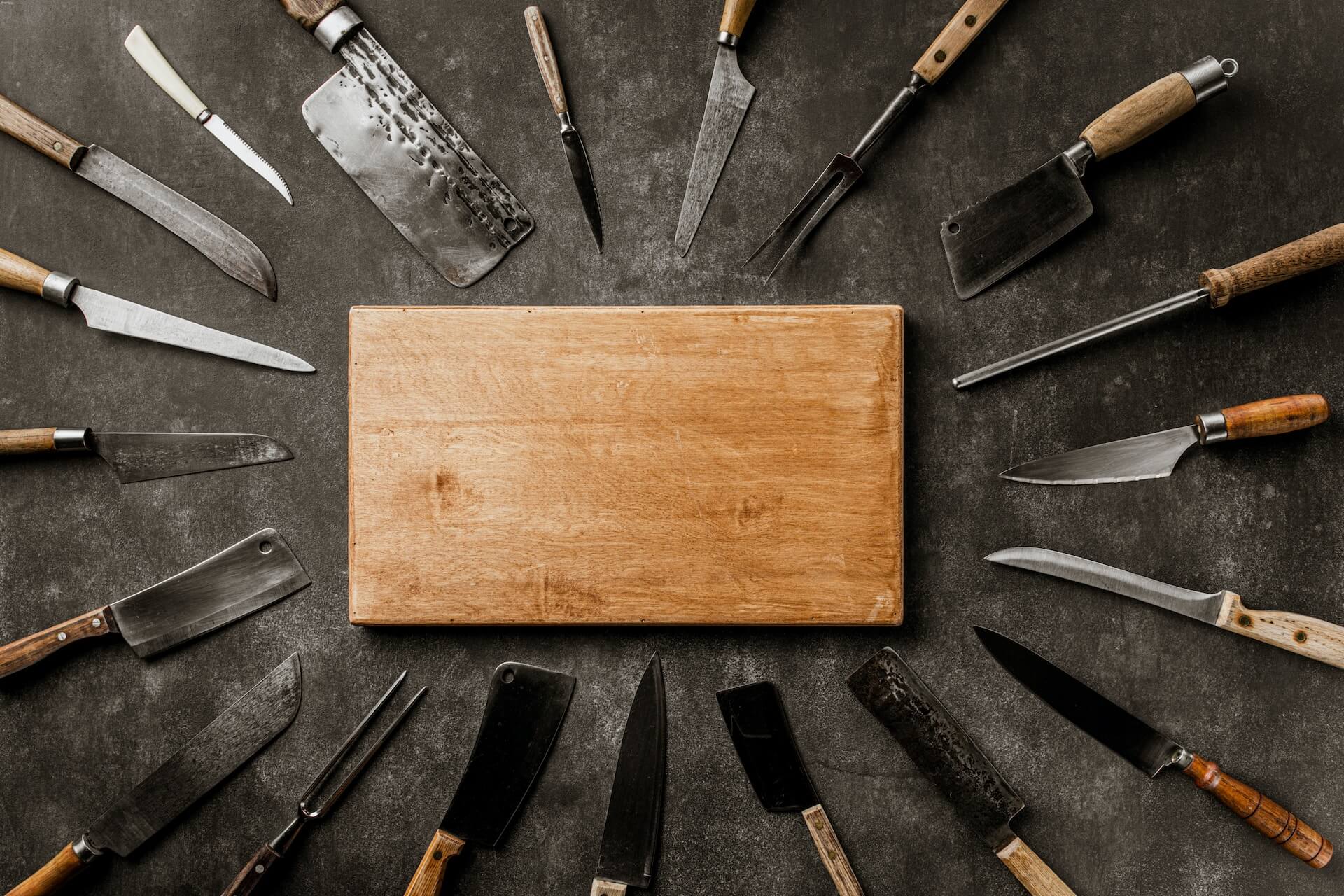
Collection of various vintage knives surrounding a cutting board

In the realm of culinary arts, the knife is not merely a kitchen tool; it’s the extension of a chef’s hands, the paintbrush for a culinary masterpiece.

In the hand of a skilled chef, a knife is the instrument that transforms raw ingredients into delectable works of art.

Therefore, knife skills are the backbone of every great chef’s repertoire, and they form the cornerstone of culinary excellence.

In this exploration, we embark on a journey to unravel the significance of knife skills, the techniques that define them, and the artistry they enable in the culinary world.

The Role of Knives in Culinary Excellence

Knives are the most fundamental tools in any kitchen. They are the bridge between raw ingredients and the final dish, and their importance cannot be overstated.

Here are some key aspects of the role knives play in culinary excellence.

Precision and Consistency

Imagine a chef creating uniform, paper-thin slices of cucumber for an elegant salad. The precision required for such delicate work comes from mastering knife skills.

Consistency in slicing, dicing, and chopping ensures even cooking and a visually appealing presentation.

Efficiency

In a bustling restaurant kitchen, time is of the essence. Efficient knife skills enable chefs to prepare ingredients quickly and streamline the cooking process.

The ability to swiftly and skillfully handle a knife can make all the difference in meeting the demands of a busy service.

Safety

Knife safety is paramount in the culinary world.

Proper knife skills not only enhance efficiency but also minimize the risk of accidents. A chef with well-honed knife skills knows how to handle the blade safely, reducing the likelihood of cuts and injuries.

Artistry

Beyond their utilitarian functions, knives are tools of artistic expression in the culinary world.

A chef’s ability to craft intricate cuts and designs with a knife can elevate a dish from ordinary to extraordinary.

From garnishes to decorative vegetable carvings, knife skills allow chefs to showcase their creativity.

Essential Knife Techniques

Knife skills encompass a range of techniques, each serving a specific purpose in the kitchen.

Let’s delve into some of the fundamental knife skills that every chef should master.

1. The Pinch Grip

The pinch grip is the foundation of proper knife handling. It involves gripping the knife handle with three fingers while using the thumb and index finger to pinch the blade near the bolster.

This grip provides control and precision, allowing for accurate cuts.

2. The Rock Chop

The rock chop is a rhythmic cutting motion during which the knife’s blade rocks back and forth on the cutting board. It’s ideal for chopping herbs, garlic, and onions.

Mastering this technique involves maintaining a consistent rocking motion to achieve uniform cuts.

3. The Slice

Slicing is a technique used to create thin, even pieces of ingredients.

The key is to maintain a smooth, forward and backward motion of the knife while keeping the fingers tucked safely away from the blade.

4. The Julienne

Julienne is the art of cutting vegetables or fruits into long, thin strips, resembling matchsticks.

Achieving uniformity in julienne cuts requires precision and practice. This is a technique often used in salads and stir-fries.

5. The Dice

Dicing involves cutting ingredients into small, uniform cubes.

Chefs use this technique for creating perfectly diced onions, tomatoes, and other vegetables. It’s a fundamental skill in many classic recipes.

6. The Chiffonade

Chiffonade is a technique for slicing leafy greens or herbs into thin, ribbon-like strips. This technique is commonly used for garnishing soups, salads, and pasta dishes.

7. The Tourne

The tourne, also known as “turned” vegetables, involves creating seven-sided, oblong shapes from root vegetables like potatoes and carrots.

This technique showcases precision and artistry.

8. The Batonnet

Batonnet cuts involve creating evenly sized, rectangular sticks from ingredients like potatoes and cucumbers.

This technique is often used for making French fries and crudités.

The Journey to Mastery

Becoming proficient in knife skills is a journey that requires dedication, practice, and a commitment to precision.

Below are a number of essential tips for aspiring chefs on their path to mastering this art.

1. Start with the Basics

Begin by mastering the fundamental techniques, such as the pinch grip, slice, and rock chop.

These skills form the building blocks for more advanced cuts.

2. Invest in Quality Knives

A chef is only as good as their tools.

Invest in high-quality knives that are well-balanced and comfortable to handle. Regularly sharpen and maintain them to ensure optimal performance.

3. Practice, Practice, Practice

Knife skills improve with practice.

Set aside time to hone your cutting techniques regularly. Consider using inexpensive ingredients like potatoes and carrots for practice to minimize food wastage.

4. Seek Guidance

Don’t hesitate to seek guidance from experienced chefs or culinary instructors.

Taking a knife skills class or watching instructional videos can provide valuable insights and feedback.

5. Prioritize Safety

Safety should always come first.

Pay close attention to hand placement, keep your fingers tucked away from the blade, and use a cutting board with a non-slip surface.

6. Embrace Creativity

Once you have mastered the basics, allow your creativity to flourish.

Experiment with decorative cuts and intricate garnishes to add flair to your dishes.

Knife Skills in the Professional Kitchen

In professional kitchens, the importance of knife skills is not up for debate. Chefs in high-end restaurants are expected to demonstrate exceptional precision and speed when handling knives.

Here’s how knife skills come into play in the professional culinary world.

Speed and Efficiency

In a busy restaurant kitchen, the ability to prep ingredients quickly and efficiently is essential.

Knife skills enable chefs to meet the demands of a fast-paced environment while maintaining quality.

Consistency

Consistency is crucial in ensuring that every dish leaving the kitchen meets the restaurant’s standards.

Uniform cuts, achieved through precise knife skills, contribute to consistent cooking times and presentation.

Artistry and Presentation

Fine-dining establishments often emphasize presentation as much as taste.

Knife skills allow chefs to create intricate designs and garnishes that enhance the visual appeal of each dish, turning it into a work of art.

Safety in High-stress Environments

Professional kitchens can be high-stress environments.

Chefs with excellent knife skills can handle the pressure more effectively and safely, reducing the risk of accidents.

Knife Skills for Home Cooks

While professional chefs rely on knife skills in their daily work, these skills are equally valuable for home cooks.

Whether you’re preparing a simple family meal or hosting a dinner party, below you’ll find how knife skills can elevate your home cooking.

Save Time and Effort

Efficient knife skills allow you to prep ingredients more quickly, making meal preparation a breeze even on busy weeknights.

Elevate Home Cooking

Mastering knife skills enables you to create restaurant-quality dishes at home.

You can impress your family and guests with beautifully plated meals.

Safety and Confidence

Proper knife skills at home reduce the risk of accidents and boost your confidence in the kitchen.

Experimentation and Creativity

With the right knife skills, you can experiment with different cuts and techniques, adding variety and creativity to your home-cooked meals.

Conclusion

In the world of culinary arts, knives are not just tools; they are extensions of a chef’s creativity and skill.

Knife skills are the foundation of culinary excellence, enabling chefs to transform ingredients into works of art.

Whether you aspire to be a professional chef or simply want to elevate your home cooking, mastering knife skills is a journey worth embarking on. It’s a journey of precision, creativity, and the pursuit of culinary perfection—a path that leads to the heart of the culinary world, where the artistry of knives comes to life.

As you embark on your own culinary journey, remember that every slice, chop, and dice brings you one step closer to mastering the art of knife skills—an art form that transcends the kitchen and allows you to create culinary magic with every cut.

So, sharpen your knives, practice your techniques, and let your culinary creativity flourish. The world of flavors and possibilities awaits at the tip of your blade.

Image: Sergey Kotenev on Unsplash
KRG Hospitality menu development. Restaurant. Bar. Cafe. Lounge. Hotel. Resort. Food. Drinks.

by David Klemt David Klemt No Comments

Restaurant Fees Facing FTC Scrutiny

Restaurant Fees Facing FTC Scrutiny

by David Klemt

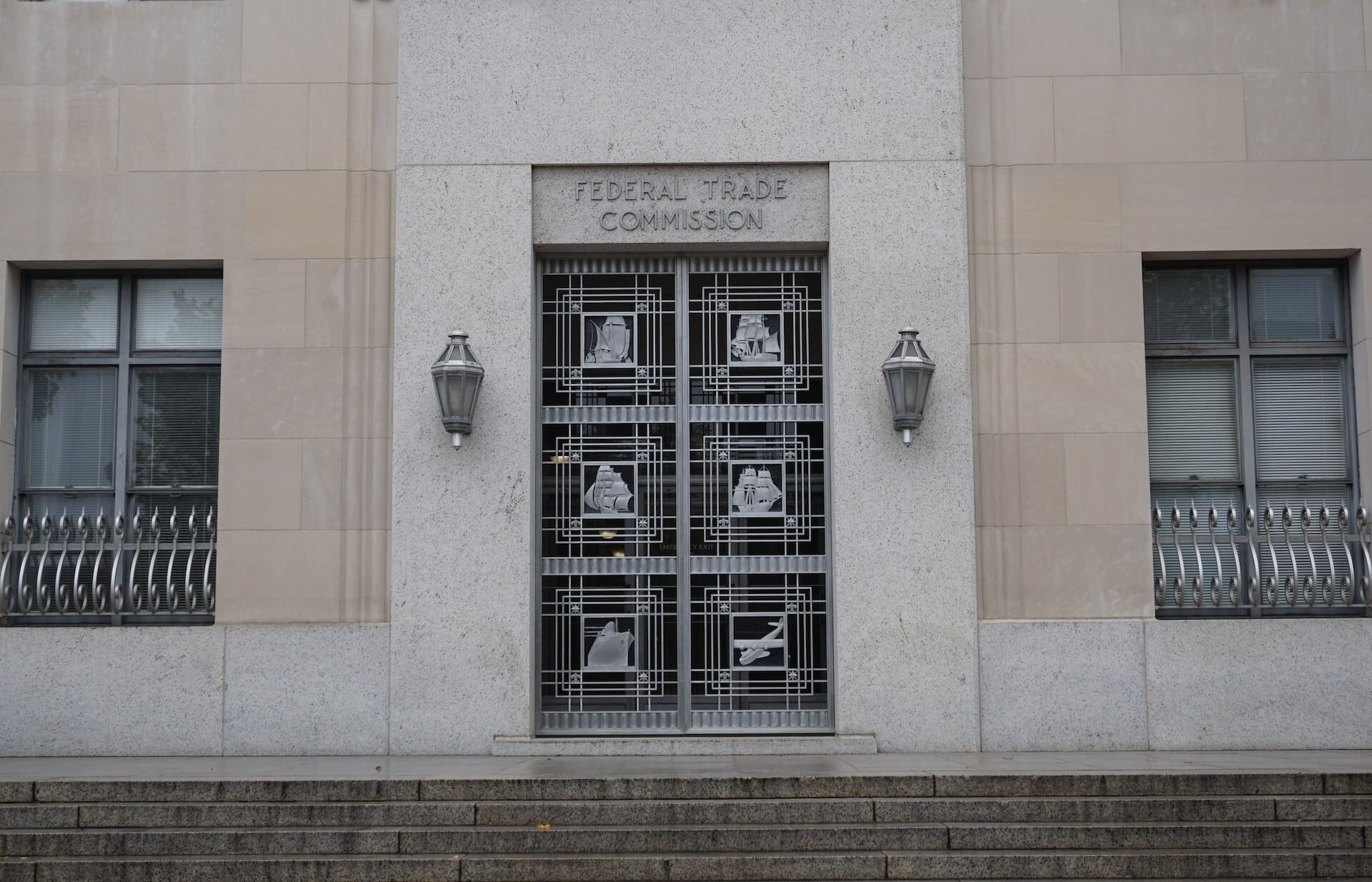
The Federal Trade Commission Building in Washington, DC

The focus on rising costs and hidden or “junk” fees over the past few years is bringing the Federal Trade Commission’s attention to the restaurant space.

Really, it was only a matter of time. Consumers are quite clearly fed up with being hit with unexpected fees. Whether purchasing concert tickets or popping into a QSR for a quick bite, they’re over the perceived nickel and diming.

That’s to say nothing of the other businesses that consumers feel are going too far with fees.

However, much of the public conversation about junk fees revolves around restaurants, and in some instances bars, as well. A common refrain on social media and online communities is, to paraphrase, “Just tell tell us what it costs on the menu!”

Of course, there are consumers who don’t want businesses to raise their prices at all. There’s no reasoning with these people, and they see all increases and fees—even those that aren’t hidden or bogus—as ripoffs.

But there are those who understand the challenges operators are facing. Understandably, these people just want transparency. And they want to have a clear idea of what it will cost to dine and drink somewhere before they plan their visit or are handed their check.

These consumers now have allies in state and federal governments.

FTC Focuses In

Some people may be surprised to learn that the FTC’s focus on junk fees isn’t entirely new. In fact, the agency has been digging into this topic for nearly a year.

Last November, the FTC asked for the public for their opinions on deceptive and unfair practices. Specifically, practices that relate to junk fees. Per the FTC, American consumers are paying tens of billions of dollars in junk fees annually.

According to the agency, they received 12,000 comments.

Now, with the support of the White House, one would assume, the FTC is asking for public input again. This time, the agency is seeking comments about a rule their proposing to address junk fees.

Last week, both the White House and FTC proposed rules that will make it mandatory for businesses to disclose all fees up front. Additionally, the White House wants to curtail “excessive” bank fees for basic services.

Put simply, the FTC’s proposal will ban hidden fees, require transparency regarding all fees, and allow the agency to impose penalties.

And now, after zeroing in on airlines, landlords, utilities, entertainment, and banking, the FTC is looking at hospitality.

Restaurants Under Scrutiny

As they did in November of last year, the FTC is once again asking for the public to comment on fees. This time, however, restaurants have been included by the agency.

To be sure, this focus isn’t exactly new. Washington, DC, for example has addressed junk fees in the restaurant space. As with other jurisdictions that have tackled this topic, restaurants must be conspicuous and make guests aware of all fees before their checks arrive. Additionally, operators must be clear about their intended use for fees.

In Washington, DC, a violation of these rules can lead to a $5,000 fine for a first-time offense. That penalty can rise to $10,000 for additional violations.

California has also passed Senate Bill 478, signed into law by Governor Gavin Newsom. This law, which also targets hidden fees, takes effect on July 1, 2024.

Most likely, the FTC is seeking comment to make adjustments to their proposed junk fee rule in order to include restaurants. From what I’ve seen, restaurant delivery fees in particular are drawing the ire of consumers and attention of state and federal agencies.

“All too often, Americans are plagued with unexpected and unnecessary fees they can’t escape. These junk fees now cost Americans tens of billions of dollars per year—money that corporations are extracting from working families just because they can,” says Lina M. Khan, FTC Chair.

Consumers will have 60 days to submit their comments to the FTC.

Takeaway

Proactive operators who haven’t already done so should make their in-person dining and delivery fees obvious.

Best practices for fee transparency include highlighting them on menus; announcing them via table tents or talkers; including fees on websites; and including a notice or disclaimer on reservation pages.

However, operators should avoid viewing being transparent about fees through a lens of compliance. Rather, being clear and upfront with guests is just good business. In fact, it’s in keeping with the spirit of hospitality and service.

If the final experience a guest has with a restaurant is being unpleasantly surprised by their check due to junk fees, how should be expected to respond? Their perception of the venue or brand will plummet, and they won’t return. How long can a restaurant sustain that guest reaction before the damage is irreparable and an operator has to close their doors?

Operators are being asked to thread a needle every day. Costs are rising and there are only so many solutions available to most operators that can keep their doors open, keep guests and staff happy, and pull the business toward long-term success.

To be clear, fees are generally fine—if consumers feel they know what to expect ahead of their visit. Nobody wants to be surprised, and that shouldn’t be difficult to understand.

So, operators need to be transparent about fees. They need to consider dynamic pricing for menus. That requires an absolute understanding of costs, guest tolerances for pricing, and the market.

The payoff, however, is happier guests who are far more likely to return for in-person dining and to place delivery or takeout orders. Savvy operators will put the work in now to get ahead of the junk fee fallout.

Image: Ian Hutchinson on Unsplash
KRG Hospitality Start-Up Restaurant Bar Hotel Consulting Consultant Solutions Plans Services

by David Klemt David Klemt No Comments

Chicago to Phase Out the Tip Credit

Chicago to Phase Out the Tip Credit

by David Klemt

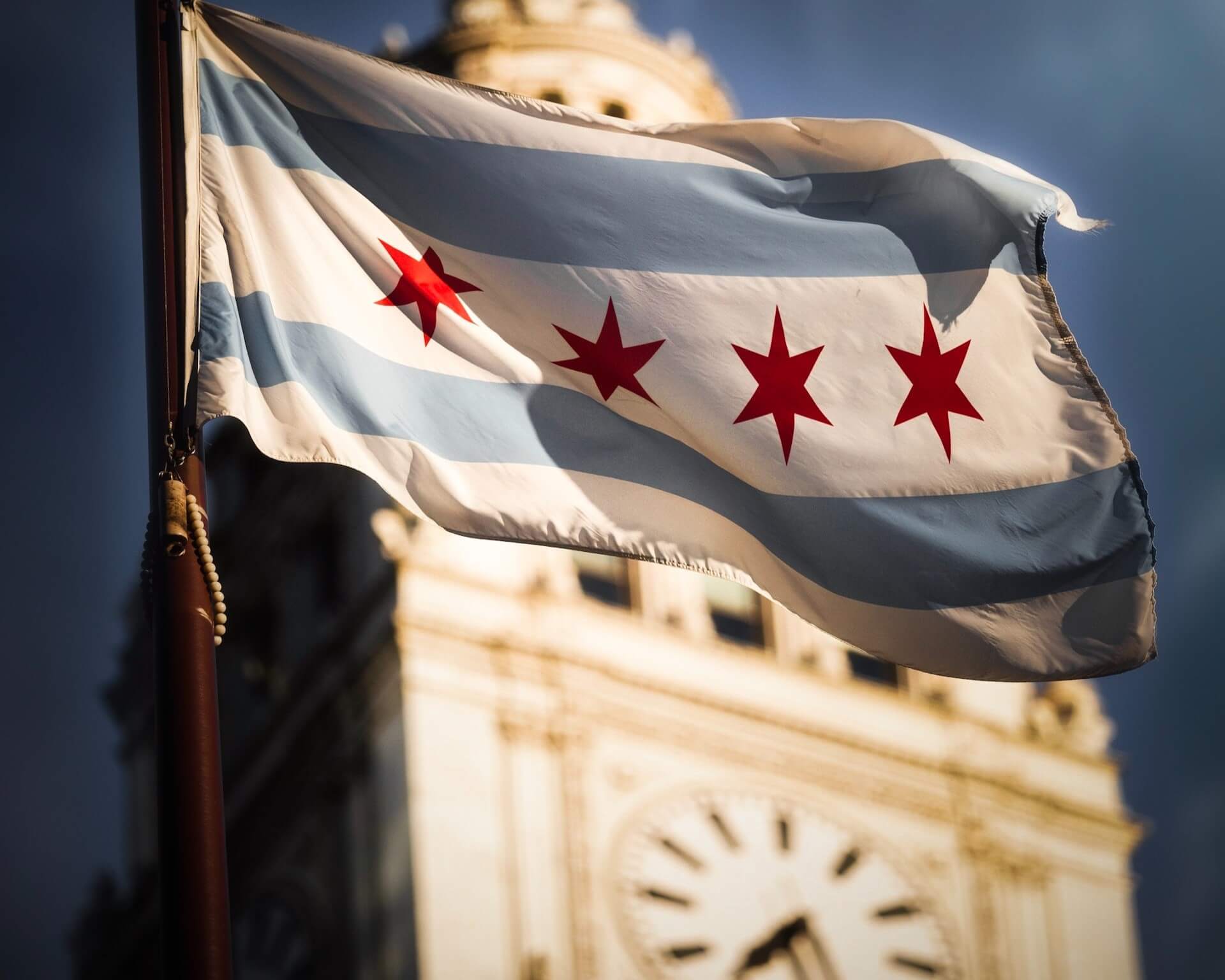
Closeup shot of the flag of the City of Chicago with Wrigley Building in background

In a move that some are celebrating and others claim will kill jobs, Chicago will phase out the tip credit incrementally by the year 2028.

Currently, pay for tipped workers amounts to 60 percent of the minimum wage. Starting next year, that will change.

Beginning July 1, 2024, tipped workers will earn eight-percent increases on an annual basis. This will continue until July 1, 2028. On that date, tipped workers must receive the full minimum wage.

Put another way, the city of Chicago will eliminate the tip credit entirely midway through 2028. To add clarification, this phasing out of the tax credit applies to all 77 of the city’s neighborhoods.

Overwhelmingly, Chicago’s City Council voted for the so-called “One Fair Wage Ordinance.” Thirty-six alderpeople voted “yea,” while just ten voted “nay.”

As one would expect, not everyone is happy that the ordinance was passed on Friday, October 6. Nor are they pleased that Mayor Brandon Johnson signed off on the bill a week ago today.

Specifically, Alderman Nicholas Sposato referred to the One Fair Wage Ordinance as a “job and business killer.”

Further, as reported by Restaurant Dive last week, the Illinois Restaurant Association opposes the decision to eliminate the tip credit in Chicago.

“We wholeheartedly disagree with the decision to move forward with the elimination of the tip credit,” Restaurant Dive reports a representative of the IRA saying in a statement emailed to the publication.

The National Restaurant Association also opposes the ordinance, reportedly vowing to fight any such legislation that introduced throughout the country.

However, One Fair Wage and the Service Employees International Union are celebrating the plan to phase out the tip credit. However, the SEIU would like the elimination to apply statewide.

A Compromise

Attempting to negotiate for legislation they found more palatable, the IRA had proposed a different approach.

Their version would have seen tipped workers make a minimum of $20.54 per hour. However, that ordinance would only have applied to restaurants that generate $3 million or more in annual revenue. Additionally, the IRA proposed tripling fines related to violations of the proposed ordinance.

Had that proposal been accepted, the pay situation would have been unchanged for tipped workers in smaller operations.

In the end, the IRA agreed to eliminating the tip credit over the course of five years to make the transition smoother for operators. This is due, in part, to the possibility of a two-year phasing out of the tip credit being passed by Chicago’s City Council.

The IRA, NRA, and others who oppose eliminating tip credits point to hardships on the operator side. Increased labor costs will lead to increases in menu prices, reductions in traffic and hours, the elimination of jobs, and, ultimately, the shuttering of many businesses.

However, those who support such ordinance point to the financial stability of vulnerable people, and those who work throughout the industry to earn a living wage.

The Future

While Chicago is the largest city in America to vote to eliminate the tip credit, it’s not the first pass such legislation.

The city joins Alaska, California, Minnesota, Montana, Nevada, and Oregon in doing so. Additionally, Washington, DC, will eliminate the tip credit fully by July 1, 2027. Phase one of DC’s tip credit elimination started May 1 of this year.

Of course, the news out of Chicago also comes on the heels of the FAST Act fight ending in California.

These developments beg the question: Which city or state will introduce legislation next, and how will it play out for workers and operators?

Image: Trace Hudson via Pexels

KRG Hospitality. Restaurant Business Plan. Feasibility Study. Concept. Branding. Consultant. Start-Up.

by David Klemt David Klemt No Comments

Brand Love: BrandVue’s 2023 Rankings

Brand Love: BrandVue’s 2023 Rankings

by David Klemt

Black and white image of a winners' podium under a spotlight

As we near the end of the year, Savanta has revealed their BrandVue’s Most Loved Eating Out Brands 2023 report, ranking 100 restaurant brands in America.

The B2B and B2C market consultancy has been publishing this report since 2019. Their fifth-annual report includes 16 categories, including ranking consumer opinion of third-party delivery services.

As a category, Burger boasts the greatest presence with 17 loved restaurant brands. In second is Italian or Pizza with 13 brands. With ten brands, Specialty comes in third as a category. Tied for fourth are Mexican and Chicken, featuring eight brands each.

Download the full report here.

Top Restaurant in Each Category

Below you’ll find the gold medalist in each category, in alphabetical order by restaurant type.

  • Asian: Panda Express
  • Burger: McDonald’s
  • Café or Bakery: Starbucks
  • Chicken: Chick-fil-A
  • Family Style: Cracker Barrel Old Country Store
  • Frozen Dessert: Cold Stone Creamery
  • Italian or Pizza: Olive Garden
  • Mexican: Taco Bell
  • Sandwich: Subway
  • Seafood: Red Lobster
  • Specialty: Krispy Kreme
  • Steak: Texas Roadhouse
  • Varied Menu: The Cheesecake Factory

Other Categories

There are a handful of other categories on the BrandVue list. Namely, Delivery, Sports Bar, and Meal-kit.

I’ve separated Delivery in particular because it doesn’t represent brick-and-mortar brands. Rather, these are third-party services.

For this year’s list, Savanta ranks five delivery services. Below, the top three:

  1. Caviar
  2. DoorDash
  3. UberEats

However, it’s important to note that DoorDash bought their one-time rival Caviar back in 2019. So, it’s really as though DoorDash claims two spots among the top three.

Of course, UberEats owns Postmates, which is among the five Delivery brands on this list. So is Seamless, owned by Grubhub. However, Grubhub itself doesn’t appear on this list.

The other two categories, Sports Bar and Meal-kit, count just one brand each among them: Buffalo Wild Wings and Plated, respectively.

Top 26 Restaurant Brands

Below, the top quarter of the 2023 BrandVue list. As you’ll see, the gold medalists among the top 25 are in bold.

Why did I decide to show the top 26 rather than the top 25? My reasoning is simple: one of the top 25 is a delivery service, not a brick-and-mortar restaurant.

  1. Domino’s (Italian or Pizza)
  2. Red Lobster (Seafood)
  3. Cold Stone Creamery (Frozen Dessert)
  4. Culver’s (Burger)
  5. Caviar (Delivery)
  6. Cinnabon (Specialty)
  7. Braum’s (Burger)
  8. Auntie Anne’s (Specialty)
  9. Wingstop (Chicken)
  10. Popeyes (Chicken)
  11. Wendy’s (Burger)
  12. Pizza Ranch (Italian or Pizza)
  13. Pizza Hut (Italian or Pizza)
  14. KFC (Chicken)
  15. The Cheesecake Factory (Varied Menu)
  16. Subway (Sandwich)
  17. In-N-Out Burger (Burger)
  18. Dunkin’ Donuts (Café or Bakery)
  19. Taco Bell (Mexican)
  20. Raising Cane’s (Chicken)
  21. Olive Garden (Italian or Pizza)
  22. Krispy Kreme (Specialty)
  23. Texas Roadhouse (Steak)
  24. McDonald’s (Burger)
  25. Starbucks (Café or Bakery)
  26. Chick-fil-A (Chicken)

Unsurprisingly, the top six spots go to gold medalists. In total, gold medalists claim seven slots amongst the top ten. Twelve of the top performers out of all 16 categories are in the top 25.

Interestingly, the list also puts America’s love for burgers, chicken, and pizza on full display. Of the top 25 most-beloved restaurant brands, five fall into the Burger category, and five fall into Chicken. Four slots belong to the Italian or Pizza category.

Notably, there are no Asian or Family Style restaurants among the top 26. However, I expect more Asian and Mexican restaurants to earn places in the top quarter over the next few years.

To see the full list of the 100 most-beloved restaurant (and delivery) brands in the US, click here.

Image: Joshua Golde on Unsplash

KRG Hospitality. Restaurant Business Plan. Feasibility Study. Concept. Branding. Consultant. Start-Up.

by David Klemt David Klemt No Comments

Taco Bell Racking Up Rewards Program Wins

Taco Bell Racking Up Rewards Program Wins

by David Klemt

"Say yes to tacos" graffiti

Taco Bell, masters of the limited-time offer and loyalty program, continue to rack up wins with the return of a fan-favorite promotion, and more.

The fast-food giant operates more than 7,800 restaurants in the US alone. However, the company understands that sheer numbers aren’t enough to turn a profit.

Rather, Taco Bell continually proves they understand the power of promotions, loyalty, and LTOs.

The QSR routinely releases specialty items, then packs them away to generate buzz and traffic by making them available once again—for a limited time. Compellingly, Taco Bell also ties their LTOs to their loyalty program. Often times, the only way for guests to enjoy special perks and items is to be a Taco Bell Rewards member.

Not only does this help to engage existing members, this approach drives new program signups.

Case in point: the Taco Lover’s Pass.

National Taco Day Promotion

If you’re industry or a fan of Taco Bell, you should be aware of the Taco Lover’s Pass by now.

Tracing its genesis to 2021 in Arizona, the LTO pops up every now and then. In exchange for $10, those who grab a pass can get one free taco each day for 30 consecutive days.

Oh, and the pass is now only available via the Taco Bell app, and to members of the Taco Bell Rewards program. Again, this is an excellent way to boost engagement. Do guests want to take advantage of this LTO? Great—they’ll need to exchange their info and provide access to themselves to do so.

Normally, the Taco Lover’s Pass is available for purchase for just one day. However, this time around Taco Bell gave rewards members two days to snag one. This is likely due to a new menu item drop coming tomorrow.

For quite some time now, Taco Bell has been hinting that they’ll be making breakfast easier and better. And now we know how they plan to accomplish that goal.

Joining the Seasoned Beef Crunchy Taco, Seasoned Beef Crunchy Taco Supreme, Seasoned Beef Soft Taco, Seasoned Beef Soft Taco Supreme, Spicy Potato Soft Taco, Seasoned Beef Doritos® Locos Tacos, and Seasoned Beef Doritos® Locos Tacos Supreme on the Taco Lover’s Pass is the new Toasted Breakfast Taco.

Today, October 12 (a Taco Tuesday!), Taco Bell drops the Toasted Breakfast Taco, and holders of their coveted pass can grab one for free.

Clearly, Tuesdays are important to Taco Bell. Let’s not forget that they very publicly challenged the “Taco Tuesday” trademark, and very publicly celebrated its cancellation. So, launching an all-new item that will drive traffic to Taco Bell during the breakfast daypart makes perfect sense. The drop also further solidifies their branding and marketing.

Steal a Base…

…Steal a Taco. Not only is the Taco Lover’s Pass back, so is Taco Bell’s Major League Baseball promotion.

And, once again, it’s available only via the Taco Bell app, and only to Taco Bell Rewards members.

Focusing on the Fall Classic, “Steal a Base, Steal a Taco” is a collaboration between Taco Bell, the MLB, and Topps.

Starting October 27 (not a Tuesday), the first player to steal a base will earn the title Taco Hero. That player will also earn free Nacho Cheese Doritos® Locos Tacos for Taco Bell Rewards members.

Taking things further, however, is Topps. The iconic trading card brand has put a limited run of Topps TacoFractor cards into circulation. People who hold the card of the first player to steal a base during the 2023 World Series could win Taco Bell for life. For this promotion, that comes in the form of a digital $15,000 Taco Bell gift card.

Alternatively, the holders of Topps TacoFractor Wild Cards could win the big prize.

On October 10 (a Tuesday!), Taco Bell Rewards members will have the chance to score free Topps Chrome or Cosmic Chrome packs. This limited Tuesday Drop could lead to a Taco Hero card, which in turn can lead to winning Taco Bell for life.

Takeaway

Unquestionably, Taco Bell understands the power of marketing messaging, branding, promotions, and the LTO.

However, they also understand the need for loyalty and rewards programs to do more than just offer discounts and free menu items. A great loyalty program needs to be big, bold, and encourage constant engagement.

With that in mind, it’s more than likely time for most operators, regardless of size, to review and rethink their programs.

Image: Chad Stembridge on Unsplash
Bar Nightclub Pub Brewery Marketing Agency Team

by David Klemt David Klemt No Comments

Leisure and Hospitality Adds 96,000 Jobs

Leisure and Hospitality Adds 96,000 Jobs

by David Klemt

"Optimist" graffiti

Update: The figure of 61,000 restaurant and bar jobs was adjusted to 48,300 after revisions.

The latest report from the US Bureau of Labor Statistics reveals that the outlook looks promising for hospitality.

Put together, leisure and hospitality added 96,000 jobs in September. However, hospitality certainly leads the way according to the most recent report.

In particular, the news is wonderful for the restaurant and bar sector. Adding 61,000 jobs in September, “food services and drinking places” are back to February 2020 levels.

Put more simply, restaurants and bars are back to pre-pandemic employment numbers. It has taken more than three years, but we can finally breathe a collective (but cautious) sign of relief.

In fact, one in five jobs created in September was in a restaurant or bar. That’s incredible growth and welcome news.

But reaching this point hasn’t been easy. Operators, along with restaurant and bar workers, have clawed their way through the past several years.

The industry has changed, and operators need to avoid the temptation of regressing. Yes, employment levels are back to where they were before the pandemic. Worker and guest expectations will not return to where they were before February 2020. The changes are here to stay.

Lodging/Accommodation

Unfortunately, not every sector of hospitality is back to pre-pandemic employment levels.

First, the positive news. Lodging (or accommodation, if you prefer) did add jobs in September. Whereas restaurants and bars rose 61,000 jobs, lodging is up 16,000.

That’s good growth and reason to be optimistic regarding that sector. That’s where the good news ends when it comes to hard employment numbers.

On the negative side, lodging hasn’t yet returned to pre-pandemic employment levels. In fact, the sector is remains down by 217,000 jobs when compared to February 2020.

Should lodging/accommodation continue to add jobs at this pace, we could see a full recovery in Q4 2024.

However, the past few years have been an eyeopener for many lodging and accommodation operators. Many hotels, for example, have reduced the sizes of their teams.

It’s possible that as long as guest feedback remains positive, hotels and resorts will continue to operate with smaller teams. Indeed, technological innovations have made it simpler for mid- and large-scale properties to pare back labor.

Takeaway

While returning to pre-pandemic employment levels in restaurants and bars is great news, we must still be cautious.

This is a delicate situation, and one month of growth isn’t enough to shout, “We’re back!” There’s reason to be optimistic, to be sure, but adding jobs is just one part of an equation that features many variables.

For example, the unemployment level in the US remains unchanged at 3.8 percent.

So, be optimistic. Allow yourself to feel some hope. But be cautious. Continue to work toward empowering your teams, increasing traffic and revenue, mastering the guest experience, and achieving short- and long-term goals.

Image: George Pagan III on Unsplash
KRG Hospitality Start-Up Restaurant Bar Hotel Consulting Consultant Solutions Plans Services

by David Klemt David Klemt No Comments

The Top-performing New Restaurant Type

The Top-performing New Restaurant Type

by David Klemt

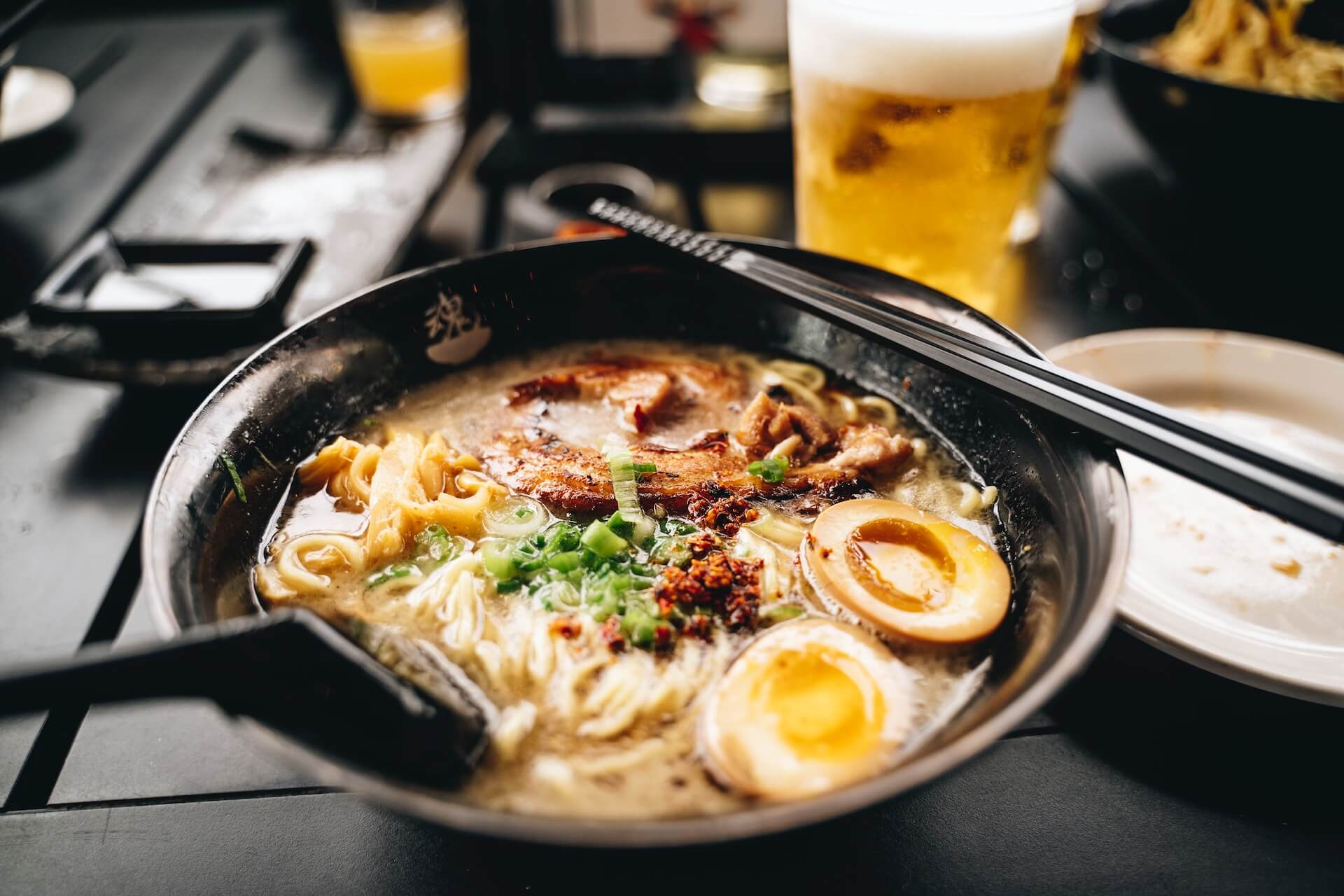
A bowl of ramen with beers in the background

According to a midyear Yelp report, one category of new restaurant is experiencing a surge in growth across the US unlike any other.

No, it’s not ramen, as the image above suggests. Instead, it’s pop-up restaurants.

We can trace the growth of this category, at least on the operator side, to cost. Sure, pop-ups were popular before 2020. However, they grew even more popular during the pandemic.

One can argue the life cycle of the pop-up is fad to trend to cost-saving adaptation to proliferation.

There are even those who transform shipping containers into mobile, pop-up restaurants and bars. With the right permits and hookups (water, electricity, etc.), an operator can test a new market or an entirely new concept before committing fully to a brick-and-mortar location.

In other words, the pop-up simply makes sense for our industry. This category of restaurant (or bar) clearly doesn’t cost anywhere as much as its permanent brick-and-mortar counterparts, for one. Secondly, a pop-up doesn’t (shouldn’t, anyway) require more than a skeleton crew. And thirdly, they do seem to enjoy pops in interest whenever they come to a new market or new address.

There are, of course, other benefits. However, the low(er) cost is the most attractive element for most operators.

Keep in mind that Double Chicken Please started life as a pop-up cocktail concept. In fact, DCP is the current Best Bar in North America according to the World’s 50 Best Bars.

Covering more than 10,000 miles and serving over 1,200 cocktails, the DCP pop-up toured the US for three years before finding a brick-and-mortar home. And what a home. The concept is now a jewel in New York’s Lower East Side F&B crown.

Top Restaurant Types by Opening

According to Yelp, the following restaurant categories are experiencing the most growth.

The numbers below represent the changes in business openings from April 2021 to March 2022 in comparison to April 2022 to March 2023.

  • Pop-ups: +105 percent
  • Ramen: +45 percent
  • Noodles: +40 percent
  • Tacos: +28 percent
  • Chicken shops: +28 percent
  • Food stands: +23 percent
  • Japanese: +20 percent
  • Breakfast and brunch: +20 percent
  • Sushi: +13 percent
  • Steakhouses: +9 percent

As the numbers above show, the growth of pop-ups far exceeds that of any of the other categories. In fact, they’re growing by nearly three times that of the second-place category, ramen restaurants.

Make a Pop-up Work for You

For a pop-up to work the concept must be realized fully. The brand and its story must be communicated clearly.

And while the menus can perhaps change more easily, signatures should be dialed in to generate buzz.

At KRG Hospitality, our view of pop-ups is a popular one. We think they’re excellent branding tools and are a viable way for new operators to test the waters.

However, we believe that a successful pop-up should be paired with a fully customized feasibility study and in-depth concept development. Both are core services offered by KRG Hospitality, and both are specialties that set us apart.

They may be mobile, they may feel niche and “temporary” or experimental, but they’re still a business.

A pop-up can only transform into a brick-and-mortar concept with a shot at longevity if the operator treats it as a roving proving ground.

Image: Diego Lozano on Unsplash

KRG Hospitality Start-Up Restaurant Bar Hotel Consulting Consultant Solutions Plans Services

by David Klemt David Klemt No Comments

FAST Act Fight Appears to be Over

FAST Act Fight Appears to be Over

by David Klemt

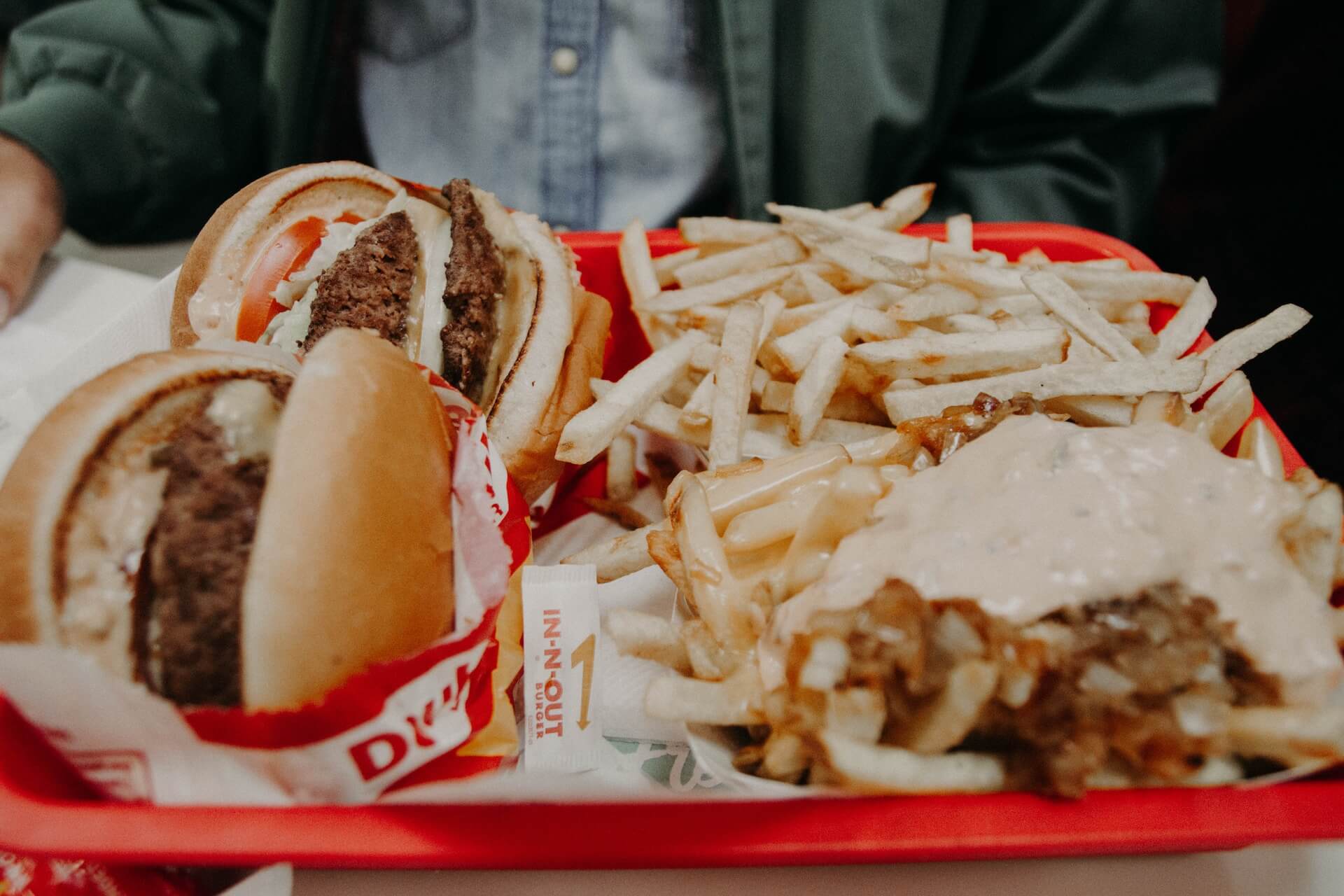
Tray with In N Out burgers and French fries

Well, that was fast: If recent reports are accurate—and it appears they are—the battle over the FAST Act has come to a close.

Rather than fight on the ballot, fast-food chain operators and labor groups have struck a deal. Per some reports, this puts a halt to a referendum battle that could have cost more than $100 million in campaign funds.

On its face, the deal is quite simple. AB 257, known as the Fast Food Accountability and Standards Recovery—or FAST Act—is dead. That is, dead save for one provision: the creation of the Fast Food Council will move forward.

The council will have a total of eleven members. Nine will have the power to vote, two will be non-voting members. The breakdown will be as follows:

  • two representatives of the fast-food restaurant industry (2);
  • two franchisees or restaurant owners (2);
  • two restaurant employees (2);
  • two advocates for fast-food restaurant employees (2);
  • member of the public who is not affiliated with either side (1, will serve as chair); and
  • members from the Department of Industrial Relations and the Governor’s Office of Business and Economic Development (2, non-voting)

Their first meeting is on the schedule for March 15.

In exchange, fast-food workers will see the minimum wage bump up to $20 per hour should they be in the employ of a fast-food chain with more than 60 locations throughout the US. That pay rise will come in April 2024.

When it comes to further pay rises, the council has two options:

  • An annual wage increase of 3.5 percent; or
  • An increase based on average changes to the consumer price index each year.

As one might expect, the rise will be whichever number is lower.

What was AB 257?

To summarize, FAST would’ve done the following:

  • Establishes the Fast Food Council, ten members appointed by the Governor, the Speaker of the Assembly, and the Senate Rules Committee. The council will operate until January 1, 2029.
  • Defines “the characteristics of a fast food restaurant.”
  • Gives the Fast Food Council the authority to set “minimum fast food restaurant employment standards, including standards on wages, working conditions, and training.”
  • Provides the council the power to “issue, amend, and repeal any other rules and regulations, as necessary.”
  • Allows the formation of a Local Fast Food Council by a county, or a city that has a population of more than 200,000.

Click here to review the bill’s text in its entirety.

Why is this Important?

It’s entirely possible that similar bills will pop up in other states in the coming years.

If this result is anything go by, such bills may be used by QSR operators and labor groups as negotiating tactics. The most recent news regarding the FAST Act should have the attention of both operators and hospitality workers. In California alone, the pay rise is expected to affect at least 500,000 workers.

However, there is one provision of the FAST Act that workers may find less than encouraging. The deal that has been struck kills a notable provision: fast-food operators, at least in California, won’t be held legally responsible for labor violations that occur in franchise locations.

Operators in other states should keep an eye out for similar bills, as should all hospitality professionals.

Image: Kenny Eliason on Unsplash
by David Klemt David Klemt No Comments

Pumpkin Spice Everything is Already Here

Pumpkin Spice Everything is Already Here

by David Klemt

Black and white image of jack-o'-lantern with smoke coming of its eyes

In what perhaps is an attempt to encourage people to think of cooler autumnal temperatures, pumpkin spice is descending upon us earlier than ever before.

Operators who are finalizing their pumpkin spice menu items are basically already late to the party.

Luckily, it isn’t like the brands for which fall’s most infamous LTO flavor works are too far behind. A significant percentage of consumers are drawn to pumpkin spice menu items like trick or treaters to homes handing out full-size candy bars.

So, operators still have time to put the final touches on pumpkin spice menu items…but they’ll want to get a move on.

That’s exactly what restaurant chains did this year. Their pumpkin spice-flavored onslaught began with the start of this month.

Pumpkin Spice, Now a Summer Flavor?

Spirit Halloween stores. Christmas music. And now, it appears, Pumpkin Spice.

What do these three things have in common? Well, it seems like they’re making their debuts earlier and earlier each year.

When we think of summer and seasonality, I don’t think pumpkin or even baking spices enters into most people’s minds.

Unless, however, those people are in marketing and branding.

According to Restaurant Business, Krispy Kreme went all in on pumpkin spice on August 7. On that day, the chain unveiled four donuts and a number of beverages featuring pumpkin flavors.

Interestingly, the company’s global chief brand officer, Dave Skena, states that their pumpkin spice releases came one day earlier this year. Last year, they say, pumpkin spice arrived “significantly earlier than the year before.”

7-11 may have crossed the pumpkin spice dateline first this year. Dunkin’ is already offering pumpkin spice F&B items. And Starbucks, famous for their PSL LTO, is rumored to be launching their specialty menu this Thursday.

Given these August releases, can we expect a brand to attempt to get the jump on everyone else and launch pumpkin spice LTOs in July?

Consumer Cravings

Brands wouldn’t gamble on releasing their pumpkin spice LTOs in August if they didn’t think their decision would pay off.

Considering what Krispy Kreme’s Skena says about pumpkin spice’s August arrival, consumers have already spoken. Apparently, a significant percentage of people have an interest in fall flavors midway through summer.

Of course, there are a few considerations for independent operators in terms of seasonal releases. Rolling out new menus and menu items can be a costly endeavor. Pulling the plug on one revenue-generating seasonal menu or LTO in favor of significantly different items may be harmful to the bottom line.

One approach operators could take is to plan far enough ahead to pull the trigger on LTOs when 7-11, Dunkin’, or Starbucks launch theirs. In other words, be ready, but don’t jump the gun.

This also speaks to the importance of operators knowing their core guests and listening to feedback. Are front-of-house staff hearing murmurs from guests that they’re craving new flavors? Perhaps it could be lucrative to leverage that anticipation.

Image: Colton Sturgeon on Unsplash
KRG Hospitality Start-Up Restaurant Bar Hotel Consulting Consultant Solutions Plans Services

by David Klemt David Klemt No Comments

Taco Bell Celebrates Taco Tuesday Win

Taco Bell Celebrates Taco Tuesday Win

by David Klemt

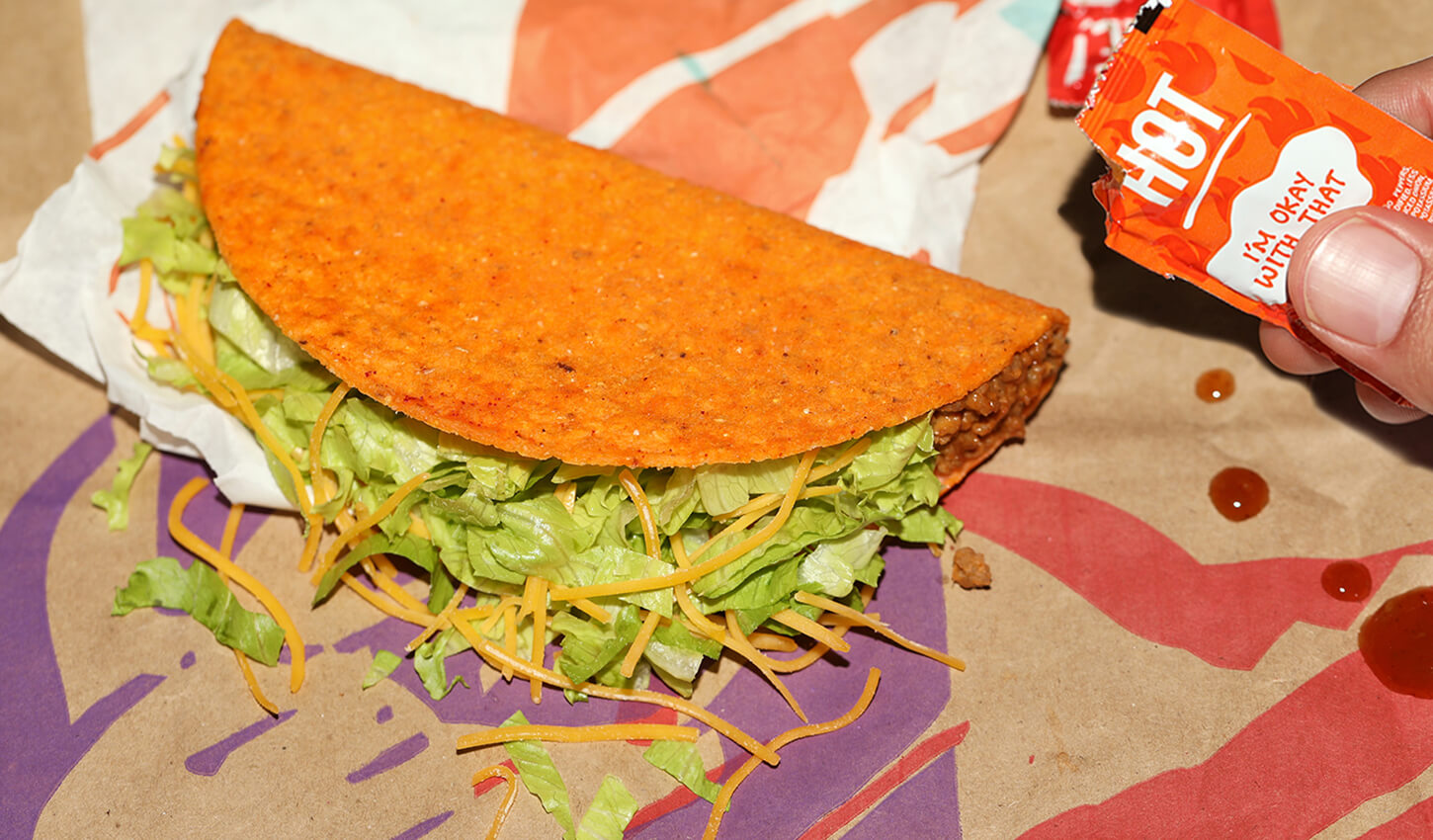
Taco Bell Doritos Locos Taco and sauce packet

Taco Bell, fresh off their victory in petitioning for the cancellation of the “Taco Tuesday” mark, will open a $5 million taco tab on September 12.

There’s no arguing that over at least the past few years Taco Bell has become the master of LTOs and attention-grabbing, loyalty-strengthening, and headline-generating promotions.

This campaign further solidifies the brand’s status as king of the fast-food campaigns.

“Taco T**sday” to “Taco Tuesday”

It’s highly unlikely that consumers and operators alike are unaware of the company’s “Taco T**sday” ads. The campaign, while playful, put a spotlight on the fact that, until recently, “Taco Tuesday” was a registered trademark.

Rather than spend millions of dollars to fight Taco Bell, Taco John’s, who previously had the rights to the mark, opted to relinquish the rights to the mark. Taco Bell’s argument was that nobody should be permitted to mark a common phrase.

“We’ve always prided ourselves on being the home of Taco Tuesday, but paying millions of dollars to lawyers to defend our mark just doesn’t feel like the right thing to do,” said Jim Creel, Taco John’s CEO. “As we’ve said before, we’re lovers, not fighters, at Taco John’s. So in that spirit, we have decided to begin sharing Taco Tuesday with a pledge to contribute $100 per location in our system to restaurant employees with children who are battling a health crisis, death or natural disaster. And we’re challenging our litigious competitors and other taco-loving brands to join us in supporting the people who serve our favorite food to guests across the nation.”

In fact, Creel fired a shot across the bow at Taco Bell at other rivals. After announcing their pledge to CORE, the CEO challenged other brands that want to use “Taco Tuesday” to do the same. The result would be quite the donation, considering that Taco John’s operates 400 restaurants in 21 states and Taco Bell alone operates more than 7,200 in the US. Look overseas and that number jumps up by about 1,000 locations in 30 countries.

Taco John’s has reportedly made good on their pledge, donating $40,000 to CORE, Children of Restaurant Employees.

What’s in a Mark?

Fast-food chain Taco John’s trademarked the phrase back in 1989. However, back in 1984, a California-based restaurant, Tortilla Flats, registered the trademark. According to some sources, the mark lapsed and Taco John’s snapped it up. That said, Tortilla Flats has sued other California restaurants for using the phrase throughout the years.

Interestingly, Taco John’s only had rights to the mark in 49 states. The exception is New Jersey, where Gregory’s owns the trademark. In fact, anyone who visits their site (as of the publication of this article) will see the phrase “Home of the Original Taco Tuesday!” right at the top.

However, it may surprise some to learn that a celebrity who appeared in Taco Bell’s “Taco T**sday” ads attempted to trademark the phrase in 2019. That celebrity? None other than Lebron James.

Clearly, this seemingly simple two-word phrase is a valuable trademark. It’s also likely that plenty of restaurants across the US have been surreptitiously using the phrase to drive traffic to their venues on Tuesdays for years.

The fact that Lebron James showed interest in the trademark and Taco Bell likely spent millions of dollars in ad revenue to have Taco John’s mark canceled shows the value. Time will tell how many millions of dollars the phrase will be worth to Taco Bell and other restaurant brands across the US.

Taco Tab

Some will see Taco Bell’s campaign as a massive brand bullying a smaller rival. Others will agree that it’s unfair for anyone to own the rights to such a common phrase.

In terms of exposure, I think this battle will help Taco John’s experience further growth. Last year was a banner year for growth for the franchise, and the brand was seeing growth back in 2021 as well.

After doing some digging, I learned that seven Taco John’s locations are owned by corporate; the plan for 2023 is to go from 375 stores to 400; and another 20 to 25 locations are planned for 2024. Per the Taco John’s website, initial layout for a franchise is between $942,000 and $1.4 for a single unit. A single franchise location generates annual revenue of around $1.2 million, on average.

Regarding Taco Bell, the brand is celebrating their victory—framed as a victory for all restaurants—with another of their famous and effective LTOs. On August 15, August 22, August 29, and September 5, Taco Bell guests can score a free Doritos Locos Taco. But the big celebration comes on September 12.

For that upcoming Taco Tuesday, Taco Bell will open a $5 million tab with DoorDash across the United States, with the exception of New Jersey. Again, Gregory’s owns the rights to the “Taco Tuesday” mark in the Garden State.

On September 12, Taco Bell will cover a portion of orders placed through the third-party delivery app to participating restaurants that offer Mexican cuisine. This does help the fast-food titan make the case that they fought this battle not just for themselves but all foodservice brands that wish to use the phrase “Taco Tuesday” without fear of legal action.

For further information, read the official Taco Bell press release below.

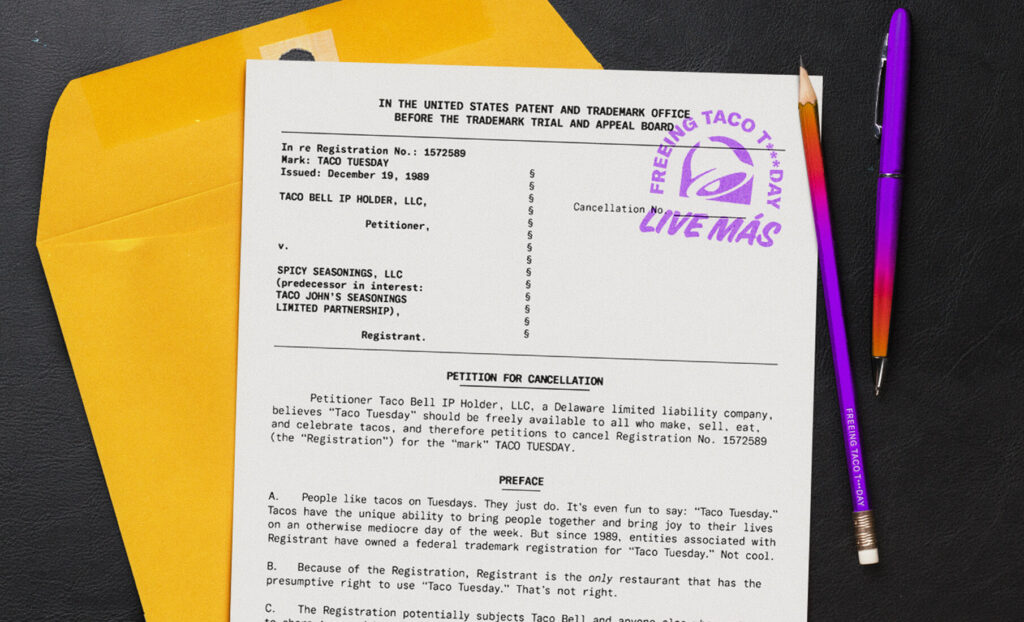
Taco Bell's "Liberate Taco T**sday" court petition

TACO BELL WILL HELP PAY FOR YOUR TACO TUESDAY CELEBRATION — EVEN IF IT’S NOT AT TACO BELL

Irvine, Calif. (August 8, 2023) – To celebrate the liberation of the Taco Tuesday trademark registration in 49 states, and to support and spotlight restaurants who now have the right to freely use Taco Tuesday, Taco Bell has announced that on Tuesday, September 12, Taco Tuesday fans (nearly) everywhere* can celebrate Taco Tuesday (nearly) anywhere – and Taco Bell will help pay for it.

On Taco Tuesday, September 12, Taco Bell, in partnership with DoorDash, is opening a $5 million taco tab to cover a portion of taco fans’ orders from any participating vendor selling Mexican cuisine. Because now that Taco Tuesday is free* – your tacos should be, too.

Leading up to the September 12 celebration, all Taco Bell locations will be offering a free Doritos® Locos Taco every Tuesday, no purchase necessary, on 8/15, 8/22, 8/29 and 9/5**.

“Taco Tuesday belongs to all who make, sell, eat and celebrate tacos, and this Free-For-All will not only thank taco fans who supported the cause, but will also spotlight local restaurants and vendors who can now embrace Taco Tuesdays without fear of legal action,” said Taco Bell U.S. Chief Marketing Officer, Taylor Montgomery. “When tacos win, we all win. We all win when Taco John’s decides to release its trademark registration, we all win when taco vendors everywhere are free to join the movement, and we all win when taco fans can freely celebrate and support Taco Tuesdays at Taco Bell or anywhere else.”

The Road to Freeing Taco Tuesday

In May 2023, Taco Bell took a bold step on behalf of taco lovers nationwide by filing legal petitions to cancel the two Taco Tuesday trademark registrations. The aim was simple: to free the phrase for restaurants nationwide. The message was clear: Taco Tuesday belongs to everyone, from Taco Bell to Taco John’s to your favorite local taco spot.

In late July, Taco John’s courageously decided to abandon its Taco Tuesday trademark registration. Not only did Taco John’s act benefit thousands of businesses across 49 states by making the term Taco Tuesday more freely available, Taco John’s also made a meaningful donation to Children of Restaurant Employees (CORE) for $40,000, which the Taco Bell Foundation has matched.

Supporting The Taco Community

Taco Bell has also committed to donating $1 million in partnership with the Taco Bell Foundation to support young people who make, sell, eat and celebrate tacos. Donations made by Rounding Up at checkout on Tuesdays will be matched up to $1 million. These donations will continue to fund the Taco Bell Foundation’s Community Grants and the Live Más Scholarship for fans and team members.

*The Taco Tuesday trademark registration has been canceled in all states except New Jersey. Therefore, the DoorDash offer will be limited to the 49 states where Taco Tuesday has been freed.

**NO PURCHASE NECESSARY. Offer valid on Tuesdays 8/15, 8/22, 8/29, and 9/5 only during local store operating hours while supplies last. Limit one (1) regular Free Seasoned Beef Nacho Cheese Doritos®

Locos Tacos per person, per offer day, available at participating U.S. Taco Bell® locations only. Not available with delivery orders unless placed directly on the Taco Bell app (delivery fees, taxes and tip apply). App and web orders require inputting offer code and customer must add a DLT to their cart. Not valid with any other offer. No substitutions. No cash value. Void where prohibited. Terms: ta.co/terms.

About Taco Bell Corp.

For more information about Taco Bell, visit our website at www.TacoBell.com, our Newsroom at www.TacoBell.com/news or www.TacoBell.com/popular-links. You can also stay up to date on all things Taco Bell by following us on LinkedIn, TikTok, Twitter, Instagram, Facebook and subscribing to our YouTube channel.

Images: Taco Bell

by David Klemt David Klemt No Comments

Seemingly Simple: The French Fry

Seemingly Simple: The French Fry

by David Klemt

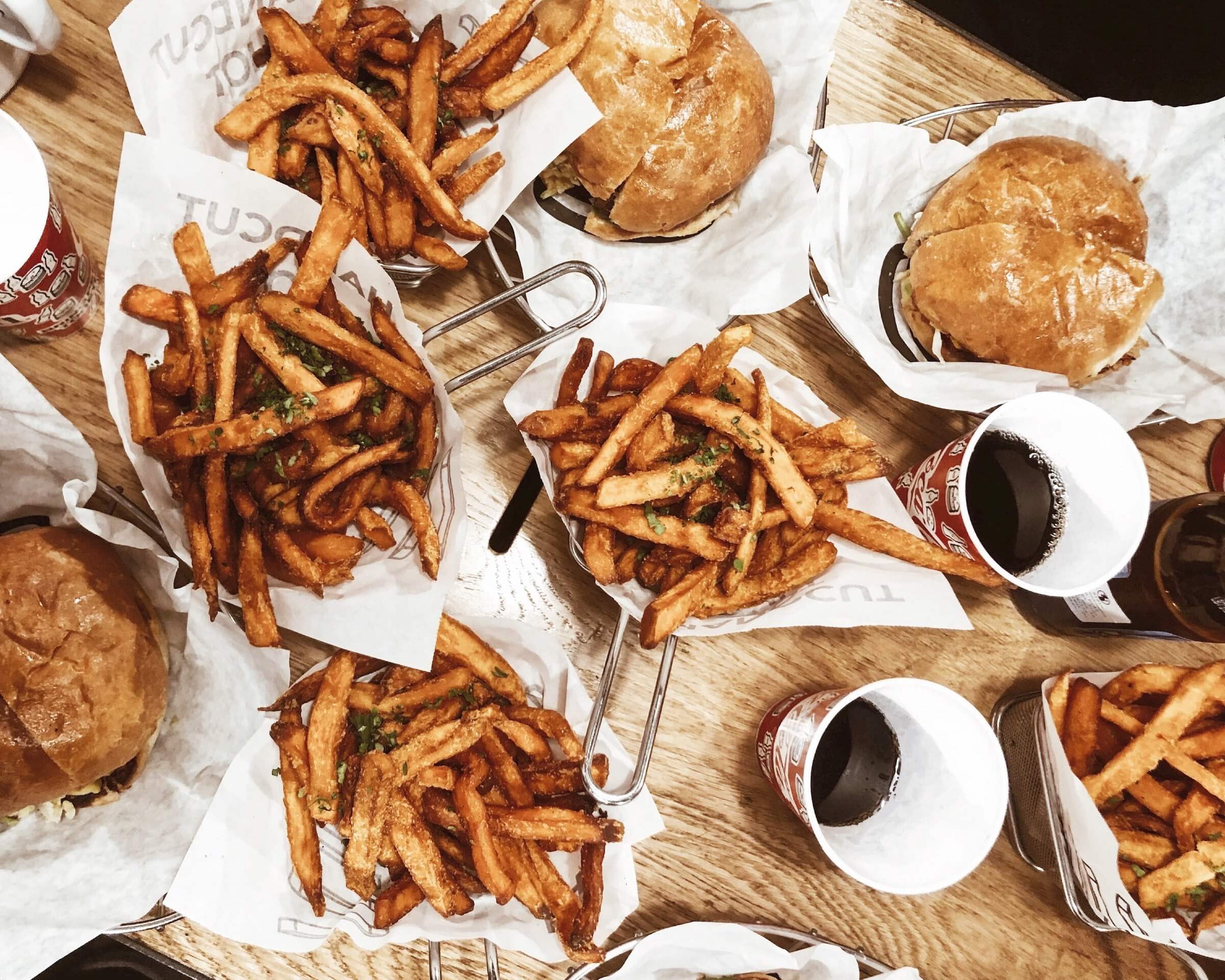
French fries and sandwiches in baskets

We celebrate the humble French fryat once a living legend and deceptively simple sideon Thursday, July 13, National French Fry Day.

Now, I know I tend to dive into the history, disputed or not, of a given item when a holiday comes around. However, that’s not the point of this article.

Of course, I could easily point out that this iconic item’s origins aren’t settled history. That Belgium claims ownership as of 1680. Or that Chile may have beaten Belgium by 61 years. And that France gets credit because the recipe for “modern” French fries appear in the cookbook La Cuisinière Républicaine from 1775. I’m not even going to get into the debacle that was 2003’s Freedom Fries…

Again, that’s not the point. Whether you call them French fried potatoes, French fries, fries, pomme frites, or chips, they’ve been around for anywhere from 400-plus to almost 250 years in some form.

And still they manage to confound many a cook.

We’ve all gotten an order of flaccid, cold, mushy or otherwise cheerless chips. And we’ve all managed to muscle down at least a handful of those dismal, forlorn fries, each soggy bite driving us deeper into despair.

Okay, that may be the tiniest bit dramatic. My point is, French fries are deceptively simple to get just right. And a subpar fry canlet’s face it, will—ruin a guest’s perception of a restaurant. They may return, but they’ll be apprehensive.

Fry Infatuation

If you thought maybe I’d try to create a portmanteau like “infrytuation,” I did think about it. But that would be far too silly, even for me. I wouldn’t even type such a thing out loud.

Anyway, we may not know the origin of fries or chips for a fact. But we do know that for the most part, people love a fry. Those who don’t, well, they’re not to be trusted. Should you come across such a person, grab a handful of friesor the entire basketand run away. You don’t need that kind of negativity in your life.

But why? Why do we love a fry?

Perhaps it’s the versatility. They complete many a limited-service restaurant or QSR meal. At this point, the “bag fry” is almost its own varietal.

They’re at home at a dive or neighborhood bar. But they’ll also step up and accompany a steak at a French bistro or steakhouse. Fish house, shack or upscale seafood restaurant? Pleasefish and chips are a power couple comfortable in any environment.

Speaking of versatility, chips are also happy to indulge a chef or cook’s most debaucherous thoughts. A vessel to carry short rib, cheeses, and an array of seasonings? They’re down.

Of course, it’s likely that fry popularity comes down to comfort. A hit of salt, fat, heat, crispness, and creaminess? That’s at the bare minimum. Toss on some parmesan or pecorino romano and that hit of dopamine doubles, at least.

Chip Tips

One professional, personality, and purveyor who knows his way around a French fry is Chef Brian Duffy.

Indeed, he takes fries seriously. So seriously, in fact, that he has promoted Lamb Weston for several years. For the unfamiliar, America-based Lamb Weston is on of the biggest producers of French fries in the world.

One of their products, the Extra Crispy series of fries, retains crispness for 30 minutes.

Chef Duffy also understands the importance of fries. They can, as stated above, make or break a guest’s visit.

Additionally, as you can see in the Instagram post below, Chef Duffy certainly sees the humble fry as a blank canvas for experimentation.


View this post on Instagram


A post shared by Chef Brian Duffy (@chefbriduff)

Given his strongly held views on fries, I reached out for his thoughts. And, of course, Chef Duffy didn’t disappoint. If you want to master your fries, take the Duffified approach.

Make sure you’re following Chef on Instagram, Facebook, Twitter, and Pinterest. From knife skills to thoughts on seasonings and techniques, you’ll gain helpful culinary insights. Oh, and he’s funny, too.

Duffified Fries

Elevate your French fries. Realize that they’re not “just” a side dish and therefore an afterthought.

For many brands, their fry is a calling card. That “card” can either tempt people through your doors or warn them to stay away.

Are they seasoned well?

Fries are seasoned perfectly when seasoned within 3-5 seconds of being removed from the fryer. Create a fry seasoning that has a good salt-to-seasoning ratio. My Fry base is 1 cup sea salt, 1/8 cup fresh ground black pepper, 1/2 cup onion powder, 1/4 cup garlic powder, 1/8 cup dark chili powder.

Are they crispy?

A good quality fry holds its crispiness for 10 to 15 minutes, unless it’s designed with a coating like a Crispy on Deliveryfry from Lamb Weston that can stay crispy for up to 30 minutes. There’s nothing worse that taking that first bite and having a cold, soggy fry.

Are they hot?

A hot fry has a creaminess in the center that enhances the ultimate experience of the fry. Having that crispy exterior and creamy interior ensures a perfect fry!

Hand-cut fries.

Let’s be real: They’re amazing within the first few minutes. But anything longer than that is a soggy fry, rarely cooked perfectly due to the labor involved and the variations between the type of potato, the time of the year, and the starch to sugar content. It’s just a super inconsistent product unless it’s a huge focus for your concept. I’d stay away.

What are your sauces?

Just ketchup? Just ranch? Make up a few new dipping sauces that will assist you in creating a fry program that isn’t just as a side. Three different fry cuts and three different sauces are now a $14 appetizer that will make people happy.

Choose a fry or a fry program that matches your concept!

Is it a wedge, a concertina, a waffle, a dipper or a steak…? Choose wisely because the wrong fry can take your menu from great to, “Well, that sucked.”

Takeaway

Speaking of featuring fries as a premium appetizer that justifies a premium price, Chef Duffy has a couple of ideas.

One, a fry board. We’ve seen cheese boards, meat boards, pretzel boards… Why not fries?

Sift through Instagram and you’ll also find a Chef Duffy take on build-your-own nacho fries.

Get creative. Don’t just have fries, engage your kitchen and have them build a fry program. Innovation draws people in and converts them to loyal, repeat guests while justifying premium pricing.

Image: Vincent Rivaud on Pexels

Disclaimer: Neither the author nor KRG Hospitality received compensation, monetary or otherwise, from Lamb Weston or any other entity in exchange for this post.

KRG Hospitality menu development. Restaurant. Bar. Cafe. Lounge. Hotel. Resort. Food. Drinks.

by krghospitality krghospitality No Comments

KRG Hospitality now Serving Midwest Region

KRG Hospitality adds Midwest Region

Marina City Towers in Chicago, Illinois

KRG HOSPITALITY NOW SERVING MIDWEST REGION

Toronto-based hospitality industry consulting firm with offices throughout Canada and the USA now serving the Midwest through Chicago office.

CHICAGO, IL (March 17, 2023)—Today, KRG Hospitality announces the addition of the Midwest region of the US to their North American service area. The team will operate out of an office in Chicago, Illinois. However, the agency will serve Midwest markets outside of Chicago as well.

KRG is excited to announce their presence in the region and their ability to serve clients effectively. The agency will offer the full suite of their proven hospitality solutions, including: hourly consulting and coaching; complete feasibility studies, fully customized concept plans; in-depth, focused business plans; project support and management; food and/or drink menu development and consulting; and personalized F&B education.

“I was born in Chicago and first entered the hospitality industry in the Northwest Suburbs. I got my first taste of nightlife in Chicago’s incredible bar and nightclub scene,” says David Klemt, partner and director of business development of KRG Hospitality. “Those experiences shaped my entire hospitality career trajectory. It will be an honor to serve the great people of the Midwest and bring their hospitality visions to life.”

“2023 is turning into quite the growth year for KRG, with the addition of team members Kim Richardson and Jared Boller, and now an exciting new market,” says Doug Radkey, KRG Hospitality founder, president, and project manager. “We see great opportunity in the Midwest, not only in Chicago, but many of the surrounding regions. The food, beverage, and hotel scene is incredibly strong, and we’re open to the challenge of not only helping launch new hospitality brands but helping transform existing brands scale and be successful in the new era ahead.”

KRG is ready to work with clients of all experience levels in the Midwest. The consulting agency’s suite of solutions serve new operators looking to open their first concept and veterans seeking a rebrand or expansion. From independent pizzerias and QSRs to multi-unit regional chains and boutique hotels, and everything in between, the KRG team is eager to take client visions and transform them into brick-and-mortar realities.

To schedule an introductory call to learn how the KRG Hospitality team serves clients, please follow this link.

About KRG Hospitality

KRG Hospitality is a storied and respected agency with proven success over the past decade, delivering exceptional and award-winning concepts throughout a variety of markets found within Canada, the United States, and abroad since 2009. Specializing in startups, KRG is known for originality and innovation, rejecting cookie-cutter approaches to client projects. The agency provides clients with a clear framework tailored to their specific projects, helping to realize their vision for a scalable, sustainable, profitable, memorable, and consistent business. Learn more at KRGHospitality.com. Connect with KRG Hospitality and the Bar Hacks podcast on social: KRG Twitter, Bar Hacks Twitter, KRG Media Twitter, KRG LinkedIn.

Image: Tobias Brunner from Pixabay

KRG Hospitality Start-Up Restaurant Bar Hotel Consulting Consultant Solutions Plans Services

by David Klemt David Klemt No Comments

FAST Act Dealt Knockdown Blow

FAST Act Dealt Knockdown Blow

by David Klemt

Boxer being knocked back by punch

A bill we think is one to watch, California’s Fast Food Accountability and Standards Recovery Act, may be on the ropes already.

Assembly Bill 257, known as the FAST Act, is “on hold” until 2024. So, while the Save Local Restaurants coalition and voters have yet to kill the bill, it may be out on its feet.

We reported two months ago that fast food chains were moving quickly to kill the FAST Act. It appears that the initial attack on AB-257 was successful.

That is, the chains and coalition got what they want: the ballot initiative vote has knocked down AB-257.

For those unfamiliar with the Save Local Restaurants Coalition, the following organizations are members: The National Restaurant Association (NRA), US Chamber of Commerce (USCC), and International Franchise Association (IFA). Further, fast-casual and QSR chain coalition members—including Starbucks, In N Out, McDonald’s, and Chipotle—threw nearly $13 million at the ballot measure that halted FAST.

What’s FAST?

To read AB-257, the FAST Act, in its entirety, click here.

In summary, FAST:

FAST does the following:

  • establishes the Fast Food Council, ten members appointed by the Governor, the Speaker of the Assembly, and the Senate Rules Committee. The council will operate until January 1, 2029;
  • defines “the characteristics of a fast food restaurant“;
  • gives the Fast Food Council the authority to set “minimum fast food restaurant employment standards, including standards on wages, working conditions, and training“;
  • provides the council the power to “issue, amend, and repeal any other rules and regulations, as necessary”; and
  • allows the formation of a Local Fast Food Council by a county, or a city that has a population of more than 200,000.

Voters effectively stopped California from implementing FAST until November 2024 at the earliest. (That is, if the California Secretary of State verifies that the referendum effort did indeed secure the required amount of signatures.)

Opposition

A statement from Save Local Restaurants reads, in part:

The quick-service restaurants targeted by the law – which include coffee shops, juice bars, pizzerias, delis, and salad shops – already operate on small, single-digit profit margins. These include more than 10,000 small businesses, including thousands of women- and minority-owned businesses.

If these restaurants are forced to absorb the costs, the result will be bad for workers and local communities. To survive, many restaurant owners will have no choice but to reduce worker hours or introduce automation. Some may choose to leave their communities entirely or go out of business.

As is often the case with overreaching California policies, this is likely only the beginning.

Additionally, the National Restaurant Association, a member of the coalition, has said the following:

The impacts of the FAST Act won’t be limited to quick service restaurants in California. The law allows the new regulating council to set a higher minimum wage for quick service restaurants. Independent restaurants will, however, be forced to increase their pay to match, so they can remain competitive when recruiting and retaining workforce.

Takeaway

We believe this bill is one to watch because similar efforts could spring up in other states. Also, just because the bill is on hold until 2024 in California doesn’t mean other states aren’t working on similar legislation right now.

Now, there are obviously two sides to consider. Opponents, as we see above, say FAST will raise prices, eliminate jobs, and hurt families.

Proponents believe FAST will protect the health, safety, and welfare of fast-food workers. Additionally, the Fast Food Council could increase the minimum wage for fast food workers above California’s $15.50 minimum (effective January 1, 2023).

We’ll keep an eye on FAST over the next couple of years. Perhaps the coalition can work with California on a bill that protects fast food workers and doesn’t hurt operators and the communities they serve.

At any rate, FAST is down but certainly not yet out.

Image: Johann Walter Bantz on Unsplash
by David Klemt David Klemt No Comments

Canada’s Single-use Plastics Ban

How Canada’s Single-use Plastics Ban Affects Operators

by David Klemt

Single-use plastic straws and utensils

With a few exceptions, Canada’s ban on the manufacture, importation, and sale of single-use plastics is now officially in effect.

However, that doesn’t mean restaurant and bar operators need to worry about current inventories just yet. While the Single-use Plastics Prohibition Regulations are in effect, operators have a year to deplete their stocks.

SUPPR is a crucial element of Canada’s overall plan to combat pollution and reach a goal of zero plastic waste by 2030. The single-use plastics ban was announced in June of this year.

“We promised Canadians we would deliver a ban on single-use plastics. Today, that’s exactly what we’ve done,” said Minister of Environment and Climate Change Steven Guilbeault the day SUPPR was announced. “By the end of the year, you won’t be able to manufacture or import these harmful plastics. After that, businesses will begin offering the sustainable solutions Canadians want, whether that’s paper straws or reusable bags. With these new regulations, we’re taking a historic step forward in reducing plastic pollution, and keeping our communities and the places we love clean.

Now, six months later, it’s the law of the land.

What’s Banned?

Essentially, Canadian operators must evaluate everything they use for delivery and takeout or pickup. If any items are single-use plastic, they must be gone by December 2023.

Per SUPPR, the manufacture, importation, and sale of the following is prohibited:

  • Checkout bags designed to carry purchased goods from a business and typically given to a customer at the retail point of sale.
  • Cutlery includes:
    • knives
    • forks
    • spoons
    • sporks
    • chopsticks
  • Foodservice ware designed for serving or transporting food or beverage that is ready to be consumed, and that:
    • contains
      • expanded polystyrene foam
      • extruded polystyrene foam
      • polyvinyl chloride
      • carbon black
      • an oxo-degradable plastic
    • are limited to the following items
      • clamshell containers
      • lidded containers
      • boxes
      • cups
      • plates
      • bowls
  • Ring carriers are flexible and designed to surround beverage containers in order to carry them together.
  • Stir sticks designed to stir or mix beverages, or to prevent a beverage from spilling from the lid of its container.
  • Straws include:
    • straight drinking straws, and
    • flexible straws, which have a corrugated section that allows the straw to bend, packaged with beverage containers (juice boxes and pouches)

For accuracy, the above comes from the Government of Canada website directly, unedited.

What does this mean for Operators?

Again, operators in Canada don’t need to toss their current stock of the above items.

However, Restaurants Canada does recommend that operators contact suppliers and customers if they import, export, or sell prohibited items currently.

The single most important thing for operators to do now is research single-use plastic alternatives. Items need testing as changes will affect F&B items and the guest experience.

Of course, it’s possible an operator’s current supplier already offers alternatives to single-use plastics. That could prove convenient but costs, supply chain reliability, and impact on menu items need careful consideration.

Sustainability and responsible practices are no longer just conversation topics within the industry. As of this week, in Canada, they’re the only way forward.

Image: Volodymyr Hryshchenko on Unsplash

by krghospitality krghospitality No Comments

2023: Year of the POS Systems?

2023: Year of the POS Systems?

by David Klemt

SpotOn POS system on laptop

Image from SpotOn press release

According to SpotOn, the industry could be in for a tech revolution next year as independent operators pursue more powerful POS solutions.

The results of a survey conducted by the cloud-based POS platform are rather revealing. In an effort to better understand where the industry is heading, SpotOn surveyed 300 independent and small-chain restaurant operators.

Both full-service and limited-service (LSR) concept operators participated in this SpotOn survey. Intended to identify the challenges operators face currently, the results reveal much more.

Below, the picture these survey results paint for the industry.

Legacy vs. Innovation

This isn’t the first time I’ve stated the following: Our industry hasn’t been the fastest to implement new technology.

However, we did appear to turn that around in 2021. Now, heading into 2023, our industry may be pursuing cutting-edge tech solutions even more fervently. Today’s guest expects more tech, and your team likely wants access to more modern tech that makes their jobs easier.

Per SpotOn’s survey, 81 percent of independent operators still use so-called “legacy” POS systems. These are “traditional” systems from companies that have been around for quite some time.

It’s not difficult to understand why the vast majority of independent operators continue using legacy systems:

  • Investing in a new platform requires expenditures of money and time.
  • Introducing a new POS platform requires staff training.
  • Staff need to grow adept at using the new system.
  • It can be daunting to research the available platforms and implementing change.

So, independent and small-chain operators have a choice to make: Stick with the familiar or invest in the future. Change can not only be intimidating, it can be expensive.

However, it seems that most operators are ready to throw comfort to the wayside and embrace innovation.

State-of-the-art Benefits

Should the SpotOn survey prove to be accurate snapshot of the industry, 75 percent of operators will implement new tech next year. According to SpotOn, this is largely in response to growing labor challenges, such as scheduling and retention.

The restaurant, bar, nightclub, and food truck platform found that operators are spending as much as 20 hours per week on administrative tasks. State-of-the-art POS systems can slash those hours by:

  • streamlining operations;
  • making scheduling simpler;
  • calculating tips and payout for payroll; and
  • managing overtime, an increasingly common task.

More modern POS platforms can automate labor management tasks, saving operators time, money, and frustration. Automation and streamlining give operators something invaluable: time.

In particular, innovative and helpful tech solutions provide an operator with time to focus on growing their business. When weighing whether to keep a familiar but less feature-rich POS system or invest in a modern platform that seamlessly integrates many solutions, ask yourself a couple important questions:

  • What’s my time worth?
  • What am I focusing on every day?
  • Am I growing my business or stagnating?
  • Is my current POS system helping or hindering my team?
  • Does my POS system streamline and automate any tasks?

Image: SpotOn

by David Klemt David Klemt No Comments

8 Glendalough Cocktail Recipes for St. Patrick’s Day and Beyond

Offer your guests something different for your St. Patrick’s Day promotion with Glendalough Distillery cocktail recipes.

Without a doubt, you should have plenty of the expected Irish whiskeys on hand. However, Glendalough Distillery Double Barrel, Pot Still, Wild Gin, and Rose Gin are extraordinary Irish whiskeys and gins.

Each spirit the distillery crafts honors the art of Irish distillation, a craft that stretches back centuries. What’s more, each whiskey Glendalough crafts is single malt—there are no light-bodied blends in their lineup.

To learn more, check out episode 71 of the Bar Hacks podcast with Glendalough Distillery co-founder and national brand ambassador Donal O’Gallachoir.

by David Klemt

Glendalough Distillery Wild Gin Irish gin

8 Amazing Irish Whiskey and Gin Cocktails

Below, eight refreshing and sophisticated drink recipes made with Glendalough whiskeys and gins. Sláinte!

Glendalough Distillery Double Barrel Single Malt Irish Whiskey

The Lough Inn

This highball is made with Glendalough Double Barrel, a single-grain Irish whiskey aged in ex-bourbon barrels before being finished in Oloroso sherry casks.

  • 2 oz. Glendalough Double Barrel Single Grain Irish Whiskey
  • 1 oz. Spiced honey syrup (see note)
  • 1 oz. Fresh lemon juice
  • Soda to top
  • Lemon wheel or slice to garnish
  • Mint leaf to garnish
  • 1 cup Honey for spiced honey syrup
  • 0.5 cup Water for spiced honey syrup
  • 4 Cinnamon sticks for spiced honey syrup
  • 1 pod Star anise for spiced honey syrup

Add ice to a highball glass, then add first three ingredients. Top with soda water. Garnish with lemon wheel or slice and freshly torn mint leaf.

For spiced honey syrup: Add honey, water, cinnamon sticks, and star anise to pot. Bring to a boil, then stir. Strain into container.

Glendalough Distillery Pot Still single malt Irish whiskey

Pot Still Highball

Deceptively simple to build, this cocktail highlights the terroir of the land surrounding Glendalough Distillery.

  • 1.5 oz. Glendalough Pot Still
  • Soda to top
  • Grapefruit peel to garnish
  • Mint leaf to garnish (freshly torn and slapped, of course)

Prepare a highball glass with an ice shard, spear or cylinder. Pour in Glendalough Pot Still whiskey, then top with soda. Glendalough Distillery recommends a 1:2 ratio, Pot Still to soda. Garnish with mint leaf.

Glendalough Distillery Wild Gin Negroni cocktail

Glendalough Negroni

The foraged botanicals in Glendalough Wild Gin add even more complexity and depth to the classic Negroni. In fact, the flavors work so well this recipe maintains the Negroni’s crucial 1:1:1 ratio.

Prepare an Old Fashioned with ice. Add first three ingredients to glass in the above order. Add more ice if necessary. Stir, express orange peel, and place as garnish.

Glendalough Distillery Wild Gin Irish gin

Glendalough Wicklow 75

Bubbles make everything better and everyone happier.

Add all ingredients to shaker. Add ice and shake until well chilled. Strain into Champagne flute, top with Prosecco, and garnish with lemon twist.

Glendalough Distillery Rose Gin Irish gin and cocktails

Glendalough Rose G&T

This simple classic receives a huge visual and aromatic boost from Glendalough Rose Gin.

  • 2 oz. Glendalough Rose Gin
  • Tonic to top (the higher the quality, the better)
  • Lime slice
  • Mint leaves

Add ice to glass, then add Rose Gin. Top with tonic, and garnish with lime slice and mint leaves.

Glendalough Distillery Rose Gin Fizz

Glendalough Rose Gin Fizz

One way to elevate the highball is to use a striking pink-hued Irish gin.

  • 1.5 oz. Glendalough Rose Gin
  • 0.5 oz. Elderflower liqueur
  • Raspberry & Lime sparkling water to top
  • Lime wheel to garnish

Add ice (spear, shard or cylinder for impact), Rose Gin, and liqueur to highball glass. Stir, then add sparkling water to top. Garnish with lime wheel.


View this post on Instagram


A post shared by Glendalough US (@glendaloughus)

Glendalough Rose Collins

Boost the classic Collins with Glendalough’s striking rose-petal gin.

  • 1.5 oz. of Glendalough Rose Gin
  • 1 oz. of Lemon juice (freshly squeezed)
  • 0.5 oz. of Sugar syrup (1:1 ratio, hot water to sugar)
  • Soda to top
  • Lemon peel to garnish
  • Cherry to garnish

Combine first three ingredients in a shaker with a cup of ice. Place an ice shard, spear or cylinder to a highball glass. Shake until well chilled, then strain into glass. Top with soda, and garnish with lemon peel and cherry.

Glendalough Distillery Rose Gin Hibiscus Rose

Glendalough Hibiscus Rose

Refreshing and flavorful, the hibiscus tea syrup plays incredibly well with Glendalough Rose Gin.

  • 1.5 oz. Glendalough Rose Gin
  • 0.5 oz. Hibiscus tea syrup (see note)
  • 0.5 oz. Lemon juice (fresh squeezed)
  • Prosecco to top
  • Dehydrated lemon wheel to garnish
  • Rose petals to garnish
  • 33 oz. Water for hibiscus tea syrup
  • 16 oz. Sugar for hibiscus tea syrup

Add first three ingredients and ice to a shaker. Shake until well chilled and double strain into a coupe.  Top with Prosecco, and garnish with dehydrated lemon wheel and rose petals.

For the hibiscus tea syrup: Steep seven hibiscus tea bags in 33 ounces of water for 15 minutes. Add 16 ounces of sugar.

Images & Recipes: Glendalough Distillery

Related Reading

Work with Us

Click the image below to partner with us on your project.

Client Intake Form - KRG Hospitality

Top